Order Ophidiiformes Family Ophidiidae(cusk-eels)
Goatsbeard brotula
Brotula multibarbata(Temminck & Schlegel, 1847) Max length/100cm TL. Common length/30cm TL
Korean name/su-yeom-cheom-chi(수염첨치)
Japanese name/Itachiuo/鼬魚(イタチウオ)
Chinese name/多鬚鬚鼬鳚(다수수유위)
D/soft ray 111~117. A/soft ray 83. P1/25. Vert/16+42=58
Distribution; Indo-Pacific/Red Sea, Persian Gulf, from East Africa to Pitcairn, south to Lord Howe Island. north to southern Japan and south sea of Korea(Busan city)
General; The body is long and compressed. The eyes are large and oval. Jaws with small conical teeth. The length of both jaws is almost same, but the upper jaw slightly protruded. 3 pairs of barbels on snout and chin respectively. The dorsal and anal fins connected to the caudal fin. Body covered with fine cycloid scales. The color of the body and fins is dark brown or reddish-brown, with submarginal broad black zone and narrow yellow(when alive) border on outer edge of dorsal and anal fins. The yellow border turn to white in dead specimens. When alive, the barbels and pelvic fin rays are yellow in color. In some underwater photos, the barbels and pelvic fin rays appear white, but this is the result of overexposure of yellow pigment due to the effect of the camera flash light.
Benthopelagic on shelf and upper slope. Larvae found in the epipelagic far offshore. Found in shallow lagoon and seaward reefs and occurs at depths of at least 220 m. Adults(30-90 cm) move to depths of 100-650 m. A nocturnal species, rarely seen for it lives in caves and crevices during the day and periodically emerges from cover at night to feed on crustaceans, mainly crabs, and fishes. Oviparous, with oval pelagic eggs floating in a gelatinous mass. Utilized fresh and eaten steamed, pan-fried and baked.
|

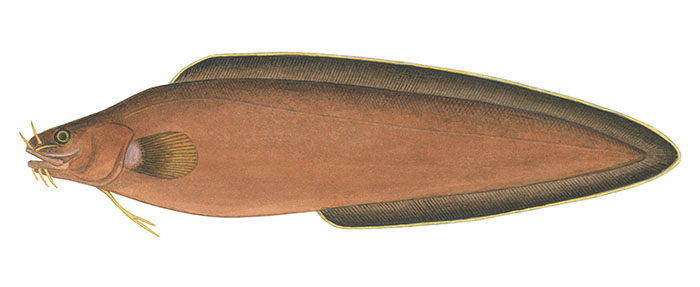
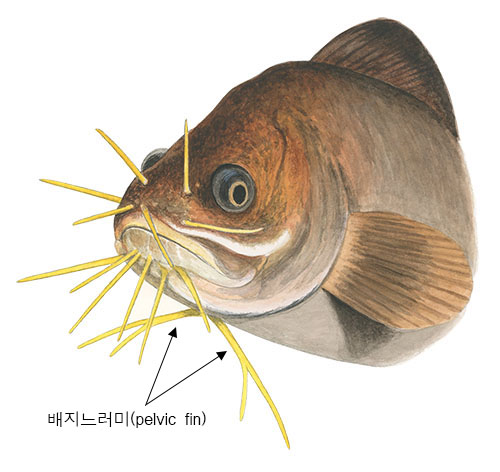
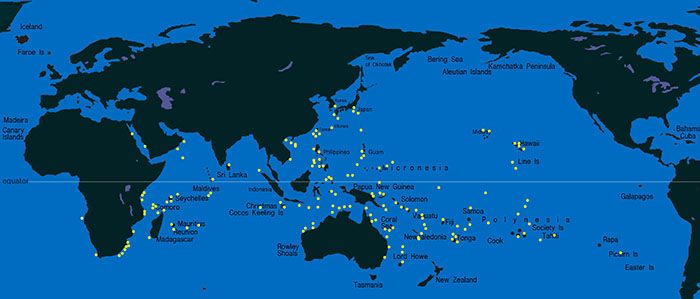 수염첨치 분포도. Distribution map of Goatsbeard brotula(Brotula multibarbata). Derived work. Author/Kim in young(fishillust.com)

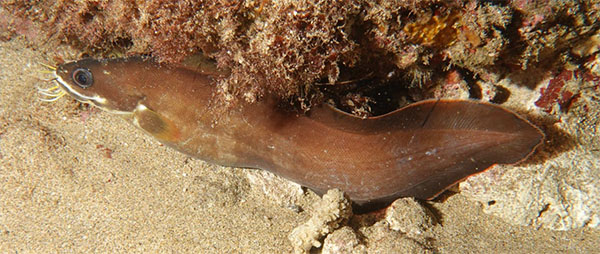 수염첨치의
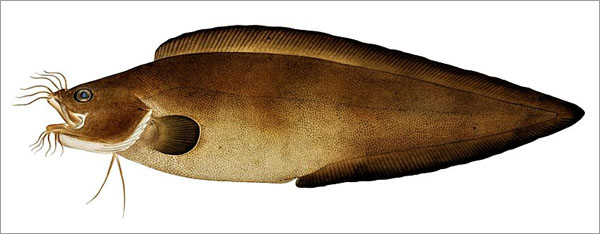

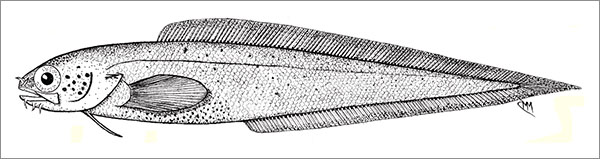
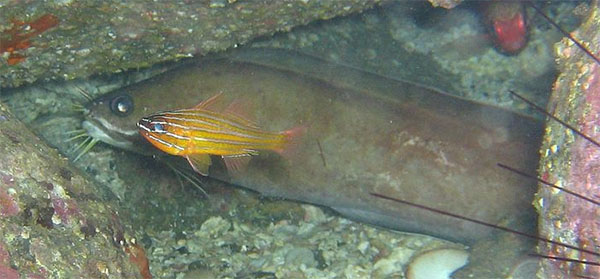
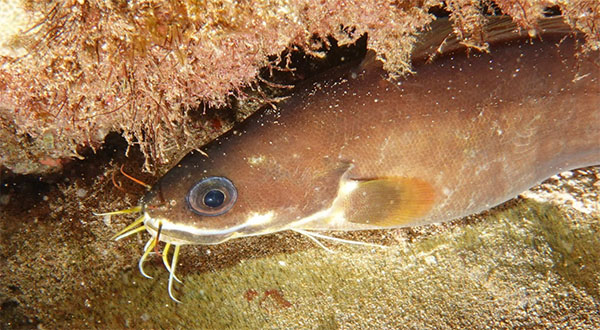
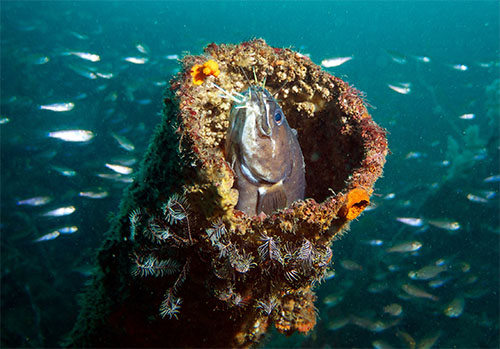 해양생물이 잔뜩 붙어 자란 폐기 구조물 안에 은신해 있는 수염첨치. 장소/일본 이두 반도. A Goatsbeard brotula(Brotula multibarbata) hiding in an abandoned structure overgrown with marine life. Location/Toi, Izu Peninsula, Japan. Author/Ryo sato




 검색
