
사이트 로그인
사이트 로그인
|
분류계통/경골상강→조기강→아귀목→점씬벵이과→점씬벵이 |

|
| 점씬벵이 기본 모습. Lateral view of Spotted sea toad(Chaunax abei) |
|
|
|
아귀목 점씬벵이과 분포; 인도-서태평양/한국의 남해, 일본 후쿠시마현 이남의 태평양 연안, 타이완, 동중국해, 필리핀, 뉴칼레도니아, 마다가스카르에 분포한다. 측선은 3개가 상 중 하에 위치해 있는데 중간 것은 눈 아래 머리 부분에서 짧게 끝나고 위 것은 눈 뒤에서 시작하여 몸의 등쪽을 따라 미병부까지 이어져 있고 맨 아래 것은 턱 아래 배쪽에서 시작하여 옆으로 가다가 가슴지느러미 기부에서 끝난다. 등지느러미는 내재적으로는 2개로 구성되어 있지만 제2등지느러미만 겉으로 나타난다. 왜냐하면 제1등지느러미는 3개의 가시로 구성되어 있는데 첫 번째 가시는 먹이 유인 낚싯대로 변형되어 있고 그 뒤로 2개의 가시가 있으나 피부 속에 묻혀있어 안 보이기 때문이다. 등지느러미와 뒷지느러미 및 가슴지느러미의 연조들은 불분지 기조이며 꼬리지느러미 기조들은 분지되어 있다. 꼬리지느러미 뒤는 수직형이다. 신선할 때 몸색은 환경에 따라 등쪽이 황적색에서부터 거의 흰색에 가까운 옅은 적색까지 변화가 있으며 눈 크기의 둥글고 선명한 적갈색 점들이 비교적 균일하게 산재하고 있다. 복부는 희다. 배지느러미 뒷지느러미는 희며 나머지 지느러미들은 붉은색 바탕에 2~3줄의 갈색 띠가 있다. 점씬뱅이는 큰점씬벵이(Chaunax fimbriatus)와 매우 유사하다. 그러나 점씬벵이는 적갈색 점 무늬를 가지고 있는데 반하여 큰점씬벵이는 점 무늬가 노란색이며 모양이 둥글거나 또는 불규칙하다. 수심 약 100~500m의 바닥에 서식한다. |
|
|
|
Order Lophiiformes(anglerfishes) Family Chaunacidae(Sea toads). Distribution; Indo-West Pacific/South Sea of Korea, Pacific coasts in south of Fukushima Prefecture Japan, Taiwan, East China Sea, Philippines, New Caledonia and Madagascar All surface of body very densely covered with numerous minute spines. Numerous soft cortical processes in shape of beard hair around the rim of belly below the mandibular Mouth large and almost vertical. 3~4 rows of small and sharp teeth on both jaws. Vomer also with teeth. Posterior end of upper jaw not reach the anterior margin of eye. Three lateral lines are located at the top, middle, and bottom respectively. The middle one placed below eye and ends shortly within the head. The upper one skewed toward the dorsal and starts at the back of the eye and runs along the dorsal side of the body to the peduncle. The bottom one starts at the ventral side under the chin, goes sideways, and ends at the base of the pectoral fin. The dorsal fin is inherently composed of two, but only the second dorsal fin is visible. The reason is that the first dorsal fin consists of three spines, the visible first spine is transformed into a fishing rod(Illicium) to attract food, and the two spines behind it are hidden under the skin and are not visible. Dorsal, anal and pectoral fin rays unbranched soft ray, but caudal fin branched. Caudal fin with truncated margin. Color of body; When fresh, the body color changes from orange red in ground color to pale red close to white depending on the environment, and round and distinct reddish brown dots the size of the eyes are scattered relatively evenly. Belly pale. The pelvic and anal fins white, the rest fins with red in color and with 2~3 rows of dark brown bands. Chaunax abei is very similar to c. fimbriatus in morphological features, but the former is characterized in having round red brown spots, whereas the latter has round or irregular yellow spots on the body surface. Found in bottoms of 100~500m depth. |
 점씬벵이 분포도. Distribution map of Spotted sea toad(Chaunax abei). Main reference/GBIF. Data base date/February 2023. South Sea of Korea added. |
 점씬벵이(Spotted sea toad(Chaunax abei).. 한국분포종. 일본 에노시마 수족관 사진. Spotted sea toad(Chaunax abei). Location/Enoshima Aquarium, Japan. Author/OpenCage. |
 위키메디아 원본 사진에 점씬벵이로 소개되어 있는데 몸의 점 무늬 색상이 큰점씬벵이의 설명과 같아 보여서 동종이 잘못된 것인지 의심이 간다. 일본의 수족관沼津港深海水族館) 사진이다. In Wikimedia commons, introduced as Chaunax abei, but the color of spots on the body look same to description of Chaunax fimbriatus, so doubt whether the classification of species is wrong. Location/Numazu Deepblue Aquarium, Shizuoka, Japan. Author/Kentaro Ohno |
 점씬벵이과 점씬벵이 속(genus Chaunax)의 일반적인 측면 모습. 그림에는 등 앞 부분에 가시가 3개(유인 낚싯대 포함) 있으나 2번과 3번 가시는 피부 안에 들어가 있어서 실제로는 보이지 않는 것들이 많다. General side view of genus Chaunax. In the illustration above, there are 3 spines on anterior back(including the illicium), but the 2nd and 3rd spines are embedded under the skin and are not actually visible in most congerners. Author/Unknown. |
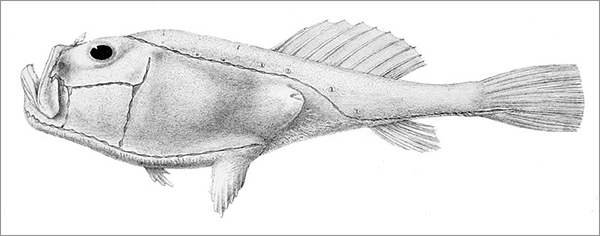 점씬벵이류의 측선 배열도. lateral line arrangement of species in Genus Chaunax. Date/1887 Author/R. Mintern |
|
|
| Copyright ⓒ FISHILLUST.COM All rights reserved. All contents can not be used without permission of the copyright holder. |


 검색
