
사이트 로그인
사이트 로그인
|
분류계통/경골상강→조기강→동갈치목→날치과→날치 Copyright by Kim In Young. 김인영 그림
|

|
| 날치의 기본 모습. Lateral view of Japanese flyingfish(Cheilopogon agoo) |
동갈치목 날치과 Order Beloniformes Family Exocoetidae(Flyingfishes) 분포; 서북태평양/한국의 중부 이남, 일본 남부, 타이완에 분포. 동태평양/멕시코 중부 태평양과 갈라파고스 북쪽 태평양 추가됨(2023년 4월 현재 GBIF 데이터 인용) 날치는 위협을 느끼면 큰 가슴지느러미를 날개처럼 이용하여 물 밖으로 튀어나와 비행을 하며 달아남으로 '날치'란 이름이 붙었다. 수면을 전속력으로 헤엄치다가 상체를 일으켜 꼬리로 수면을 타듯이 달리면서 뛰어 오르고 잘 발달된 양쪽 가슴지느러미와 배지느러미를 활짝 편 채 글라이더처럼 활강한다. 수면 위로 나오기 직전에는 가슴지느러미를 몸에 바짝 붙여 몸을 유선형으로 갖춘 다음 수면을 벗어나는 순간 가슴지느러미를 활짝 펴서 글라이딩한다. 물 위로 나오는 순간 속력은 시속 50~60km 정도이며 나는 동안 꼬리지느러미를 조작하여 방향을 약간은 바꿀 수 있지만 미미한 정도이다. 그래서 보트 같은 장애물을 만나면 충돌하여 죽거나 갑판 위에 떨어져 사람의 횟감이 된다. 꼬리지느러미는 착수 시 랜딩기어의 역할도 한다. 보통은 해면에 닿을 정도로 비행하지만 2~3m 정도로 높게 비상하기도 하며 최장 비행거리는 3백~4백m, 최장 비행시간은 30~40초로 알려져 있다. 날치의 비행은 새처럼 날개 짓을 하는 것은 아니며 글라이딩하는 것이다. 반대로 물 밖의 천적인 새에게 잡아 먹힐 위험이 생긴다. 멀리 날기 위하여 몸을 가볍게 해야 하므로 먹이는 소화가 잘 되는 작은 플랑크톤 갑각류를 먹는다. 장이 짧아 먹이를 빨리 소화시켜 체외로 배출시킨다. 천적이 나타나면 비행 전에 똥을 싸서 몸을 가볍게 하면서 이수(離水)한다. 날치뼈를 현미경으로 보면 조류의 뼈처럼 골밀도가 낮아서 구멍이 숭숭 뚫려 있어서 뼈가 가볍다. 등은 짙은 청색(어두운 청색), 측면은 희미한 청색, 배는 흰색이다. 등지느러미에는 검은 무늬 부분이 없다. 가슴지느러미와 꼬리지느러미는 투명하다. 꼬리지느러미는 매우 깊게 안으로 패였으며 상엽보다 하엽이 길다. 비늘은 둥근 비늘이며 쉽게 떨어진다. 동물성 플랑크톤을 먹고 살며 35㎝까지 자란다. 등지느러미 앞 비늘 수는 33~37개이다. 측선은 아가미 뚜껑 하부의 가슴에서부터 복부의 하단을 수평으로 지나 꼬리지느러미 기부 하단까지 직선으로 진행되어 있다. 한반도의 중부 이남에서 발견되며 4월 중순이 되면 수만 마리가 떼를 지어 난류를 타고 제주도 부근 및 남해안 연안으로 이동해 오며 연안의 해조류에 알을 붙여 낳는다. 날치의 살은 단백질은 풍부하나 지방이 적어 맛이 없다는 평가와 살이 매우 부드러워서 혀와 입안에 착 감기는 맛 좋은 생선이라는 평가가 공존한다. 알은 맛이 좋다는 공통적인 평가를 받으며 초밥용, 알밥용으로 사용된다. 일본에서는 날치 알보다는 '날치 소금구이'가 더 인기 있다. 한방에서는 비어(飛魚)라고 하여 아이를 쉽게 낳게 하는 약재로 사용된다. |
|
Order Beloniformes Family Exocoetidae(Flyingfishes)
Japanese flyingfish Cheilopogon agoo(Temminck & Schlegel, 1846). 35.0 cm SL Korean name/nal-chi(날치) Japanese name/トビウオ(Tobi-uo; flying fish)
Taiwanese name/阿戈飛魚(아과비어) Chinese name/燕鰩魚(연요어)
D/Soft ray 10-12. A/soft ray 9~11. P1/16-17. P2/6. lateral line scales/52-57. Vertebrae/46~48
Distribution; Northwest Pacific/south of central Korea, southern Japan and Taiwan. East Pacific/Added Pacific of Central Mexico and Pacific North of the Galápagos(Citation of GBIF data as of April 2023) General; Body elongate, fusiform, head and body slightly compressed, close to cylindrical. Head short. Snout blunt. Eyes are big. Mouth small. Both jaws of equal length, or lower jaw a little longer than upper jaw; juveniles with a pair of short tapering barbels bearing proximal flap-like appendage. Pectoral fin inserted high on body side, strikingly long, posterior tip reaches posterior end of dorsal fin. Be differentiated from other species by unbranched uppermost 2 rays of pectoral fin. Origin of anal fin behind 3rd soft ray of dorsal fin. When feels threatened, flying fish uses its large pectoral fins like wings to jump out of the water and fly away, hence the name 'flying fish'. After swimming at full speed on the surface, raise the upper body, run as if riding the surface with the tail, jump, and glide like a glider with well-developed both pectoral and pelvic fins wide open. Just before coming out of water, pectoral and pelvic fins attach close to body to form perfect streamlined body, and then, as soon as they come out of water, the fins open wide like wings. The speed at the moment it comes out of water is about 50 to 60 km per hour, and it can slightly change the direction by manipulating the tail fin while flying, but it is insignificant. So, when it encounters obstacle such as boat, it crashes and dies or falls on the deck and becomes sashimi for persons on board. The caudal fin also serves as landing gear when landing. It usually flies enough to touch the sea surface, but it sometimes soars as high as 2 to 3 m, and the longest flight distance is 300 to 400 m, and the longest flight time is known to be 30 to 40 seconds. Not flapping its wings like bird, in true sense of the word, it's not flying, it's gliding. On the contrary, there is risk of being eaten by the natural bird outside the water. It needs to be light to fly far, so it eats small planktonic crustaceans that are easily digested. The short intestine digests food quickly and discharges it out of the body. Flying fish poop before flying to lighten their bodies. Microscopic images of flying fish bones show that they are light in weight because they have low bone density like bird bones. Body deep blue above, pale below; dorsal fin without distinct black region; pectoral and caudal fins transparent. Caudal fin deeply forked, its lower lobe longer than the upper. Scales large, cycloid, easily shed. Predorsal scales 33 to 37. The lateral line runs in a straight line from the thorax below the edge of the gill cover, horizontally through the lower side of belly to the lower base of caudal fin. Found from south of central Korean Peninsula to southern seas including Jeju Island. In mid-April of Korea, groups of tens of thousands migrate to the shallow coastal waters to spawn. The eggs attach to algae. Common and commercially valued. There are two different opinions about the taste of flying fish; The meat is rich in protein, but low in fat, so it is evaluated as tasteless, and the meat is very soft, so it is evaluated as a delicious fish that melts in the tongue and mouth. However, eggs are commonly evaluated as having good taste and are used for sushi and topping of boiled rice. In Japan, salt-grilled fish is more popular than eggs. In Chinese medicine, used as medicine to facilitate childbirth. |
 날치 분포도. Distribution map of Japanese flyingfish(Cheilopogon agoo). Main ref. GBIF. Edited by fishillust.com. Data as of April 2023. |
 죽은 개체 날치. Dead Japanese flyingfish (Cheilopogon agoo). Author/Lab of Fish Ecol. and Evo., BRCAS( Fish Database of Taiwan) |

| 날치 죽은 개체. Dead specimen of Japanese flyingfish(Cypselurus agoo). Author/Dieno |
 날치 묘사도. illustration of Japanese flyingfish(Cypselurus agoo). Author/Starks, Chloe Lesley. Publisher/Smithsonian Institution, NMNH, Fishes. licence Usage Conditions Apply. |
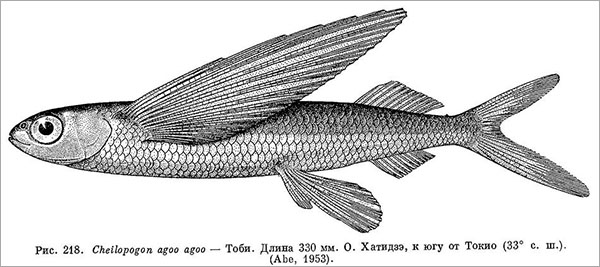
| 날치 묘사도. illustration of Japanese flyingfish(Cypselurus agoo). Author/Abe, 195. Source/fishbiosystem.ru |
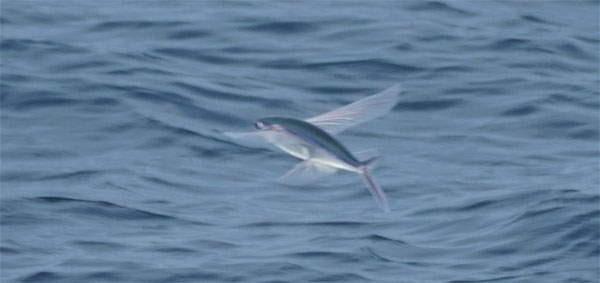 수면 위 공중을 나는 날치. Japanese flyingfish flies above the surface of the water. Observed in Japan. Author/Hitoshi WATANABE 渡辺仁. Publisher/ iNaturalist. licenses/by-nc/4.0/ |
 Left/날치 알 초밥. Sushi of flying fish eggs. Author/Till Krech. Right/알밥. Korean dish; “albap”, boiled rice topped with flying fish eggs. Author/rose garden |
 날치를 타고 어디론가 항해하고 있는 두 사람. 네덜란드 화가 히로니뮈스 보스(Hieronymus Bosch/1450~1516)의 제단화 “성 안토니우스의 유혹(The Temptation of Saint Anthony)”은 3폭 대형 그림이다. 3폭 중 3번째 폭 그림(위에서는 우측 그림)의 왼쪽 꼭대기에 아주 작게 그려진 그림이다. |
 네덜란드 화가 히로니뮈스 보스(Hieronymus Bosch/1450~1516)의 제단화 “성 안토니우스의 유혹(The Temptation of Saint Anthony)”. 3폭 전체 그림에는 수많은 이야기가 담겨있다. 위키메디아에서 대형 데이터 사진(7,800 × 4,042 pixels)을 보면 내용을 자세히 들여다 볼 수 있다. You can find many stories contained in 7,800 × 4,042 pixel version in Wikimedia. |


|
| Copyright ⓒ FISHILLUST.COM All rights reserved. All contents can not be used without permission of the copyright holder. |


 검색
