
사이트 로그인
사이트 로그인
|
분류계보/분류계보/경골상강→조기강→잉어목→잉어과→잉어 아과→이스라엘 잉어(Israeli Carp; Cyprinus carpio) Copyright by Kim In Young. 김인영 그림
|
 |
| 이스라엘 잉어(향어)의 한 패턴. A type of Israeli Carp(name born in Korea). |
[담수어] 분포; 이스라엘에서 한국에 이입된 변형 잉어. 이스라엘 잉어가 선호하는 적정 수온은 25도 가량이며 수명은 40년 정도이다. 5~6월에 산란한다. 저서성이며 무리를 지어 활동한다. 주위환경에 대한 적응력이 뛰어나 미국산 배스(민물농어)와 함께 토종 어자원을 탐식하는 어종 중 하나이다. 몸길이와 몸 높이의 비율이 2:1로 성장속도는 잉어보다 2~2.5배 정도 빠르다. 몸길이는 비슷하나 무게가 잉어에 비해 무겁다. 물 흐름이 느리고 바닥이 뻘로 된 호소나 하천 등지에서 작은 동물이나 조개류, 조류 등을 먹으며 풀씨, 물벌레, 부드러운 수초 잎사귀도 잘 먹는다. 한국에는 1973년, 국민들의 먹을 거리가 다양하지 않던 시절에 영양보충을 위해 이스라엘 농무성을 통해 치어 1천여 마리를 들여 온 것이 시초다. 그 후 실험양식에 성공해 1978년부터 전국 대형 호수에서 대대적인 양식이 시작됐다. 1980년대 초반 이후 1990년대 후반까지 내수면 양식업의 대상으로 각광을 받아왔고, 공급이 원활한 만큼 유료낚시터에서 인기를 끌었다. 성장이 빠르고 육질이 단단하며 비린내와 같은 역한 냄새가 나지 않고 잔가시가 없기 때문에 가두리 양식으로 많은 양이 생산되었다. 그러나 1997년부터는 수질보호를 위해 호수의 가두리 양식장이 사라지면서 현재는 공급이 거의 중단된 상태로 그간 대형 호수나 저수지에 방류돼 자연 번식한 향어들이 명맥을 유지하고 있다. 맛이 담백하여 민물회로 인기가 많으며 푹 고아 보신용으로 먹기도 한다. 매운탕, 찜, 소금구이, 튀김 등 다양하게 요리된다. |
[Freshwater fish]] Distribution; A variation of common carp introduced to Korea from Israel Israeli carp prefers optimum temperature of 25° C, max age 40 years. Spawn in May to June. Demersal and schooling fish. They inhabit warm, deep, slow-flowing, and still waters such as lowland rivers and vegetated lakes. They grow faster than common carp by twice or twice and half growth rate. Have a strong appetite, feeding on a variety of benthic organisms and plant material. The flesh has a firm, chewy texture, with no fine bones or earthy musty odor. Thus, leather carp has become popular as a raw flesh or as a hot chowder food. Korea was impoverished country until 1970s. Korean government imported about 1,000 fries of Israeli carp from Israel for farming target in 1973, the purpose of this government action was to improve malnutrition of the people. Israeli carp farming flowered in 1980~1990s, and along with, the pay fishing ponds flourished. Israeli carp farming begun to decrease from 1997, due to new policy of prohibiting cultivation of fish in inclosing net that considered degenerating the water quality. Presently, supply of farmed Israeli carp almost none, only minor population found in natural lakes, these rare specimens are later generations of released fishes. |
 |
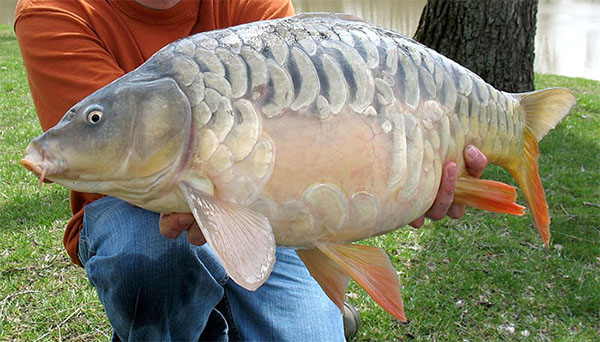 |
위 2 사진은 이스라엘 잉어가 아니고 거울잉어(mirror carp)이다. “이스라엘 잉어”라는 이름은 외국에는 없는 이름이며 한국에서 생긴 이름이다. 거울잉어의 비늘 모양이나 분산 모양은 지문처럼 개체마다 모두 다르다. 정확히 한국의 이스라엘 잉어를 촬영한 것이라는 사진은 한국 내 인터넷 상으로 존재하지 않으며 대부분 저작권이 기증된 외국의 거울 잉어 사진들 중에서 하나를 선택해 이스라엘 잉어라고 소개하고 있다. 실제로 이스라엘 잉어는 유럽의 거울잉어와 어떻게 다른지 설명하기 어려우며 유럽의 가죽잉어(leather carp)와도 혼동되는 모습으로 설명되어 있다. Above 2 pictures are not “Israeli carp”(named by Korean fishery industries) but Mirror carps. Photograph that distinctly confirmed as of Israeli carp is not found in Korean literatures, they utilize mirror carps’ images under Creative Commons licenses. Practically, the exterior morphology of “Israeli carp” impossible to distinguish from “mirror carps”, and in some case from leather carps. Left picture/Author; George Chernilevsky. Right picture/ Author; Tim Creque from South Lebanon, OH, USA |


|
| Copyright ⓒ FISHILLUST.COM All rights reserved. All contents can not be used without permission of the copyright holder. |


 검색
