
사이트 로그인
사이트 로그인
|
분류계통/경골상강→조기강→쏨뱅이목→양볼락과→짧은날개쏠배감펭 Copyright by Kim In Young. 김인영 그림
|
 |
| 짧은날개쏠배감펭 기본모습. Lateral view of Dwarf lionfish(Dendrochirus brachypterus). |
쏨뱅이목 양볼락과 분포; 인도-서태평양/한국의 제주도, 일본 남부, 대만, 필리핀, 괌, 미크로네시아, 베트남, 인도, 스리랑카, 안다만해, 보르네오, 인도네시아, 호주 서부와 북부와 동부, 로드하우 섬, 뉴칼레도니아, 솔로몬제도, 사모아, 통가, 하와이,홍해, 아프리카 동부 해안, 마다가스카르, 남아프리카. 체형은 긴 타원형이며 머리와 몸통은 옆으로 납작하다. 코 부분에 작고 무딘 가시가 1개 있다. 전새개골에 3개의 가시가 있으며 피부에 덮여 있어서 뒤 끝만 겨우 보인다. 두 눈 사이는 오목하다. 눈 위와 정수리 부위 및 정수리 아래 머리 측면에 작은 뼈 융기가 있고 이 융기에 작은 거치가 여러 개 있다. 위턱과 아래턱의 앞 끝은 같은 위치에서 끝난다. 코뼈의 전후, 눈 위, 위턱 중앙부, 전새개골 부근에 막대형 또는 나뭇잎 모양의 작은 피질 돌기들이 있다. 이 피질돌기들은 성장단계에 따라 변화가 있다. 위턱 뒤 끝은 눈 뒤 가장자리에 이른다. 양턱과 서골에 이빨이 있고 구개골에는 없다. 옆줄은 완전하며 등쪽으로 치우친 위치에서 출발하여 곡선으로 내려가 꼬리부분에서는 중앙부를 지난다. 머리와 몸통은 모두 빗비늘로 덮여 있다. 등지느러미 가시 기조의 막은 다음 기조와의 사이에 깊은 패임을 가지며 앞쪽 것일수록 패임의 깊이가 더 깊다. 가시 기조들의 막은 맨 꼭대기에서부터 측면으로 확장된 모양을 가지며 검은 반점형 점들이 위 아래로 여러 개 배열되어 있다. 가시 기조의 막은 그 가장자리가 톱니 모양의 굴곡을 가지고 있다. 등지느러미 기점은 아가미뚜껑 뒤 끝보다 훨씬 앞쪽에 위치한다. 등지느러미 극조부의 기저부 길이는 연조부 기저부 보다 훨씬 더 길다. 등지느러미 연조부의 기점은 뒷지느러미 기점보다 뒤쪽에 있으며 뒷지느러미 기저부 뒤 끝은 등지느러미 연조부의 기저부 뒤 끝보다 앞에 있다. 등지느러미 극조부의 가장 긴 가시들은 체고 보다 짧다. 가슴지느러미 시작 위치는 몸통 중앙보다 약간 아래에 있고 뒤 끝은 뒷지느러미 기저부 뒤를 초과한다. 가슴지느러미 아래쪽 연조(약 8개)들은 불분지 기조이며 위쪽 연조(약 10개)들은 분지기조들이다. 가슴지느러미의 아래 쪽 불분지 연조들은 이웃 기조와의 사이가 비교적 깊이 패였으나 위쪽 분지 기조들은 패이지 않았다. 꼬리지느러미는 뒤가 둥글다. 색상은 적색 범위 내에서 변화가 많다. 홍색(또는 검은 홍색) 사선 띠 무늬가 눈 아래에서부터 위턱 중간 방향으로, 그리고 위턱 뒤 쪽으로 있다. 바탕색이 매우 연하고 눈 지름보다 더 큰 진한 홍색 띠무늬 3~5개가 있는 경우가 있고 바탕색이 어둡고 몸의 띠 무늬가 3개 이하로 줄어들었지만 그 폭은 매우 확장된 경우도 있다. 전체적으로 갈색 내지 적갈색이 복잡하게 얼룩덜룩한 경우도 있다. 가슴지느러미와 배지느러미에는 띠 무늬들이 있고 나머지 지느러미들에는 작은 검은 점들이 있다. 가슴지느러미에는 뚜렷한 8-10 개의 수직 띠 무늬가 있다. 야행성이며 작은 갑각류를 잡아먹는다. 1~80m 수심 범위의 바닥 층에서 살며 모래와 바위가 섞여 있고 수초가 자란 지대에서 잘 발견된다. 성어는 해면 위에서 자주 발견되고 어린 개체들은 10여 마리가 암초의 튀어나온 부분에 모여 있는 일이 자주 있다. 낮에는 주로 암초 틈 속이나 해면 속에 은신해 있다. 수컷과 암컷은 짝짓기를 위해 쌍을 이루며 암컷은 난소는 특수한 구조를 가지고 있는데, 난자를 만드는 줄기 모양의 층상세포(層狀細胞; lamellae)와 분비액을 만드는 상피세포(上胞細胞; epithelium)가 있다.등지느러미의 13개 가시 기조에는 독샘이 있어서 찔리면 매우 심한 통증을 당할 수 있다. 짧은날개쏠배감펭은 일부 지역의 생계형 고가잡이에서 식용으로 사용된다. 관상어 시장에서 가끔 볼 수 있다. 가두어진 상태에서 알을 낳은 사례가 있으나 새끼를 거두기는 매우 어려운 것으로 나타났다. ※ “감펭”의 어원/순수 한국말 ‘감풀다’에서 온 말이다. 사납고 거칠다는 뜻의 형용사로 명사로 말하면 '감푼이(사납고 거친 사람)’, 이것이 변형되어 ‘감펭이’→’감펭’이가 됨. |
Oder Scorpaeniformes Family Scorpaenidae(Scorpionfishes or rockfishes) Distribution; Indo-Western Pacific/Jeju Island in Korea, southern Japan, Taiwan, Philippines, Guam, Micronesia, Vietnam, India, Sri Lanka, Andaman Sea, Borneo, Indonesia, western, northern and eastern Australia, Lord Howe Island, New Caledonia, Solomon Islands, Samoa, Tonga, Hawaii, Red Sea, eastern coast of Africa, Madagascar, South Africa. Body is elongated and oval, with the head and trunk flattened laterally. A small, blunt spine on the nose. Three spines on the preopercula, which are covered with skin, so that only the posterior end is barely visible. The area between the eyes is concave. There are small bony rigdges above the eyes and on the parietal and on the head side below the parietal and these ridges with small spines. The anterior tips of both jaws end at the same vertical level. Small, rod-shaped or leaf-shaped cortical protrusions on the anterior and posterior nasal bone, above eyes, on midway of upper jaw, and preopcula. Cortical protrusions vary in their development. The posterior end of the upper jaw reaches the posterior margin of the eye. There are teeth on both jaws and the palatine bone, but none on the palatine bone. The lateral line is complete, starting from a position shifted toward the back and curves downward, passing through the center of the peduncle. Both head and trunk are covered with ctenoid scales. The membranes of dorsal fin spines have deep notch between the next spine and the anterior spines have deeper notch. The spine membranes extended broadly to side from the very top. The spine rays have several black spots arranged up and down. The spine membranes with serrated edge. The dorsal fin origin is located much farther forward than the posterior end of the gill cover. The base of the dorsal fin spine is much longer than the base of the soft rays. The origin of soft rays dorsal fin is behind the origin of the anal fin, and posterior end of anal fin base is ahead of posterior end of soft dorsal fin. The longest dorsal fin spines are shorter than the body height. The pectoral fin origin is slightly below the center of body, and the rear end extends beyond the posterior end of anal fin base. The lower soft rays(about 8) of pectoral fin are unbranched, and the upper soft rays(about 10) are branched. The lower unbranched soft rays are relatively deeply notched, but the upper branched rays are not. The back of the caudal fin is rounded. The color varies greatly within the red range. Red oblique bands from eye to middle of the upper jaw and to posterior upper jaw. Sometimes the ground color is very light and with 3 to 5 deep red bands larger than the eye diameter, and sometimes the base color is dark and the bands on the body are reduced to 3 or less but their width is greatly expanded. Sometimes the overall color is complexly mottled brown to reddish brown. Paired fins with bands; median fins with small dark spots. Pectoral fins with distinct 8-10 dark bands. Biology/Dendochirus brachypterus is a nocturnal predator of small crustaceans. Found at depths between 1 and 80m(3 ft 3 in and 262 ft 6 in) in reef flats and shallow lagoons, where there are weed-covered rocks on sandy substrates. The adults are fequently found on sponges while small aggregations of up to 10 juveniles frequent reef outcrops. During the day it is known to shelter in caves and crevices and among sponges. The males and females form pairs to mate and the females have specialised structures on the ovaries, these include stalk-like egg creating lamellae and secretory cells in the epithelium. The Dwarf Lionfish has 13 venomous dorsal-fin spines along the back that may cause a very painful wound. Dendochirus brachypterus is used as a food fish in some subsistence fisheries. It is occasionally seen in the aquarium trade, it has laid eggs in captivity but raising the young has proved very difficult. |
 짧은날개쏠배감펭 분포도. Distribution map of Dwarf lionfish(Dendrochirus brachypterus). Main Ref.; fishbase.org, October, 2024. Edited by Kim in-young(fishillust.com) |
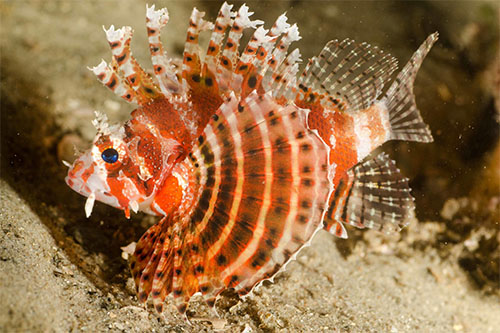 짧은날개쏠배감펭. Dwarf lionfish(Dendrochirus brachypterus). Location/Port Stephens, New South Wales, Australia. Author/Ian Shaw. |
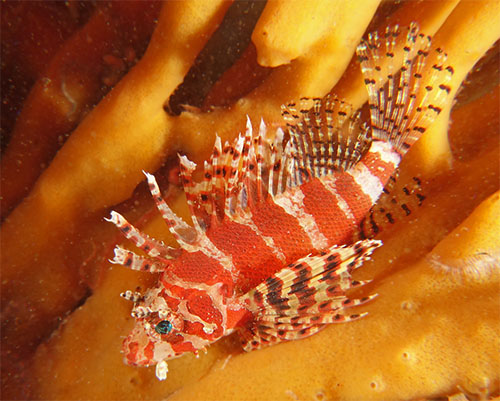 짧은날개쏠배감펭. Dwarf lionfish(Dendrochirus brachypterus). Author/John Turnbull. |
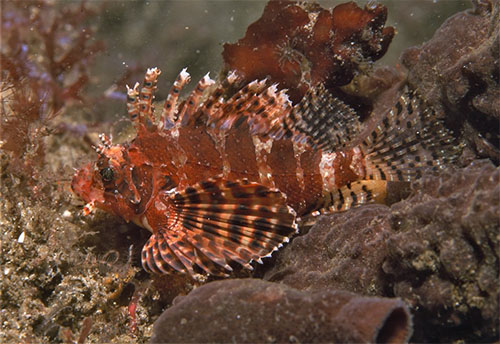 짧은날개쏠배감펭. Dwarf lionfish(Dendrochirus brachypterus). Location/Kurnell, New South Wales, Australia. Author/John Sear. |
 [좌우 사진]. 짧은날개쏠배감펭의 등지느러미 가시 기조 모습. [left and right]. The appearance of dorsal fin spine of Dwarf lionfish. Cropped from the photos of Ian Banks and John Sear. Edited by fishillust.com. |
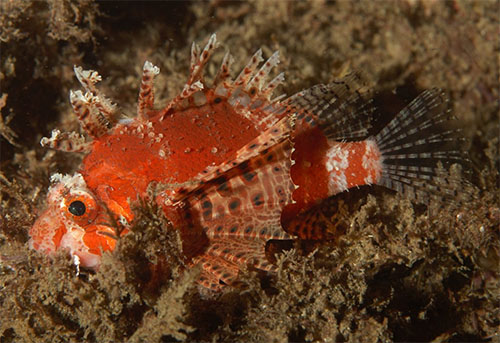 짧은날개쏠배감펭. Dwarf lionfish(Dendrochirus brachypterus). Location/New South Wales, Australia. Author/John Sear. |
 짧은날개쏠배감펭. Dwarf lionfish(Dendrochirus brachypterus). Location/Chowder Bay, Sydney Harbour. Australia. Author/Graham Short. |
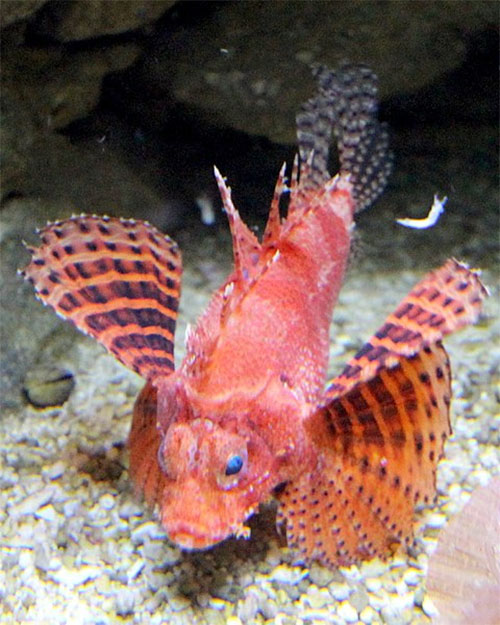 짧은날개쏠배감펭. Dwarf lionfish(Dendrochirus brachypterus). Location/Leipziger Zoo. Author/Colling-architektur. |
 짧은날개쏠배감펭. Dwarf lionfish(Dendrochirus brachypterus). Location/Lembeh Strait, Sulawesi, Indonesia. Author/Graham Edgar. |
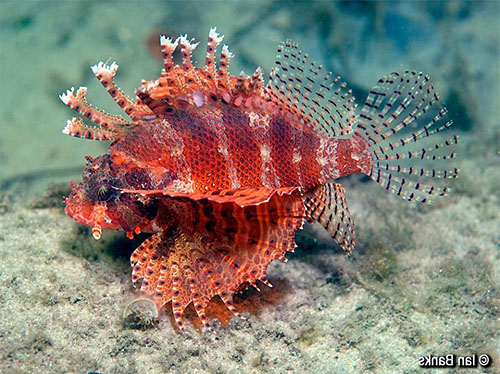 짧은날개쏠배감펭. Dwarf lionfish(Dendrochirus brachypterus). Location/Gold Coast Seaway QLD Australia. Author/Ian Banks. |
| text on preparation |
| text on preparation |


|
| Copyright ⓒ FISHILLUST.COM All rights reserved. All contents can not be used without permission of the copyright holder. |


 검색
