
사이트 로그인
사이트 로그인
분류계통/경골상강→조기강→뱀장어목→붕장어과 붕장어과(弸張魚科) Family Congridae(Conger and garden eels). 몸은 앞쪽이 원통형이며 뒤로 가면서 측편되었다. 머리와 입이 크다. 꼬리 길이가 머리와 몸통을 합한 길이보다 길다. 붕장어과 장어는 모두 눈이 상대적으로 크고 전비공은 튜브 형이며 후비공은 머리 측면 눈 앞에 있다. 위, 아래 입술의 테두리가 발달하여 있다. 아가미구멍은 작고 일자형이다. 지느러미에 가시 기조는 없다. 등지느러미와 뒷지느러미는 꼬리지느러미와 연속적이다. 배지느러미가 없다. 몸에 비늘이 없다. 가슴지느러미는 대부분 갖고 있다. 등지느러미의 기점은 아가미구멍 위치에 있거나 약간 뒤쪽에 있다. 측선은 뚜렷하다. 이빨은 강하고 크지 않은 편이며 양턱과 입 천장에 작은 이빨들이 띠 모양으로 놓여있다. 새피막은 8-22 개, 척추골 수는 105-225 개이다. 대부분 회색이며 밝은 색상을 가진 경우는 드물다. 가든일 종류는 저서 생활은 하며 90 m 수심까지 발견된다. 일반적으로 낮에는 모래 바닥을 꼬리부터 파고 들어가 숨어 있다가 야간에 나와서 돌아다닌다. 일부 다른 뱀장어류와 달리 번식을 위해서 먼 거리로 이동하지 않는다. 붕장어과는 물론 뱀장어목 안에서 가장 큰 뱀장어는 유럽붕장어(European conger; 학명/Conger conger)이며 최대 기록은 전장 300 cm에 중량 160 kg.에 달한다. 갑각류와 작은 물고기를 잡아먹는다. 가든일 Garden eels(Heterocongrinae) 붕장어류 자어(렙토세팔루스)의 특이한 행동.
붕장어과의 한국 분포 6속 11 종. Korea distributing 6 genera 11 species in Family Congridae |
Congridae(Conger and garden eels). Garden eels(Heterocongrinae) Characteristic behavior of Conger Leptocephali(larvae) |
 Left/꾀붕장어 유어. Juvenile Silvery conger(Ariosoma anago). Author/Philippe Bourjon. Right/검붕장어. Beach conger(Conger japonicas). Author/yamakk ※그러나 2018년 7월 분류학 전문매체(ZOOTAXA와 Magnolia Press)에 검붕장어는 붕장어(Whitespotted conger; Conger myriaster)의 동종이명이라는 논문이 발표되어 있다. ※However, in July 2018, a paper was published in the taxonomic media(ZOOTAXA and Magnolia Press), saying that Beach conger(Conger japonicus) is a synonym of whitespotted conger(Conger myriaster). |
 꾀붕장어 묘사도. Illustration of Silvery conger(Ariosoma anago). Date/1878. Author/C. Achilles |
 바드 샌드 콩거 묘사도. Illustration of Barred Sand-conger(Ariosoma fasciatum). Date/1871. Author/G.H.Ford |
 모래밭에 들어가 머리만 내놓고 있는 바드 샌드 콩거. Bard Sand Conger(Ariosoma fasciatum) shows only his head from burrow in sand bed. Locality/Bali, Indonesia. Author/Scott Johnson |
 Left/라지투스 콩거 묘사도. Illustration of Large-toothed conger(Bathyuroconger vicinus). Date/1888. Author/Bideault Right/암초 틈바구니에 숨어있는 유럽 붕장어. Hiding in reef crack. European conger(Conger conger). Author/Smastapee |
 유럽 붕장어 묘사도. Illustration of European conger(Conger conger). Date/1877. Author/Gervais et Boulart |
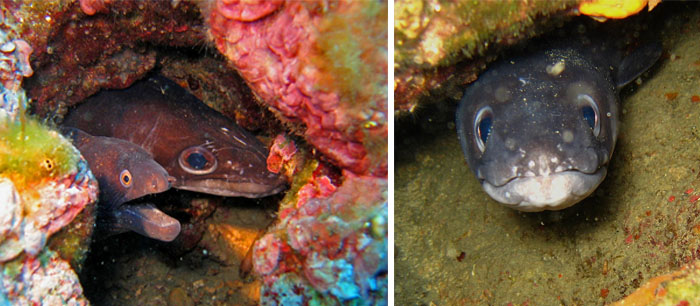 Left/암초의 한 구명에서 곰치(외쪽)와 유럽붕장어(오른족)가 동거하고 있는 모습 European conger(Conger conger) at left and a moray eel(right) in one hole, at the Protected Marine Area of Portofino in Italia. Author/Hectonichus Right/암초의 구명에서 머리를 내보이고 있는 유럽붕장어. European conger(Conger conger). showing its head out of a hole in the reef. European conger(Conger conger). Localit/Italia. Author/SUBnormali Team |
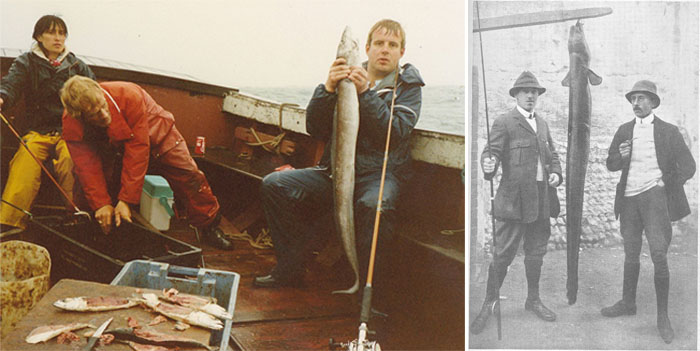 Left/어부가 잡은 대형 유럽붕장어. Date/2013. Large conger caught in Ireland. Author/Peter van der Sluijs Right/1913년 영국 스포츠 낚시 대회에서 잡힌 거대 유럽붕장어. Great European Conger caught in British Sport Fishing competition. Date/1913. Length/2.1m. weight/30kg. Author/Charles Frederick Holder(1851–1915) |
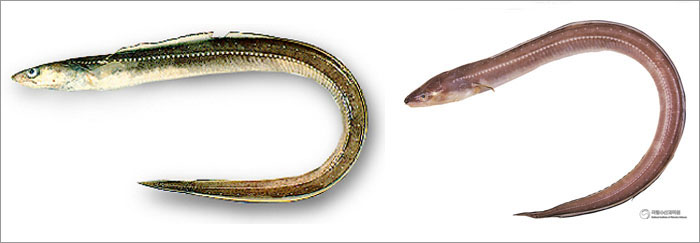 붕장어. 죽은 개체 사진. Dead specimens of Whitespotted conger(Conger myriaster). Author/left; fao, right; nifs(국립수산과학원). |
 Left/붕장어. Whitespotted conger(Conger myriaster). Location/Suma Aqualife Park, KOBE, japan. Author/OpenCage Right/붕장어. Whitespotted conger(Conger myriaster). Video capture image. Author/Nesnad |
 Left/케이프 붕장어. Cape conger(Conger wilsoni). Collection/Auckland War Memorial Museum. Artist/Tom Trnski Right/케이프 붕장어 묘사도. Illustrated Cape conger(Conger wilsoni). Date/1921. Author/Edgar Ravenswood Waite(1866–1928) |
 트레와와스 붕장어 죽은 개체. Dead specimen of Trewawas conger(Rhynchoconger_trewavasae). Location/Balochi, Pakistan. Author/Osmany, Hamid Badar |
 황붕장어 죽은 개체. Dead specimen of Yellow conger(Rhynchoconger flavus). Location/Gulf of Mexico. Author/NOAA |
 Left/스폿티드 가든 일. 수족관 사진. Spotted garden-eel(Heteroconger hassi). Aquarium image. Location/Taiwan. Author/廖俊斌 Center/노란 가든 일. Yellow garden eel(Heteroconger luteolus). Author/Marco Almbauer Right/홍해 가든 일. Red Sea Garden Eel(Gorgasia sillneri). Author/Bernd |
t 코브라 가든 일(Cobra garden eel/Heteroconger cobra). 스폿티드 가든 일(Heteroconger hassi)과 혼동된 자료들이 발견된다. Cobra garden eel(Heteroconger cobra). Materials confused with Spotted garden-eel(Heteroconger hassi) are found. Locality: Solomon Islands. Author/Randall, J.E. , |
 Left/스플렌디드 가든 일. 수족관 사진(일본) Splendid garden eel(Gorgasia preclara). Location/Shinagawa Aqua, Japan. Author/Opencage. Right/타이완 가든 일. Taiwan garden eel(Gorgasia taiwanensis). Author/Izuzuki |
 스플랜디드 가든 일. Splendid garden eel(Gorgasia preclara). Location/Kyoto Aquarium. Author/Color-bear |
 스폿티드 가든 일. COEX 수족관 사진. 위쪽 검은 배경에 떠 있는 것들은 새우고기과(Centriscidae)의 면도날고기(razor-fish)들이다. Spotted garden-eel(Heteroconger hassi). COEX Aquarium, Seoul. Those floating in upper black background are razor-fishes in family Centriscidae. Author/salamander724 |
 바네스 가든 일. Barnes' garden eel(Gorgasia barnesi). Author/Nhobgood |
 Left/일본 오사카 회전초밥 식당의 붕장어 구이. Conger dish at a conveyor-belt sushi restaurant in Osaka, Japan. Author/bryan from Taipei Center/붕장어 백색 구이. White grilled conger eel. Author/ayustety Right/붕장어가 위에 덮인 도시락. Lunch box topped with conger eel. Author/pelican from Tokyo |
 Left/붕장어 초밥. Conger eel sushi. Author/Daisuke FUJII Center/붕장어 파이. Conger pie. Author/Man vyi Right/붕장어 파이 요리 과정 중 붕장어를 버터와 함께 후라이 시키기. Frying conger in butter for filling of conger pieConger pie. Author/Man vyi |
 붕장어의 매우 어린 유생인 렙토세팔루스 요리. Dish of raw Leptocephalus of Conger myriaster. Author/Yamaguchi Yoshiaki from Japan. |


|
| Copyright ⓒ FISHILLUST.COM All rights reserved. All contents can not be used without permission of the copyright holder. |


 검색
 붕장어과의 한 자어(렙토세팔루스)가 몸을 돌돌 마는 동작 사진의 동영상 중 캡쳐된 장면. 왼쪽은 몸을 말기 시작한 순간, 우측은 완전이 만 순간. Scenes captured from video picture; a reptocephalus of a conger eel species curls its body like a coil; left is starting moment of curling; right is completed moment. Source/Museum Victoria/https://www.youtube.com/watch?v=ok8MW4pdPXI
