
사이트 로그인
사이트 로그인
|
경골상강→조기강→앨퉁이목→솔니앨퉁이과 Superclass Osteichthyes(bony fishes)→Class Actinopterygii→order Stomiiformes→Family Gonostomatidae(Bristlemouths)
솔니앨퉁이과 Family Gonostomatidae 솔니앨퉁이과 종들은 웅성선숙(雄性先熟/protandrous) 형이며 자웅동체로 태어나서 먼저 수컷으로 살아가다가 일부가 암컷으로 변한다. 몸은 길고 크기는 2~30cm 사이이다. 평균 7.5 cm이다. 몸이 심하게 옆으로 납작한 경우는 없다. 눈은 작으며 주둥이가 짧고 입은 크고 양턱이 크다. 솔입앨퉁이류의 수컷들은 암컷보다 작다. 기름지느러미가 있는 것도 있고 없는 것도 있다. 등지느러미의 기점은 뒷지느러미의 기점과 위치가 같다. 뒷지느러미 기조 수는 16-68 개, 새피복(새조골) 수는 12-16 개이며 이중에서 4-6개는 목뿔뼈작은뿔(epihyal)의 후단부에 있다. 새조골의 발광포는 8-16 개이며 협부(isthmus.)에 있다.- 이 물고기들은 녹색이나 적색의 빛을 내는 발광기관이 몸과 머리 밑 부분에 줄지어 있다. 대부분 종들의 체형은 동일하며 종들 간의 차이는 몸 색소의 많고 적음과 발광포의 크기에 있다. 솔니앨퉁이류들의 생체 발광은 먹이를 발견하는 데 쓰이거나 또는 포식자로부터 은폐하는데 이용되거나 한다. 그러나 가장 공통적인 것은 사람들이 나이트클럽에서 춤을 추거나 밝은 색 옷을 입거나 해서 차이를 나타내듯이 그들 사이에 신호를 보내는 것이다. 솔니앨퉁이류들의 몸색은 대부분 검은 색이며 때에 따라 반투명 색을 나타낸다. 검은 몸색은 깊은 수심의 어두운 물 속에서 포식자의 눈을 피하는 위장색이다. 솔니앨퉁이류들의 턱은 자신보다 더 큰 먹이를 잡을 수 있을 정도로 크다. 그러나 아래 턱을 보면 먹이를 물 수 있는 기능은 없어 보이며 먹이를 꼬리 쪽에서부터 삼켜버리는 방식을 쓰는 것으로 보인다. 자신의 몸 크기가 작음으로 주로 동물플랑크톤과 작은 갑각류를 먹는다. 크기가 7cm 이상 되는 것들은 작은 물고기도 먹을 수는 있다. 주야간에 따라 수직 이동을 하는데 야간에는 먹이가 더 많은 얕은 수심으로 이동한다. 몸에 송과체(pineal organ/松果體/솔방울샘; 뇌 속에 있는 솔방울 모양의 내분비 기관)가 있어서 느리게 변하는 주변 광의 차이를 감지할 수 있으며 이를 이용하여 체내시계와 계절적 행동을 조절할 수 있다. Family Gonostomatidae(Bristlemouths) Bristlemouths are protandrous, therefore a male first hermaphrodite. They begin their lives as males and some of them switch to female. They have elongated bodies from 2 to 30 cm in length with average size of 7.5 cm. Never extremely compressed. With or without adipose fins. Small eyes, short snouts, large mouths, and large jaws. Male bristlemouths are smaller than females. The position of the dorsal fin begins in line with the anal fin. Anal fin rays 16-68. Branchiostegal rays 12-16; 4-6 on epihyal(= posterior ceratohyal). Branchiostegal photophores 8-16. Photophores present on isthmus. The difference between bristlemouths species is found in the intensity of their pigmentation and photophore size. For the majority of the species, the morphology remains the same. They have a number of green or red light-producing photophores aligned along the undersides of their heads or bodies. Bristlemouths rely on their bioluminescence for different outcomes. Some rely on it to find prey while others use it to avoid predation. However, the most common way that their bioluminescence is used is to signal between fish in the same way people "dance or wear bright colors at the nightclub." Bristlemouths have large jaws that are capable of catching prey larger than themselves. The lower jaw of the Bristlemouths is not functional in terms of masticating their prey. It is therefore hypothesized that they swallow their prey tail first. Bristlemouths are mostly dark in pigmentation but at times can display translucently. They are typically black in color which provides camouflage from predators in deep, dark waters. They mainly feed on zooplankton and small crustaceans due to their small size. A minor part of their diet is made up of opportunistic encounters with smaller fish. Brislemouths that consume fish prey are found in individuals ranging from 70 mm to 75 mm. Bristlemouths are diel vertical migrators, therefore migrating closer to the surface waters in the nighttime order to find more food. Bristlemouths contain a pineal organ which functions to detect slow changing ambient light. This allows the Bristlemouth to have control over its circadian clock and seasonal behavior. |
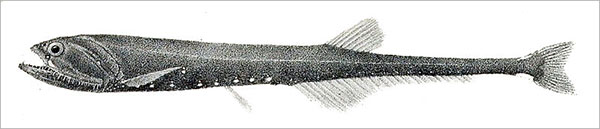 솔니앨퉁이. Slender fangjaw(Sigmops gracilis). Author/R. Mintern |
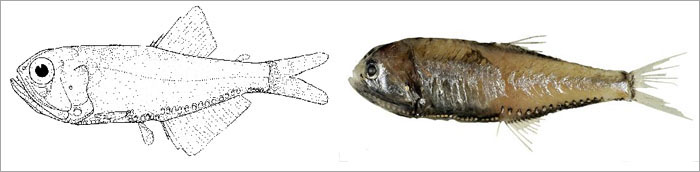
| Left and right/빅헤드 포트홀피시. Bighead portholefish(Margrethia obtusirostra). Author/left; Graham Bould. Right; CSIRO. |
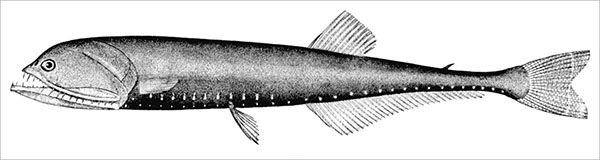 일롱게이티드 브리슬마우수. Elongated bristlemouth fish(Sigmops elongates). Source/NOAA |
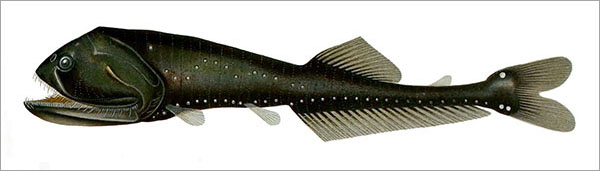 스파크 앵글마우스. Spark anglemouth(Sigmops bathyphilus). Author/Emma Kissling(–1913) |
 리바인스 포트홀피시. Rebains' portholefish(Diplophos rebainsi) Author/GrahamBould |
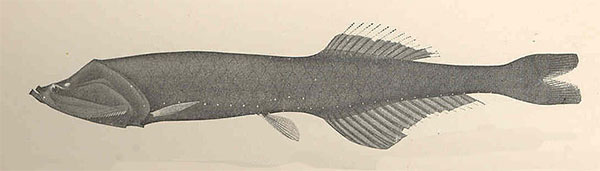 딮워터 브리슬마우스. Deep-water bristlemouth(Cyclothone atraria). Author/Charles Henry Gilbert(1859–1928) |
 롱그레이 팽조우. Longray fangjaw(Bonapartia pedaliota). Source/NOAA |
| text on preparation |


|
| Copyright ⓒ FISHILLUST.COM All rights reserved. All contents can not be used without permission of the copyright holder. |


 검색
