
사이트 로그인
사이트 로그인
분류계보; 경골상강→조기강→큰가시고기목→장갑가시고기과 [담수어] 처음에 발견된 인도스토무스 파라독수스는 일반명이 장갑가시고기(armoured stickleback) 또는 파라독스 피시(paradox fish) 또는 버마 큰가시고기(Burma stichling)라고 불렸다. 형태가 새로워서 장갑가시고기과(family Indostomidae)라는 새로운 과명이 부여되었다. 길이는 3~4cm이며 파이프 피시와 비슷하지만 체고와 체장이 훨씬 작다. 몸이 매우 가늘고 원통형이며 특히 꼬리 쪽으로 가면서 점점 가늘어지다가 꼬리지느러미는 부채꼴이다. 위턱은 앞으로 내밀어지지 않는 고정형이다. 몸이 나무 잔가지처럼 가늘고 딱딱한 인갑(鱗甲)으로 덮여있다. 등에는 각기 거리를 두고 떨어져있는 5개의 가시가 있고 그 뒤의 등지느러미는 6개의 연조로 되어있다. 아가미뚜껑에는 6개 가시가 있다. 뒷지느러미는 6개의 연조, 가스지느러미는 23개 연조 배지느러미는 4개의 연조로 되어 있으며 가시 기조는 없다. 가슴뼈는 없으며 척추골 수는 21개이다. 부레는 소화관(管)과 이어져 있지 않고 폐쇄되어 있는 구조(physoclistic) 이다.. 느리게 움직이며 강이나 늪의 진흙 바닥에서 먹이를 찾아 먹는다. [freshwater fish] The first species was named the armoured stickleback, but is also called paradox fish and Burma stichling. The fish was morphologically unique, so the new family Indostomidae was erected for it. It is 3 to 4 cm in length and much smaller in width and height, similar to the pipefish. The body is extremely thin and cylindrical, especially caudally as it tapers to its thinnest point and ends in a fan-shaped tail fin. Upper jaw non-protractile. The body is thin and twig like, covered in hard scutes, and bears 5 isolated dorsal spines followed by dorsal fin with 6 soft rays. Six spines on its operculum. Anal fin with 6 rays, pectoral fin rays 23, pelvic soft rays 4, all of them without spines. Ribs absent. Vertebrae usually 21. Swim bladder physoclistic. It is a slow-moving, bottom-feeding fish that picks for food in the mud of swamps and rivers. |
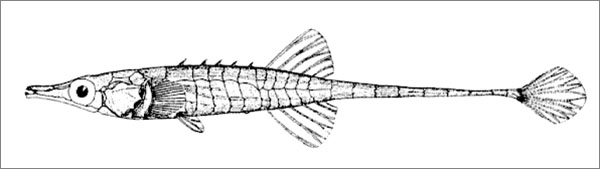 장갑가시고기과의 파라독스 피시. Paradox fish(Indostomus_paradoxus) in Family Indostomidae(Armored sticklebacks). Author/FAO |
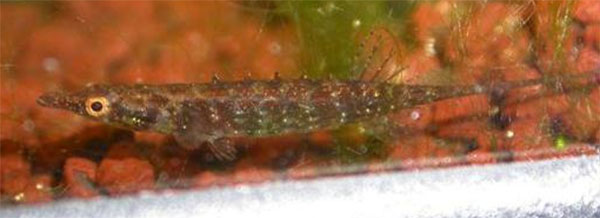 장갑가시고기과의 파라독스 피시. Paradox fish(Indostomus_paradoxus) in Family Indostomidae(Armored sticklebacks). Author/eric |
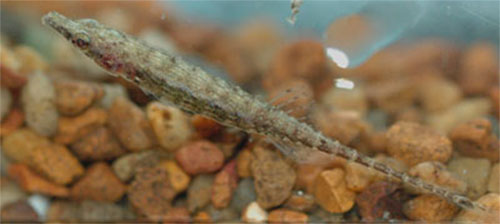 장갑가시고기과의 파라독스 피시. Paradox fish(Indostomus_paradoxus) in Family Indostomidae(Armored sticklebacks). Author/Frank M. Greco |


|
| Copyright ⓒ FISHILLUST.COM All rights reserved. All contents can not be used without permission of the copyright holder. |


 검색
