분류계통/경골상강→조기강→뱀장어목→바다뱀과
Superclass Osteichthyes→Class Actinopterygii→Order Anguilliformes→Family Ophichthidae(Snake eels).
바다뱀과. Family Ophichthidae(Snake eels).
※[한국명 “바다뱀”이 일으키는 혼란/The confusion in Korean names of Snake eels]. 바다뱀과의 대표적인 영명은 “snake eels”인데 이를 직역하면 “뱀-장어”가 된다. 이렇게 되면 흔히 우리가 알고 있는 한국명 “뱀장어(뱀장어과)”와 혼돈이 일어난다. 영명에서는 바다뱀과(科) 외의 다른 뱀장어들에게는 뱀(snake)이란 말을 적용하지 않으며 “장어(eel)”라는 용어만 쓴다. 예를 들어 Freshwater eels, European eel, Moray eels, Cutthroat eels, garden eels 등이다. 그리고 “바다뱀”이란 한국명은 파충류 바다뱀과도 큰 혼동을 일으킨다. 바다뱀과의 영명 “Snake eels”은 “뱀처럼 생긴 장어”로 이해되어 무리가 없지만 한국 명 “바다뱀”은 “장어”라는 뜻이 배제되어 있어서 별도의 설명이나 “주의”를 첨부하지 않으면 바다에 사는 파충류 뱀과 구별이 안 되는 것이다. 아이러니하게도 국명이 아닌 속명(俗名)에서는 “장어 구이”, 장어 덮밥”, “장어 요리”등으로 말함으로 “뱀”과 충돌이 이어나지 않는다. 어떤 기사에서 보면 낚시꾼이 매우 큰 갯장어를 잡고서 기뻐하다가 그것이 “바다뱀”이라고 알려주는 사람이 있어서 즉시 바다에 버렸다는 일화가 소개되어 있다. 필자는 편의상 아래 설명에서 바다뱀을 “바다뱀-장어”라는 용어와 병용하겠다.
바다뱀과에는 세계에 62속 330종 한국에 7속 15종이 알려져 있다. 전 세계 열대와 온대 바다에 걸쳐 분포한다. 바다뱀과의 학명 “오피크티디(Ophichthidae)"의 어원은 그리스어의 ophis(serpent/뱀)와 ichthys(fish/물고기)이다. 즉 “뱀처럼 생긴 물고기”이다. 뱀처럼 길고 원통형으로 생긴 모습을 이름에 표현한 것이다. 바다뱀-장어들은 몸에 점 무늬나 줄무늬를 가진 것들이 있는데 이는 독이 강한 파충류 바다뱀의 모양을 의태해서 포식자로부터 공격받지 않으려는 수단이다. 바다뱀-장어는 연안의 얕은 바다에서부터 수심 약 800 m까지 발견되며 심지어는 강에서도 발견된다. 대부분 바닥에서 살며 펄과 모래 속에 숨어있다가 작은 물고기와 갑각류를 잡아먹는다. 그러나 회유성인 종도 있다. 크기는 5 cm에서부터 최대 2.5 m까지(또는 그 이상) 있다.
등지느러미와 뒷지느러미가 있는 것도 있고 없는 것도 있다. 많은 종들이 지느러미가 없거나 부족한데 이는 벌레처럼 땅을 파고 들어가는데 유리하다. 꼬리의 끝은 지느러미가 없이 딱딱한 골질에 뾰족한 것들이 있고 꼬리지느러미가 있는데 등지느러미, 뒷지느러미와 중합된 것들이 있다. 바다뱀-장어의 꼬리지느러미와 뾰족한 주둥이는 바닥에 구멍을 파는 데 유리하게 적응된 것이다. 이 두 기관을 이용해서 전진하며 구멍을 파거나 후진하면서 구멍을 판다.
바다뱀-장어의 눈은 대개 작으며 입 위에 있다. 주둥이는 뾰족한 것들이 많으며 지붕의 처마처럼 아래턱 위 앞으로 나와있다. 같은 쌍의 두 콧구멍은 서로 멀리 떨어져 있다. 앞콧구멍은 튜브형이며 뒷콧구멍 대개 윗입술 범위 안에 있거나 윗입술을 뚫고 구멍이 입 안으로 들어가 있다. 혀는 부착되어 있다. 아가미구멍은 체측 가운데에 있거나 몸의 밑면에 있다. 새조골 수는 양측에 각각 15-49 개가 있고 복부 중심에서 서로 겹쳐저 바구니 모양은 이룬다. 이 구조를 전문용어로 쥬고스테갈리아(Jugostegalia) 라고 하며 바다뱀과에만 있는 구조이다. 신경가시(neural spines)는 있는 경우라 해도 발육이 잘 되지 않았다. 설악골(hyomandibulae)은 대개 수직형이지만 후방이나 전방으로 기울어져 있을 수 있다. 가슴지느러미는 있는 것도 있고 없는 것도 있다. 척추골 수는 110-270 개이다. 몸에 비늘이 없다. 측선은 불완전하다. 머리와 몸에 잘 발달된 감각공이 있는 경우가 많다. 바다뱀-장어는 사실 흔히 있으나 대부분의 시간을 모래나 펄 바닥 속에 들어가 있어서 거의 눈에 띠지 않는다. 후각을 이용하여 작은 물고기와 갑각류를 사냥한다. 큰 폭풍이 있을 때는 해변으로 밀려나와 있는 경우도 많다.
바다뱀과 어류의 주요 분류형질로 이용되는 기준에는 이빨의 수와 모양과 배열 형태, 머리 감각공의 수와 분포 형태, 등지느러미 기점의 위치, 체색 등이 있다. 꼬리지느러미의 유무에 따라 갯물뱀아과(Myrophinae), 바다뱀아과(Ophichthinae)로 구분된다. 갯물뱀아과는 꼬리지느러미가 있고 바다뱀아과는 꼬리지느러미가 없다. 특히 바다뱀아과의 꼬리지느러미 없이 단단하고 강한 꼬리는 모래나 펄 바닥에 파고들어가는데 잘 적응되었다.
한국에 분포하는 바다뱀과 15종 명단.
Korea distributing 15 species in Family Ophichthidae
1. 자물뱀(Purple snake eel).Brachysomophis porphyreus(Temminck & Schlegel, 1846)
2. 날붕장어(Finned worm eel). Echelus uropterus(Temminck & Schlegel, 1846)
3. 갯물뱀(Shortfin Eel 短鰭蟲鰻). Muraenichthys gymnopterus(Bleeker, 1853)
4. 돛물뱀(Highfin snake eel). Ophichthus altipennis(Kaup, 1856)
5. 제주바다뱀(Asakusa Snake Eel no English name). Ophichthus asakusae(Jordan & Snyder, 1901)
6. 긴꼬리물뱀(Short-tailed snake eel). Ophichthus brevicaudatus(Chu, Wu & Jin, 1981)
7. 물방울바다뱀장어(Blotched snake-eel). Ophichthus erabo(Jordan & Snyder, 1901)
8. 까치물뱀(Evermann's snake eel). Ophichthus lithinus(Jordan & Richardson, 1908)
9. 둥근물뱀(no English name). Ophichthus rotundus(Lee & Asano, 1997)
10. 갈물뱀(Manetail snake eel). Ophichthus urolophus(Temminck & Schlegel, 1846)
11. 바다뱀(Big-nosed sand snake eel). Ophisurus macrorhynchos(Bleeker, 1853)
12. 돌기바다뱀(Longfin snake-eel). Pisodonophis cancrivorus(Richardson, 1848)
13. 상주물뱀(Korean Snake eel). Pisodonophis sangjuensis(Ji & Kim, 2011).
14. 동해물뱀(Misaki worm eel). Scolecenchelys aoki(Jordan & Snyder, 1901)
15. 가는물뱀(Dark-throat worm eel). Scolecenchelys fuscogularis(Hibino, Y. Kai & Kimura, 2013)
|

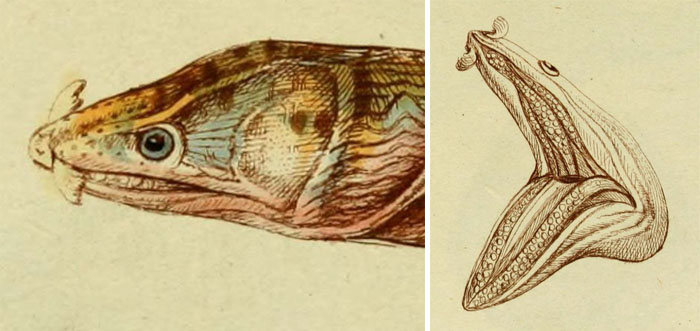 이름이 페인티드 장어(종명/Echelus myrus)인 바다뱀의 머리와 입 구조. 앞콧구멍(전비공)이 튜브형이며 일반 물고기처럼 주둥이 위에 있지 않고 윗압술에 있다. 뒷콧구멍은 튜브형이 아닌 단순이 뚫린 구멍이며 역시 윗입술에 있거나 윗입술을 뚫고 구멍의 입구가 입 안쪽을 향하고 있거나 하다. 그래서 그림에 표시되지 않은 것 같다.
 모래 굴에서 머리만 내놓고 있는 바다뱀들 Snake eels showing their heads out of the sand burrow. [Left)] 돛물뱀(한국명), Highfin Snake Eel(Ophichthus altipennis), author/Mark Rosenstein. [Center] 나폴레옹바다뱀, Napoleon snake eel(Ophichthus bonaparti) Author/Rickard Zerpe. [Right] 블랙새들 바다뱀, Blacksaddle Snake Eel(Ophichthus cephalozona). Author/Stefan Brending
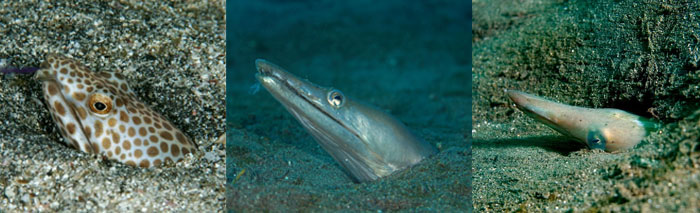 모래 굴에서 머리만 내놓고 있는 바다뱀들 Snake eels showing their heads out of the sand burrow. [Left] 물방울바다뱀장어(한국명), Blotched snake-eel(Ophichthus erabo), Author/Izuzuki. [Center] 바다뱀(한국명), Big-nosed sand snake eel(Ophisurus macrorhynchos), Author/Izuzuki. [Right] 바다뱀(한국명), Big-nosed sand snake eel(Ophisurus macrorhynchos), Author/RYO SATO.
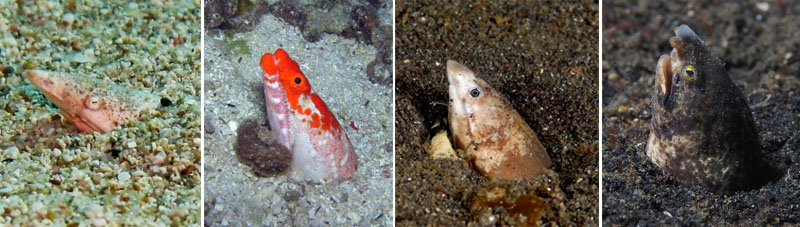 모래 굴에서 머리만 내놓고 있는 바다뱀들 Snake eels showing their heads out of the sand burrow. 좌로부터(from left) [No.1] 무지느러미 유럽바다뱀, European finless eel(Apterichtus caecus). Author/Roberto Pillon. [No.2] 악어바다뱀. Crocodile snake eel(Brachysomophis crocodilinus). Author/Silke Baron. [No.3] 검정바다뱀. Black snake eel or Kuro-umihebi(Callechelys kuro). Author/Izuzuki. [No.4] 마블드바다뱀. Marbled Snake Eel(Callechelys marmorata). Author/Rickard Zerpe
 필라리아 바다뱀, 학명/Bascanichthys filaria. Date/1873. Author/Julius Brenchley(1816–1873)
 중국바다뱀, 中國鬚蛇鰻, Chinese snake eel(Cirrhimuraena chinensis). Date/1864. Artist/L. Speigler & C.W. Mieling
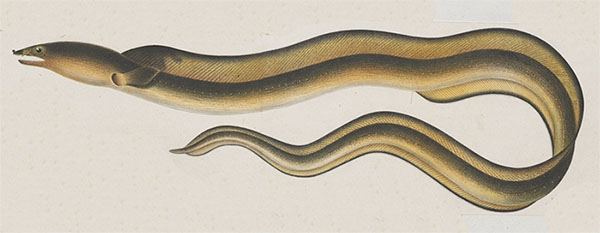 돛물뱀(한국명), Highfin snake eel(Ophichthus altipennis). Date/1864. Artist/L. Speigler & C.W. Mieling
 Left/샤프테일 장어. Sharptail eel(Myrichthys breviceps). Author/Barry Peters.`Right/물방울바다뱀장어(한국명). Blotched snake-eel(Ophichthus erabo). Author/Izuzuki
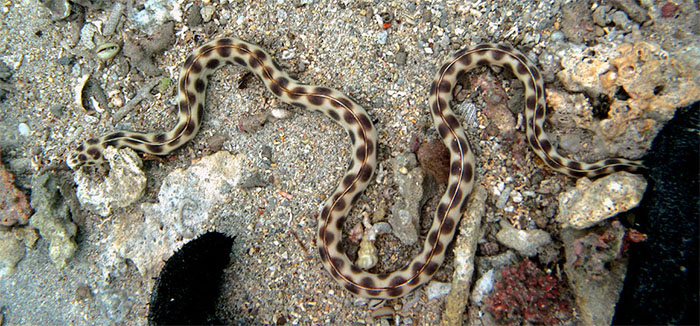 타이거뱀장어, Tiger snake eel(Myrichthys maculosus). Author/Philippe Bourjon
 나폴레옹 바다뱀장어. Napoleon snake eel(Ophichthus bonaparti). Author/Jim Greenfield
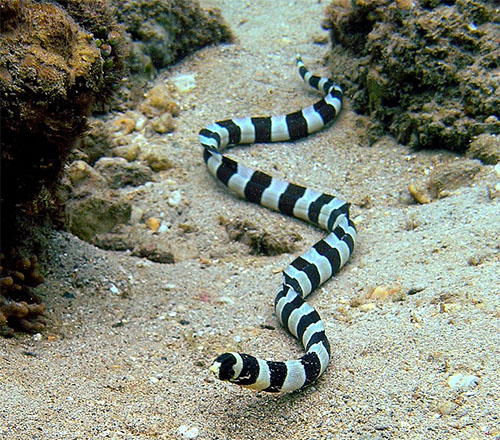 밴디드 스네이크 일. Banded snake eel(Myrichthys colubrinus). 할리퀸 스네이크 일(Harlequin snake eel)이라고도 부른다. 독성이 강한 진짜 바다뱀 Banded sea krait(Laticauda colubrina)와 구별이 안될 정도로 외형이 동일하다. 자기 보호적 의태이다. Also known as Harlequin snake eel. The appearance is indistinguishable from the real toxic banded sea krait(Laticauda colubrina). It is a self-protective mimic. Author/Nhobgood
 좌로부터(from left); [no.1] 마블드 뱀장어. Marbled snake eel(Callechelys marmorata). Date/1911. Author/Bleeker. [no.2] 새들드 뱀장어. Saddled snake-eel(Leiuranus semicinctus). Author/Bleeker. [no.3] 할리퀸 뱀장어. Harlequin snake eel(Myrichthys colubrinus). Date/1911. Author/Bleeker. [no.4] 검은어깨 뱀장어. Dark-shouldered snake eel(Ophichthus cephalozona). Author/Bleeker




 검색
