경골상강/조기강→연어목→연어과
Superclass Osteichthyes(bony fishes)→Class Actinopterygii(ray-finned fishes)→Order Salmoniformes(salmons)→Family Salmonidae(Salmonids)
연어과 Family Salmonidae(Salmonids)
세계에 11속 240종, 한국에 7속 12종이 알려져 있다. 연어와 관련해서 한국인이 유의해야 할 점은 한국명의 “연어”는 여러 종의 연어들 중 한 종(학명/Oncorhynchus keta/영명; Chum salmon)이라는 사실이다. 음식문화에서 보면 한국에서는 연어가 1종인 것처럼 인식되어 있다. 연어류는 북반구에 서식하는 물고기였지만 양식업이나 스포츠 낚시 용으로 전 세계 냉수대에 널리 도입되었다. 많은 종이 소하성 어류(遡河性魚類; anadromous fish)이다. ※바다에서 살다가 산란하러 민물로 들어가는 어류를 소하성어류라 하며 뱀장어 같이 민물에 살다가 바다로 내려가 산란하는 어류는 강하성어류(降下魚類; catadromous fish)라고 한다. 연어류는 강이나 하천 상류로 올라가 자갈밭에 산란하고 나서 거의 모두 죽는다.
연어목(order Salmoniformes)은 연어과(family Salmonidae) 1과로만 구성되어있다. 영어권에서 일반적인 이름인 쌔먼(salmon/연어), 트라우트(trout/송어), 차르(char/Salvelinus 속의 종들), 화이트피시(freshwater whitefishes/Coregonus 속의 종들), 그레이링(grayling/Thymallus 속의 종들) 등은 모두 연어류이며 통틀어서 말할 때는 쌜모니드(Salmonids)라고 한다. 한국 분포종으로 말하면 열목어, 산천어도 연어류이다. 목(Salmoniformes)과 과(Salmonidae)의 이름은 라틴어 “Salmo=same fish”가 어원이며 대서양 연어와 송어들에게 적용된 속명 중 하나가 Salmo 이기도 하다.
연어과 어류는 경골어류 중에서는 상대적으로 원시형이다. 배지느러미가 몸의 뒤쪽으로 멀리 있고 기름 지느러미는 등 뒤쪽으로 있다. 몸은 날씬하며 꼬리지느러미는 안으로 깊게 패인 형이며 비늘은 원형비늘이다. 입에는 예리한 이빨이 한 줄로 나있다. 작은 종은 13 cm 밖에 안되지만 대부분 크기가 크며 최대 2m에 이르는 것도 있다. 아가미 막은 앞쪽으로 깊숙이 들어가 있으며 지협(isthmus)과 분리되어 있다. 배지느러미에 겨드랑이 돌기(axillary process)들이 나있다. 마지막 3개 척추골은 위를 향해 있다. 지느러미에 가시가 없다. 기름지느러미가 있다. 작은 갑각류와 수생곤충, 작은 물고기를 잡아먹는다.
연어목은 경골어 진화계보상 신진골류 중에서는 원시적인 물고기로 그 위 단계 분류항목이 원극기상목(原棘鰭上目; superorder Protacanthopterygii)이며 이 원극기상목에 포함되는(잉어류와 가까운 인척) 어류군으로는 민물꼬치고기목(order Esociformes), 바다빙어목(order Osmeriformes), 샛멸목(order Argentiniformes) 등이 있다. (※본 홈피의 상단 메뉴 “어류의 진화경로” 참조). 연어과는 다음 3개의 아과로 구성되어 있다. 연어아과(Salmoninae/salmons-trouts). 백어아과(Coregoninae/whitefishes), 그레이링아과(Thymallinae/graylings).
연어과 한국 분포 12종 명단.
Korea distributing 11 species list of Salmonidae
1.열목어(Manchurian trout). Brachymystax lenok(Pallas, 1773)
2.우레기(Amur whitefish). Coregonus ussuriensis(Berg, 1906)
3.자치(Korean taimen). Hucho ishikawae(Mori, 1928)
4.곱사연어(Pink salmon). Oncorhynchus gorbuscha(Walbaum, 1792)
5.연어(Chum salmon). Oncorhynchus keta(Walbaum, 1792)
6.은연어(Coho salmon). Oncorhynchus kisutch(Walbaum, 1792). ※도입종(introduced species)
7.송어(cherry salmon Masu salmon). Oncorhynchus masou masou(Brevoort, 1856).
7-1.산천어(cherry salmon Masu salmon). Oncorhynchus masou masou(Brevoort, 1856). ※송어의 육봉형. Land locked species of Oncorhynchus masou masou
8.무지개송어(Rainbow trout). Oncorhynchus mykiss(Walbaum, 1792). ※도입종(introduced species)
9.갈색송어(브라운송어; Brown trout). Salmo trutta(Linnaeus, 1758). ※도입종(introduced species)
10.홍송어(Whitespotted char). Salvelinus leucomaenis leucomaenis(Pallas, 1814)
11.곤들매기(Dolly varden). Salvelinus malma(Walbaum, 1792)
12.사루기(Arctic grayling). Thymallus arcticus(Pallas, 1776)
Family Salmonidae(Salmonids)
11 genera, 240 species worldwide and 7 genera, 12 species in Korea. Salmonidae is a family of ray-finned fish, the only living family currently placed in the order Salmoniformes. It includes salmon, trout, chars, freshwater whitefishes, and graylings, which collectively are known as the salmonids. The Atlantic salmon and trout of the genus Salmo give the family and order their names.
Distribution: Northern Hemisphere, but widely introduced in cold waters for sports and aquaculture. Many are anadromous, spending part of their life at sea, but returning to freshwater where all species spawn in a gravel bed in rivers or streams; most fish die after spawning. Salmonids have a relatively primitive appearance among the teleost fish, with the pelvic fins being placed far back, and an adipose fin towards the rear of the back. They are slender fish, with small rounded scales and forked tails. Their mouths contain a single row of sharp teeth. Gill membranes reaching far forward, detached from isthmus. Axillary process on pelvics. Last three vertebrae directed upward. No spines. Although the smallest species is just 13cm long as an adult, most are much larger, with the largest reaching 2 m.
All salmonids spawn in fresh water, but in many cases, the fish spend most of their lives at sea, returning to the rivers only to reproduce. This lifecycle is described as anadromous. They are predators, feeding on small crustaceans, aquatic insects, and smaller fish. Highly valuable in sport and commercial fisheries.
Together with the closely related Esociformes (the pikes and related fishes), Osmeriformes (e.g. smelts), and Argentiniformes, the Salmoniformes comprise the superorder Protacanthopterygii. The Salmonidae are divided into three subfamilies and around 10 genera. The concepts of the number of species recognised vary among researchers and authorities. Three subfamilies are Salmoninae, Coregoninae and Thymallinae.
|

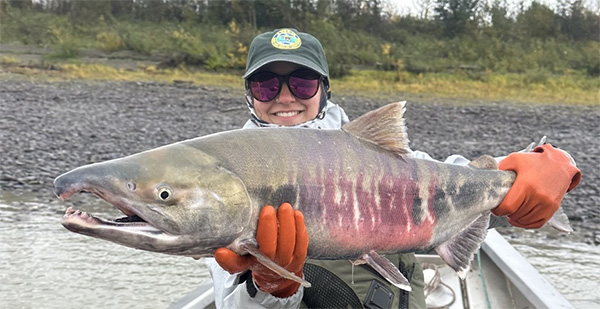 연어(한국 국명). Chum salmon(Oncorhynchus keta). location/Southeast Fairbanks County, Alaska, US. Author/winter_with_a_y(Alaska Department of Fish & Game technician).(CC BY-NC)
 연어(한국 국명). Chum salmon(Oncorhynchus keta). location/Alexander Creek, Matanuska-Susitna Borough, Alaska. Novice fisherman David Warnberg with a nice chum salmon taken at Alexander Creek, Matanuska-Susitna Borough, Alaska. Author/Jack Roberts. U.S. Fish and Wildlife Service.(CC BY-NC)
 바다 생활 기간 중의 연어(한국 국명). Marine-phase of Chum salmon(Oncorhynchus keta). location/Alaska, West Coast. Author/NOAA Fisheries.(CC BY-NC)
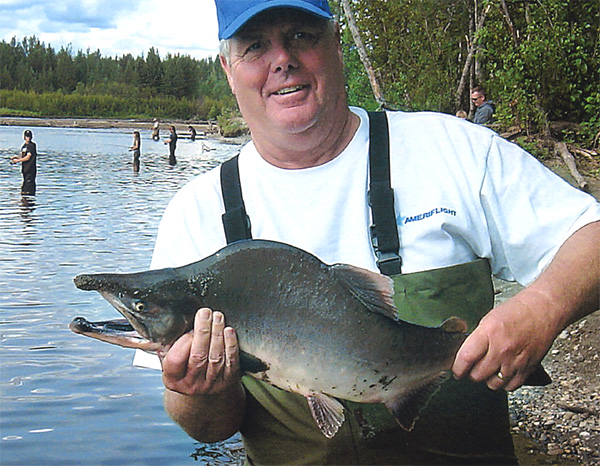 한국명으로 곱사연어. 동해 북부(북한), 베링해, 캐나다, 켈리포니아 북부에 분포한다. 영명은 핑크 쌔먼(pink salmon), 학명/Oncorhynchus gorbuscha. Distribution; North Korea to Bering Sea, Canada and north California. Author/Jack Roberts, U.S. Fish and Wildlife Service.(CC BY-NC)
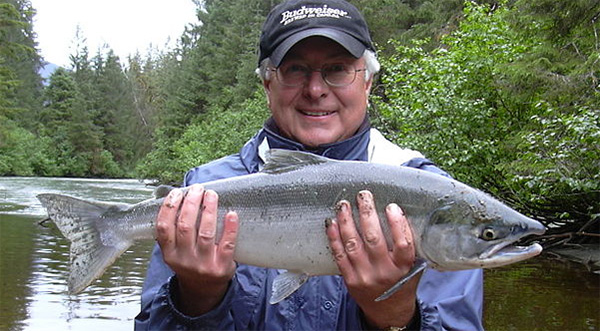 한국에서 불려지는 이름 홍연어(한국분포종 아님). 영명은 소크아이 쌔먼(Sockeye salmon). 학명/Oncorhynchus nerka. 장소/알래스카. 분포지역/일본 북부, 베링해, 로스앤젤레스. Sockeye salmon caught on an Alaskan stream. Author/Jon Warrenchuk Akdude.(CC BY-NC)

 대서양 연어(Atlantic salmon). 대서양 연어류(속명; Salmo) 중 가장 큰 종으로 최대어의 크기가 태평양의 왕연어와 거의 같다(150cm). Atlantic salmon(Salmo salar; Linnaeus, 1758). The longest and heaviest in genus Salmo. Location/Sept-Rivières--Caniapiscau, Québec, Canada. Author/REMY Trafelet, Jr. Original photo flipped. (CC BY-NC)
 은연어. Coho Salmon(Oncorhynchus kisutch). Location/Humboldt County, California, US. Author/antonsrkn. (CC BY-NC)
 산란 행위시에 형태가 변하는 연어의 머리와 입(홍연어, Oncorhynchus nerka의 경우) 왼쪽은 암컷, 오른쪽은 수컷. 수컷은 머리가 더 크고 아래턱과 위턱이 길게 늘어나 있고 위턱 콧등이 갈고리모양으로 휘어져있으며 발달된 강한 이빨이 드러나 있다. 암컷의 머리는 바다에 있을 때의 원래 모양에서 양턱이 약간만 늘어나 있고 이빨도 수컷만큼 발달해 있지 아니하다.




 검색
