
사이트 로그인
사이트 로그인
경골상강→조기강→ 달고기목→ 달고기과 달고기과 Family Zeidae(Dories) 달고기과 6종 명단. 달고기과의 학명 제이데이(Zeidae)는 그리스 신화의 제우스(Zeus)에 어원을 두고 있다. 대서양, 인도양, 태평양에서 발견된다. 2속 6종으로 구성되어 있다. 모든 종이 식용으로 가치가 높아 상업적으로 중요한 위치에 있다. 존 도리(John dory; Zeus faber/한국명; 달고기) 같은 일부 종은 대형 아쿠아리움에서 인기 있는 물고기이다. 달고기과 종들은 주로 대심도 트롤 어업에서 잡힌다. 모든 달고기류는 체형이 대략 원반형이며 옆으로 납작하다. 머리가 크고 머리의 등선이 볼록하지 아니하고 안으로 패이면서 흘러내린다. 입도 크고 민달고기 속(genus Zenopsis)은 입이 유난히 위로 치켜세워져 있다. 달고기류는 양턱이 매우 크고 앞쪽으로 매우 크게 확장되는 구조를 가졌다. 눈은 크고 머리의 꼭대기 쪽 등면에 가깝게 위치해 있다. 눈 뒤에서부터 등쪽으로는 혹처럼 가파르게 높아져 벼슬 같은 등지느러미의 극조부와 만난다. 등지느러미는 2개로 극조부와 연조부로 구분되어 있다. 등지느러미 극조부는 7–10개의 가시 기조로 구성되며 뒤로 갈수록 길이가 짧아진다. 일부 종은 성어가 되면 등지느러미 가시가 긴 필라멘트로 연장된다. 제2등지느러미는 22–37개의 연조로 구성되며 높이가 훨씬 낮고 등면 끝까지 연장되어 있다. 이 연조들은 체형이 원형인 탓에 어쩔 수 없이 기조들의 방향이 수평이다. 뒷지느러미는 앞 부분에 1–4개 가시가 있고 그 뒤로 20–39개의 연조가 있다. 연조부는 시작 점,높이, 방향이 등지느러미의 연조부와 대칭적으로 동일하다. 배지느러미는 가슴팍에 붙어 있고 극조(가시 기조)는 없으며 길이는 매우 길며 뒤쪽에서는 지느러미 막 없이 분리되어 있다. 가슴지느러미는 작고 짧고 둥글며 몸의 아래 쪽에 위치해 있는데 배지느러미 보다 뒤쪽에 있다. 꼬리자루는 가늘고 꼬리지느러미는 작으며 절단형인데 솔 모양(brush-shaped)처럼 보인다. 복부 가장자리에는 8-9개의 모비늘(단단한 골판으로 변한 비늘)이 이어져 있어 무장된 복부 용골 역할을 한다. 모비늘에는 작은 가시가 1개씩 돋아 있다. 등지느러미와 뒷지느러미 기저부에도 비슷한 모양의 작은 가시가 돋친 모비늘이 덮여있다. 아가미뚜껑에는 가시나 톱니 구조 같은 것이 없다. 척추골 수는 29–34개이다. 성어의 아가미갈퀴는 퇴보하였다. 몸에 비늘이 없는 것으로 간주된다. 만약 있다면 퇴화된 미세 비늘이다. 달고기과의 전형적인 체형 특징을 잘 나타내고 있는 종은 실버리 존 도리(silvery John dory; Zenopsis conchifer)이다. 복부 둘레 전체와 등지느러미 기저부 전체에 걸쳐 가시 돋친 방패 비늘이 발달해 있고 등지느러미의 극조부 기조들이 실처럼 연장된 것이 그것이다. 색상 생태; 저서성 물고기로 바닥 위에 붙어 있거나 가깝게 떠있는 것이 기본이지만 중층에 떠 있을 때도 있다. 자주 발견되는 수심은 약 50–800 m 범위이다. 연안에 가까운 대륙붕과 그 사면의 펄 바닥을 좋아한다. 실버리 존 도리(silvery John dory; Zenopsis conchifer) 같은 일부 종은 소수가 느슨한 간격으로 사이를 벌린 무리를 지으며 또 존 도리( (John dory; Zeus faber/한국명 달고기)는 산란기가 아니면 단독 생활을 한다. 달고기류는 헤엄 능력이 저조하다. 쥐치(triggerfish) 방식으로 헤엄치는데 등지느러미와 뒷지느러미가 물결치듯 움직이게 하여 추진력을 얻고 가슴지느러미는 균형을 잡거나 몸을 회전시키는데 사용한다 번식에 관하여는 대체적으로 잘 연구되지 못하였다. 새끼 비보호형, 바닥 살포 형으로 요약된다. 바닥 살포형이란 수많은 작은 알과 정액을 넓은 범위의 바닥에 다량으로 뿌려 놓는 것을 말한다. 수정된 알은 마이너스 부력을 가져서 바닥에 내려 앉아 그 자리에 머문다. 존 도리는 여름에 산란하는 것으로 보이며 미러 도리(Mirror dory; Zenopsis nebulosa, 한국명; 민달고기)는 겨울에 산란하는 것으로 보인다. 미러 도리는 체내 수정을 하고 존 도리는 체외 수정을 하는 것으로 보고되어 있다. 성장 속도는 빠르며 성적으로 성숙하는 데는 3–4 년 걸린다. 달고기과는 그들의 서식처에서는 맨 상위 포식자이며 뚜렷하게 협식성(狹食性; stenophagy)을 보인다. 협식성은 먹이의 선택 범위가 좁은 식성을 말한다. 유어는 동물플랑크톤만 먹으며 성어는 활발하게 무리 지어 다니는 물고기만 먹는다. 성어는 오징어 같은 두족류를 잡아먹기도 한다. 달고기류를 잡아 먹는 포식자에는 큰 상어들과 역시 대륙붕 바닥에 사는 대형 대구류(예/민대구과, Merlucciidae; Merluccid hakes)가 있다. ========================================= Family Zeidae(Dories). 6 Species in Family Zeidae The Zeidae is named after Zeus, the supreme god of Greek mythology). Found in the Atlantic, Indian, and Pacific Oceans, the family contains just six species in two genera. All species are important and highly regarded food fish supporting commercial fisheries, and some—such as the John Dory(Zeus faber)—are enjoyed in large public aquaria. These fish are caught primarily by deep-sea trawling. All dories share the same roughly discoid, laterally compressed body plan. The head is large and sloping to concave in profile; the oblique mouth is also large and in Zenopsis species, it is noticeably upturned. The jaws are massive and highly extensile. The large eyes are situated high on the head and are directed dorsolaterally. There is a perceptible hump in the back beginning just behind the eye; it is topped by a conspicuous, crest-shaped spinous dorsal fin. The dorsal fin consists of two, is divided into spine part and soft ray part. The spine part consists of 7–10 spines, which descend in height towards the posterior. In adults of some species, the dorsal spines are adorned with long, streamer-like filaments. The second dorsal fin(with 22–37 soft rays), much lower than first dorsal fin, extends down the rest of the back, in a slight retrorse direction due to the body's curvature. The anal fin contains 1–4 spines anteriorly and 20–39 soft rays with their height, direction, origin, and terminus mirroring those of the soft dorsal fin. The pelvic fins are thoracic, spineless, and greatly elongated; the rays are free of their membranes distally. The pectoral fins are small, short, and rounded, inserted fairly low on the body and posterior to the pelvics. The caudal peduncle is thin and the caudal fin is small and truncate (brush-shaped). Along the belly are a series of 8-9 spinous scutes(scales modified into hard, bony plates) forming an armoured ventral keel. Each scute with single small spine. Similar scutes also cover the base of the dorsal and anal fins. The opercular bones are free of any spines or serrations. The vertebrae number 29–34, and adults possess degenerate gill rakers. The body is apparently naked; if present, the scales are microscopic or rudimentary. The silvery John dory(Zenopsis conchifer) is typical of the Zeidae, with its scute-covered belly and filamentous spiny dorsal fin. Coloration in life is typically a highly lustrous silver, with younger dories covered in a number of randomly placed dark, dusky spots. These spots tend to fade with age; the largest(and oldest) specimens have only one dark spot, located roughly central on the flanks. In the cape dory(Zeus capensis) this spot is located just below the junction of the spinous and soft dorsal fins; in the John dory the spot is central and surrounded by a yellow ring, with the body also covered in cloud-like splotches of muddy sepia. Zeus capensis and Z. faber are tied as the largest dory species at a maximum 90 centimetres total length, with the other three species only slightly smaller. Life history; As benthic fish, dories are typically found close to or directly over the sea bottom, but occasionally in midwater as well. Depths frequented are moderate, ca. 50–800 metres; muddy substrates are preferred, usually over the continental shelf and slope, near the coast. Some, such as the silvery John dory(Zenopsis conchifer), form small and loose schools; while others, such as the John dory, are generally solitary when not spawning. Dories are poor swimmers; they propel themselves primarily via a balistiform(i.e., like the triggerfish's) mode of locomotion, with the dorsal and anal fins undulating in unison as the main propulsive force and the pectoral fins used for stabilisation and turning. The reproduction of the Zeidae are not well studied as a whole; all are assumed to be non-guarding, substrate scatterers; that is, a large number of tiny eggs and sperm are released en masse and scattered over a wide area. The fertilized eggs are negatively buoyant and sink into the substrate, to which they adhere. Spawning activity appears to peak in the summer months in the John dory, and in the winter months in the mirror dory (Zenopsis nebulosa). In the latter species fertilization is reported to be internal(within the oviduct), whereas in the former species it is external. Growth is rapid and sexual maturity is reached by 3–4 years. The Zeidae are top predators in their habitat and are noted for their marked stenophagy: juveniles feed exclusively on zooplankton. Conversely, adults feed almost exclusively on active schooling fish, such as pearlsides, porgies, young carangids(e.g., mackerels), and clupeids(e.g., sardines and pilchards); and other benthic fish, such as dragonets, gobies, filefish, flatfish, bandfish, and sea chubs; and occasionally on cephalopods such as squid and cuttlefish. Predators of dories include large sharks such as the dusky shark(Carcharhinus obscurus) and other requiem sharks, and larger shelf- and slope-dwelling bony fish, such as merluccid hakes. |
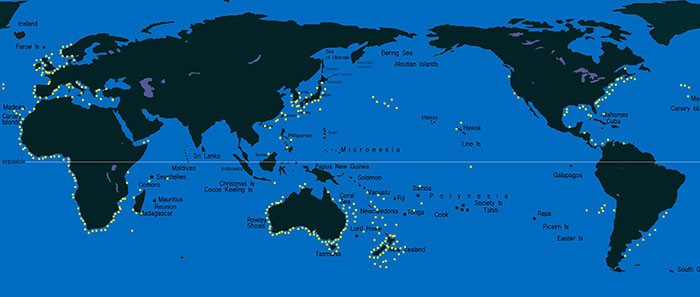 달고기과 분포도. Distribution map of Zeidae(Dories). Edited by Kim in young. |
|
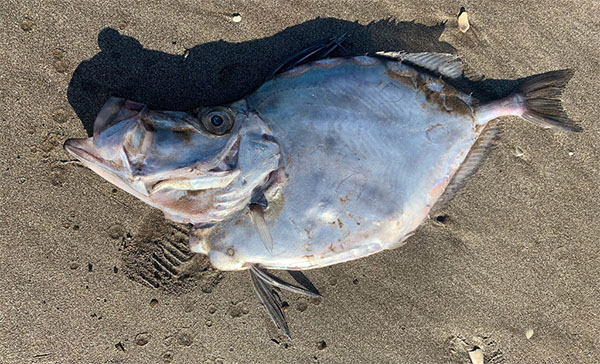 실버리 존 도리. Family Zeidae(dories). Silvery John dory(Zenopsis conchifer). Location/La Costa, Buenos Aires, Argentina. Author/Aleksey. (CC0). |
|
|
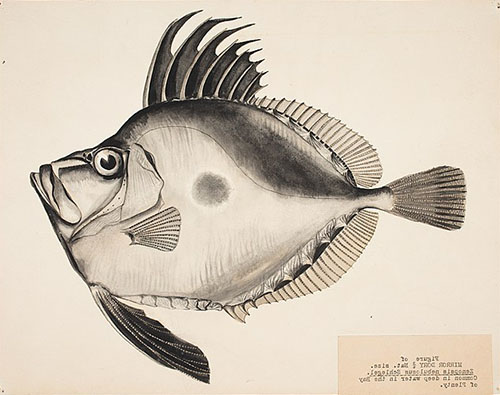 민달고기 묘사도. Illustration of Mirror dory(Zenopsis nebulosa). Distribution/Indo-Pacific. Max length/70.0 cm TL. Location/La Costa, Buenos Aires, Argentina. Creator /Griffin, L. T, artist. Author/Auckland Museum Collections from Auckland, Aotearoa New Zealand.(CC BY-NC). |
|
|
|
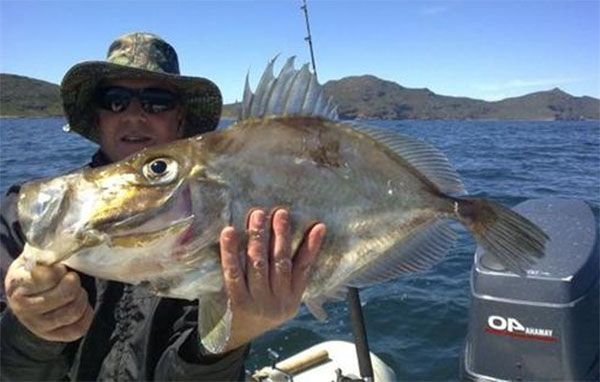 케이프 도리. Cape dory(Zeus capensis). Max length/90.0 cm TL. Distribution/Western Indian Ocean. Location/False Bay, Cape Town, South Africa. Author/Andrew Hoek. (CC BY-NC). |
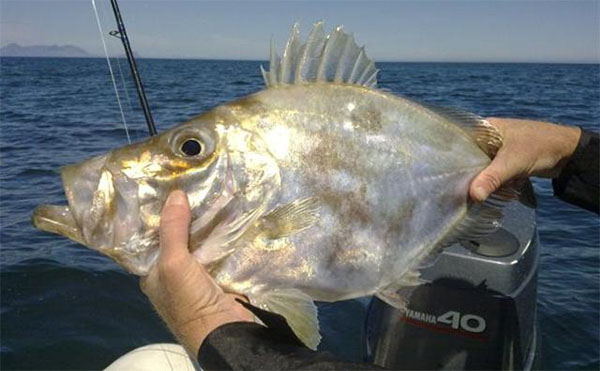 케이프 도리. Cape dory(Zeus capensis). Max length/90.0 cm TL. Distribution/Western Indian Ocean. Location/False Bay, Cape Town, South Africa. Author/Andrew Hoek. (CC BY-NC). |
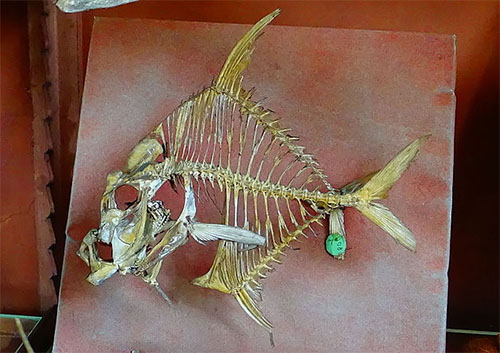 케이프 도리의 해골. Skeleton of Cape dory(Zeus capensis). Location/Natural history museum, Paris(프랑스 국립 자연사 박물관). Author/Loury Cédric. (CC BY-NC). |
|
|
|
|
 달고기 정면에서 본 모습. 수족관 사진. Aquarium photo of John dory(Zeus faber). Front view. Location/Aquarium Finisterrae in A Coruña, Galicia, Spain. Author/Fernando Losada Rodríguez. (CC BY-NC). |
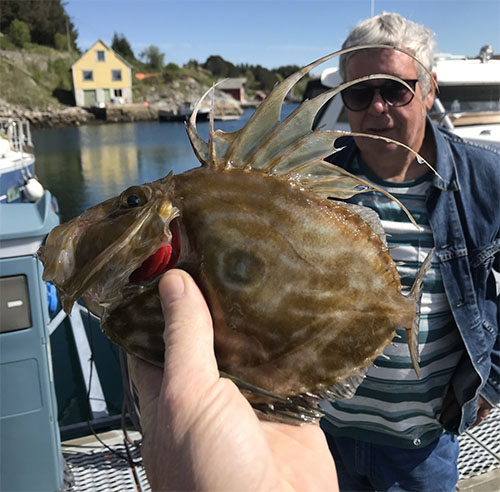 신선한 상태의 달고기. Freshly caught John dory(Zeus faber). Location/Hordaland, Norway. Author/Bernat Garrigós. (CC BY-NC). |
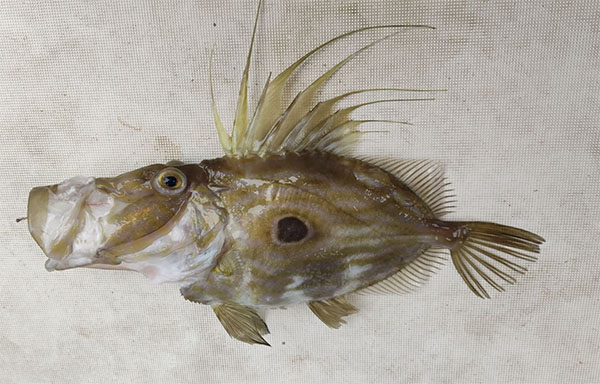 달고기 입을 전방으로 확장시킨 상태. John dory(Zeus faber). A state in which the mouth is expanded forward. Location/Montenegro(몬테네그로 공화국). Author/Павел Несмеянов(CC BY-NC). |
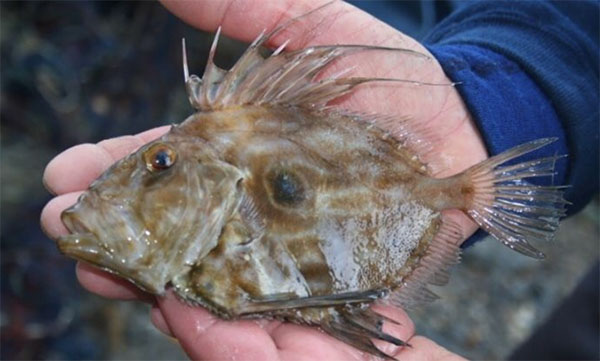
| 달고기 유어. Juvenile of John dory(Zeus faber).. Location/Europe Norway. Author/netromeyr(CC BY-NC). |
|


|
| Copyright ⓒ FISHILLUST.COM All rights reserved. All contents can not be used without permission of the copyright holder. |


 검색
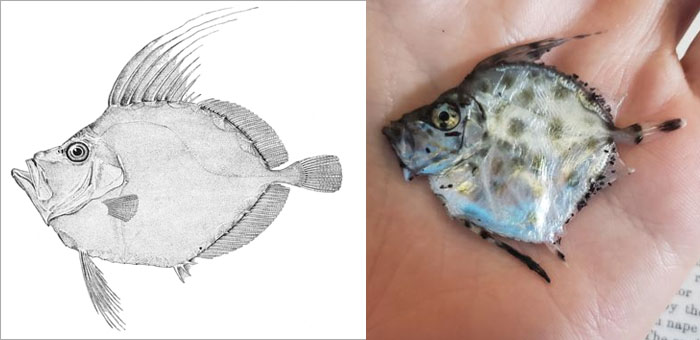 Left/실버리 존 도리 체형 묘사도. Illustration of Silvery John dory(Zenopsis conchifer). Date/1880. Source/Image from the NOAA Photo Library. Max length : 80.0 cm TL. Distribution/Atlantic Western Indian Ocean. (CC BY-NC).
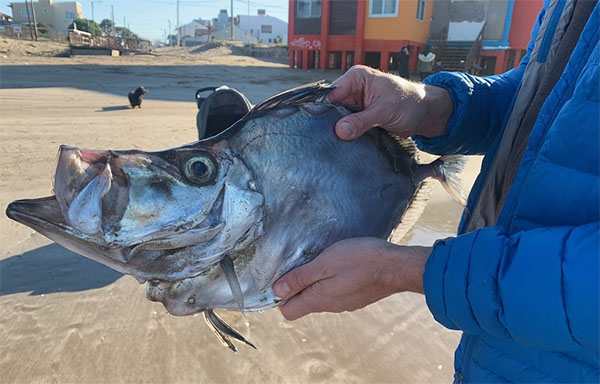 실버리 존 도리. Silvery John dory(Zenopsis conchifer). Location/La Costa, Buenos Aires, Argentina. Author/Aleksey. (CC0).
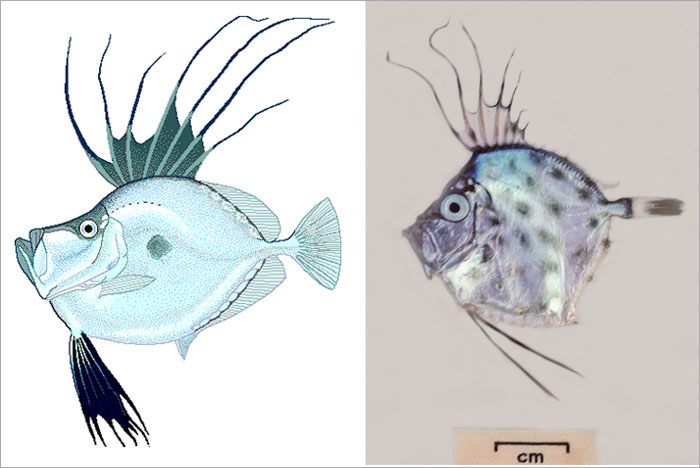 Left/민달고기 묘사도. Illustration of Mirror dory(Zenopsis nebulosa). Drawing by Robbie Cada. (CC BY-NC).
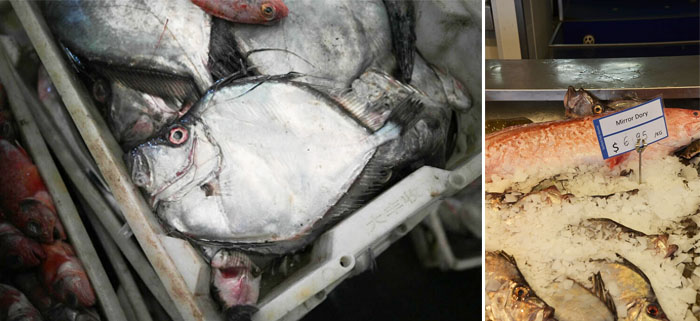 Left/생선시장의 민달고기. Mirror dory(Zenopsis nebulosa) in fish market. Location/中国浙江省台州市(Taizhou City, Zhejiang Province, China). Author/Future. (CC BY-NC).
 픽스드 스파인 미러 도리. Fixed-spine Mirror Dory(Zenopsis stabilispinosa). Distribution/Indo-Pacific. Max length/41.0 cm SL. Source/Australian National Fish Collection, CSIRO. (CC BY-NC).
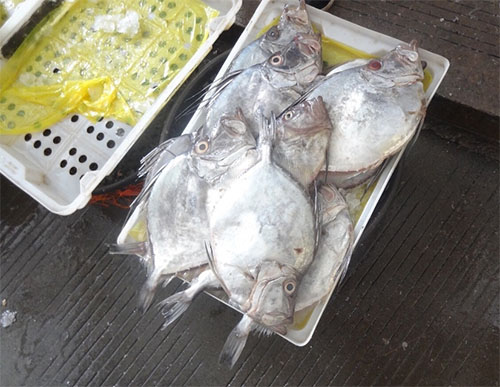 생선 시장의 픽스드 스파인 미러 도리. Fixed-spine Mirror Dory(Zenopsis stabilispinosa) in fish market. Location/wenling, taizhou, zhejiang(중국 저장 성 타이저우 시-台州市). Author/ChenJX. (CC BY-NC).
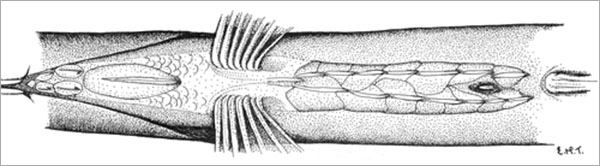 케이프 도리의 복부 묘사도, 협부(가슴)에서부터 뒷지느러미 기점까지. 가슴팍과 복부 양쪽 가장자리에는 8-9개의 모비늘(단단한 골판으로 변한 비늘)이 이어져 있어 튼튼한 복부 용골 역할을 한다. 모비늘에는 가시가 1개씩 돋아 있다. 그림의 모델을 체장(SL) 275mm 크기의 개체이다.
 Left/달고기 묘사도. Illustration of John dory(Zeus faber). Date/1892. Worldwide in distribution. Max length/90.0 cm TL. Author/William MacGillivray
 Left/달고기 수중사진. Underwater photo of John dory(Zeus faber). Location/Girona, Cataluña, Spain. Author/Bernat Garrigós. (CC BY-NC).
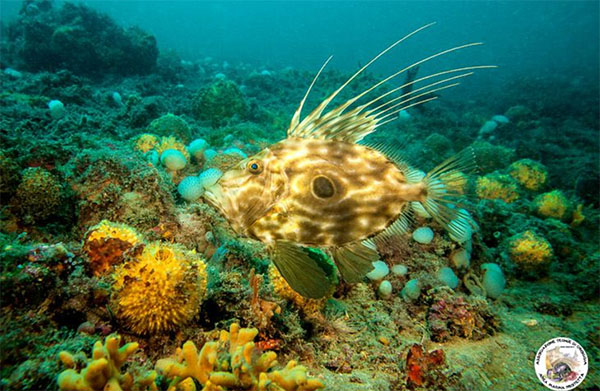 달고기 수중 사진. of John dory(Zeus faber).. Location/Europe Italy. Author/Federico Boscolo. (CC BY-NC).
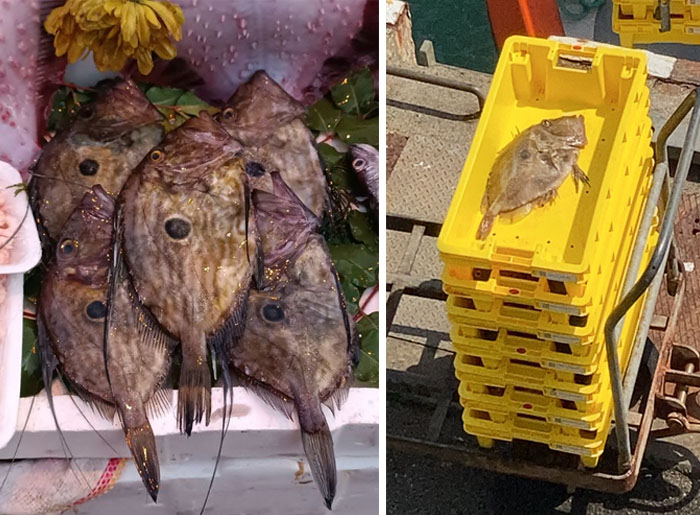 Left/달고기 어시장 사진. John dory(Zeus faber) in the fish market. Location/Europe Türkiye. Author/Koray Öğreten (CC BY-NC).
