
사이트 로그인
사이트 로그인
분류계통/경골상강→조기강→실고기목(Syngnathiformes)→실고기과(Syngnathidae)→가시해마(Spiny seahorse; Hippocampus histrix) |
Copyright by Kim In Young. 김인영 그림  [painting 1] 가시해마 수컷 기본 모습. 색상은 암수 구별과 관계없음. lateral view of male Spiny seahorse(Hippocampus histrix). Color is not gender-specific. |
Copyright by Kim In Young. 김인영 그림  [painting 2] 가시해마 암컷 기본 모습. 색상은 암수 구별과 관계없음. lateral view of female Spiny seahorse(Hippocampus histrix). Color is not gender-specific. |
Copyright by Kim In Young. 김인영 그림
 [painting 3] 가시해마 수컷 몸의 기본 틀. Body frame of male Spiny seahorse(Hippocampus histrix). |
Copyright by Kim In Young. 김인영 그림
 [painting 4] 가시해마 암컷 몸의 기본 틀. Body frame of female Spiny seahorse(Hippocampus histrix). |
Copyright by Kim In Young. 김인영 그림
 [painting 5] 가시해마 머리 정면 모습. 색상은 암수 구별과 관계없음. Front head view of Spiny seahorse(Hippocampus histrix). Color is not gender-specific. |
Copyright by Kim In Young. 김인영 그림
 [painting 6] 가시해마의 머리와 몸통의 구조를 입체적으로 이해하기.. 머리 정면 모습. 색상은 암수 구별과 관계없음. Understanding the structure of the head and body of Spiny seahorse(Hippocampus histrix) in three dimensions. |
Copyright by Kim In Young. 김인영 그림
 [painting 7] 가시해마의 측면 모습 중 하나(디테일이 약간 부족한 그림). A side view of spiny seahorse (a bit lacking in detail). |
Copyright by Kim In Young. 김인영 그림
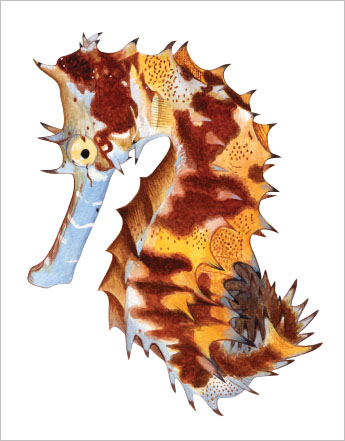 [painting 8] 가시해마의 색상이 컬러플한 국면. A colorful phase of spiny seahorse. |
 |
[4면체의 몸] 해마류의 체형을 입체적으로 잘 보여준 사진, 몸통(머리 이하)과 꼬리 전체가 4면체이며 여러 개의 벽돌 모양 골질판이 연결된 구조이다. 각 이음새는 융기된 경계선을 가지고 있다. 각각의 골질판을 체륜(體輪)이라 부른다. 사진의 개체는 반 건조된 샘플이다. 살아있는 상태에서는 살이나 돌기물이 붙어있고 배가 부른 경우가 많아서 몸의 각진 모서리가 불분명하게 보일 수 있다. 특히 거의 모든 사진들이 정 측면을 향해 찍혀 있어서 몸통이나 꼬리가 둥근 것처럼 인식되기 쉽다. 사진의 해마 이름은 큰배해마(Big-belly seahorse/Hippocampus abdominalis)이지만 종에 관계없이 해마류의 4면체 체형 특징은 모든 해마류에 적용된다. [Tetrahedral body] A photo that clearly shows the body shape of seahorse in three dimensions. The trunk(below the head) and tail are tetrahedral, and are structured with multiple brick-shaped bony plates connected. Each seam has raised ridge border. Each bony plate is called “body ring”. The specimen in the photo is half dried. When alive, they often have flesh or protrusions and bellies are often swollen, so the angled edges of body can be seen unclearly. In particular, almost all photos are images of straight body side, so it is easy to perceive the body or tail as being round. The name of the seahorse in the photo is Big-belly seahorse(Hippocampus abdominalis), but the tetrahedral body characteristics applies to all seahorses regardless of species. Author of the photo/heymilly. Location/Rodney, Auckland, New Zealand. Source/inaturalist. |
실고기목 실고기과 Order Syngnathiformes Family Syngnathidae (pipefishes and seahorses) 분포; 인도-태평양/한국의 남해, 일본 중부 이남의 태평양 연안, 대만, 중국 남부, 필리핀, 베트남, 타일랜드,인도네시아, 말레이시아 보르네오, 미크로네시아, 파푸아 뉴기니, 오스트레일리아, 뉴칼레도니아, 피지, 폴리네시아, 하와이, 홍해, 마다가스카르, 탄자니아, 모잠비크, 남아프리카.. 몸 등쪽의 융기선 가시들은 길쭉하며 끝이 날카롭지 않지만 몸통 가운에 있는 가시들은 작고 날카롭다. 가시의 끝 부분은 어두운 색이다. 이마와 뺨, 코, 눈 위에도 가시들이 많다. 배지느러미와 꼬리지느러미가 없다. 꼬리로 물체를 쥐어 잡을 수 있다. 수컷 육아낭의 배쪽에는 융기선이나 가시가 없다. 육아낭은 총배설강(항문)에서부터 아래로 7~8개의 꼬리 부분의 체륜 범위에 걸쳐 있다. 총배설강(항문)은 등지느러미 기저부 뒤 끝 아래에 위치한다 색상은 환경에 따라 변화가 심하며 회색, 크림색, 밝은 노랑색, 녹색, 또는 적색이나 갈색 등 여러 가지로 나타난다. 또한 한가지 색의 단색일수도 있고 서로 다른 색들이 혼재할 수도 있다. 주둥이를 수직으로 가로지르는 한 개 이상 4개까지의 백색 줄 무늬가 있을 수 있다. 등지느러미 각 연조에는 작고 많은 수의 어두운 점 무늬가 흩어져 있거나 열 지어 있다. 가슴지느러미와 뒷지느러미는 투명하다. 가시해마는 자주 발견되는 종은 아니면서 분포 범위는 넓다. 다른 종에 비해 깊은 수심(10–95 m) 을 선호하며 보통 15m 이상 깊은 수심에서 발견된다. 연산호와 해면에 붙어 있을 때가 많지만 해조류가 자라고 있는 자갈 밭이나 바위 암초에서도 발견된다. 육식성이며 작은 갑각류와 기타 다른 플랑크톤 생물을 먹는다. 가시해마는 난태생이다. 암컷이 산란관(産卵管; ovipositor)을 이용하여 수컷의 몸통 아래 배쪽(꼬리의 위쪽)에 있는 육아낭에 알을 집어넣는다. 낳는 알은 약 100개 정도이다. 수컷은 육아낭에 들어온 알은 수정시키며 알은 수컷의 육아낭 속에서 발육된다. 육아낭에는 풍부한 모세혈관이 들어있는 융모(絨毛) 조직이 들어 있고 알은 융모 조직에 감싸여있으며 융모에 들어있는 모세혈관에서 영양분이 공급된다. 융모 조직이 태반(胎盤) 역할을 하는 것이다. 수컷은 부화된 새끼들을 육아낭으로 보호하고 물을 순환시켜 배아에게 산소가 공급되도록 노력한다. 배아들이 완전이 독립 생활이 가능하도록 발육된 후에 육아낭 밖으로 새끼들은 배출시킨다. 수컷이 배에 힘을 줄 때 마다 새끼가 한 마리씩 육아낭 구멍으로부터 빠져 나간다. 가시해마는 세계자연보호연맹(IUCN)이 멸종 위기 종으로 지정한 종이다. 한약재와 관상용으로 남획된다. 새우잡이 어업에서 부수적으로 잡혀 죽는 개체도 많다. 이들의 서식지인 연안의 해조류 환경이 줄어드는 것도 개체 감소의 원인이다. 야생 동식물의 국제 거래에 관한 협약(CITES)에도 등재되어 있는 종이다. ※ 국내 한 일간지가 2015년 9월 중에 보도한 “몸길이 33cm '세계에서 가장 큰 해마' 잡혔다”라는 제목의 기사가 인터넷에서 검색된다. 이 해마는 영국에서 잡혔으며 데일리메일지가 보도했다고 하였다. 국내 신문은 가시해마(Hippocampus histrix)라고 학명까지 명기했다. 그러나 영국 대서양에는 Hippocampus histrix가 분포하지 않는다. 한국에서는 Hippocampus histrix를 가시해마라고 부르지만 영국인들이 가시해마(Spiny seahorse)라고 부르는 종은 Hippocampus guttulatus이다. 일반명인 “Spiny seahorse(가시해마)”가 혼동을 일으킨 결과이다. |
Order Syngnathiformes Family Syngnathidae (pipefishes and seahorses) Distribution; Indo-Pacific/Southern Sea of Korea, Pacific coast south of central Japan, Taiwan, southern China, Philippines, Vietnam, Thailand, Indonesia, Malaysian Borneo, Micronesia, Papua New Guinea, Australia, New Caledonia, Fiji, Polynesia, Hawaii, Red Sea, Madagascar , Tanzania, Mozambique, South Africa. The dorsal(upper) part of the trunk rings is slightly lower in height than the middle parts of trunk rings. The base of the dorsal fin contains two body rings and one caudal ring. There are 5 spines on the coronet of the head. It differs from the Hippocampus haema(Korean seahorse) in that the ridges on the body ring extend long outwards. The ridge spines on the back of the body are long and do not have sharp ends, but the spines on the middle of the trunk are small and sharp. The tips of the spines are dark. There are also many spines on the forehead, cheeks, snout, and around eyes. There are no pelvic and caudal fins. It can grab objects with its tail. There are no ridges or spines on the ventral side of the male brood pouch. The brood pouch extends from the cloaca(anus) down to the 7-8 caudal rings. The cloaca(anus) is located below the posterior end of the base of the dorsal fin. Body coloration is highly variable to match surroundings and goes from grey to cream, and from bright yellow, to green or red and even brownish. It can be plain or different colors may be mixed. There may be one to four white stripes running vertically across the snout. Each dorsal fin membranes have multiple small dark spots scattered or arranged in rows. The pectoral and anal fins are transparent. The spiny seahorse is relatively rare but widespread. The species favours relatively deep waters(10–95 m) and is usually found below 15 m depths. It often attaches itself to soft corals or sponges, but also found in gravel beds or rocky reefs where seaweed grows. The spiny seahorse has a carnivorous diet and feeds on small crustaceans and other planktonic organisms. Spiny seahorses are ovoviviparous. The female uses ovipositor to insert eggs into the brood pouch located on the ventral side(upper tail) of the male. About 100 eggs are laid. The male fertilizes the eggs that enter the brood pouch, and the eggs develop within it. The brood pouch contains villus tissue containing abundant capillaries, and the egg is surrounded by the villus tissue, and nutrients are supplied from the capillaries contained in the villi. The villus tissue acts as a placenta. The male protects the hatched young in brood pouch and circulates water to supply oxygen to the embryos. After the embryos have developed to the point where they can live independently, they are released out of the brood pouch. Each time the male exerts force on his stomach, one baby escapes from the hole in the brood pouch. H. histrix is listed as vulnerable by the IUCN. It is subject both to targeted exploitation for use in traditional medicine and the aquarium trade, and to population losses from bycatch in the shrimp fishery. Inshore sea-grass habitats frequented by the species are also in decline. Like all seahorses, it is listed in Appendix II of the Convention on International Trade in Endangered Species of Wild Fauna and Flora (CITES), meaning that it is on the list of species the trade of which must be controlled to ensure their survival. ※ In September 2015, an article titled “The ‘world’s largest seahorse’ with body length of 33 cm was caught” was reported and posted on the Internet by a daily newspaper in Korea. The article said the seahorse was caught in England, and the Daily Mail reported. The Korean newspaper even listed its scientific name as Hippocampus histrix. However, Hippocampus histrix is not distributed in the British Atlantic. In Korea, Hippocampus histrix is called as Spiny seahorse, but the species that British people call Spiny seahorse is Hippocampus guttulatus. This is the result of confusion over the common name “Spiny seahorse.” |
 가시해마 분포도. Distribution map of Spiny seahorse(Hippocampus histrix). Edited by fishillust.com(Kim inyoung) |

| 가시해마. 장소; 동티모르. Spiny seahorse(Hippocampus histrix). location/Timor-Lestes. Author/Nick Hobgood. (CC BY-NC) |
 가시해마. 장소; 인도네시아 발리. Spiny seahorse(Hippocampus histrix). location/Bali, Indonesia. Author/oceangirl4. (CC BY-NC) |
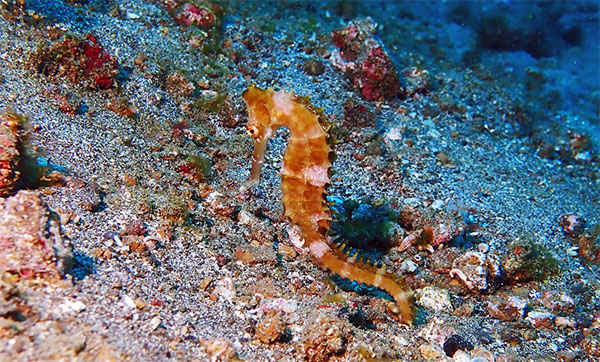 모래와 자갈이 깔린 개방된 바닥에 있는 가시해마. A spiny seahorse on an open bottom of sand and gravel. 장소; 인도네시아 술라웨시. Spiny seahorse(Hippocampus histrix). location/Sulawesi, Indonesia. Author/divebullshark. (CC BY-NC) |
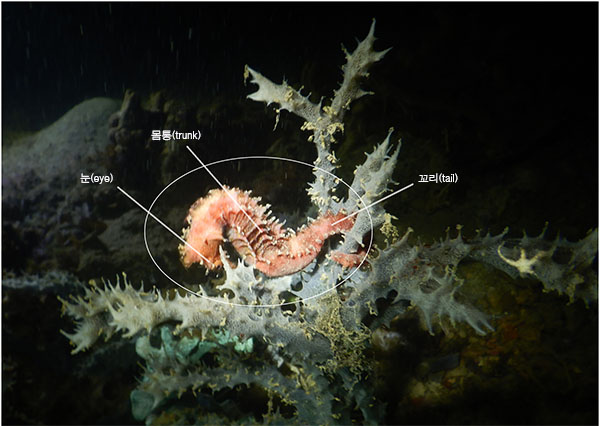 숨은 그림 찾기. 가시해마 한 마리가 저서 부착 생물(해면의 한 종류로 추측함) 속에 몸을 은폐시키고 있다. Finding hidden object. A spiny seahorse is hiding itself in a benthic organism (presumably a type of sponge). Location/Kwale, Kenya. Author/Ewout Knoester. (CC BY-NC) |
 Left/가시해마(Spiny seahorse; Hippocampus histrix). Location/East Nusa Tenggara, Indonesia Author/Silke Baron. Right/가시해마(Spiny seahorse; Hippocampus histrix). Location/Timor Oriental. Author/prilfish |
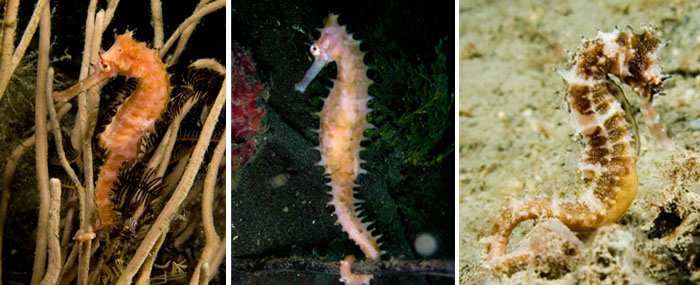 Left/가시해마(Spiny seahorse; Hippocampus histrix). Location/ East Timor. Author/Nick Hobgood. Center/가시해마(Spiny seahorse; Hippocampus histrix). Author/Steve Childs. Right/가시해마(Spiny seahorse; Hippocampus histrix). Location/ East Timor. Author/Nick Hobgood |
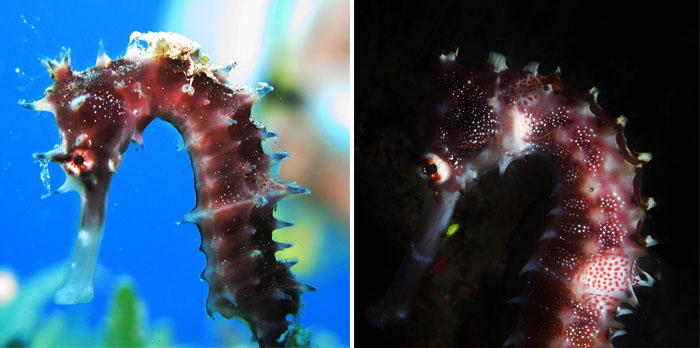 흑색 국면의 가시해마. Spiny seahorse(Hippocampus histrix) in the black phase. Left/location; Zamboanguita, Negros Oriental, Philippines. Author; Andy. Right/location; Diving Lembeh Indonesia. Author; Rickard Zerpe. (CC BY-NC) |
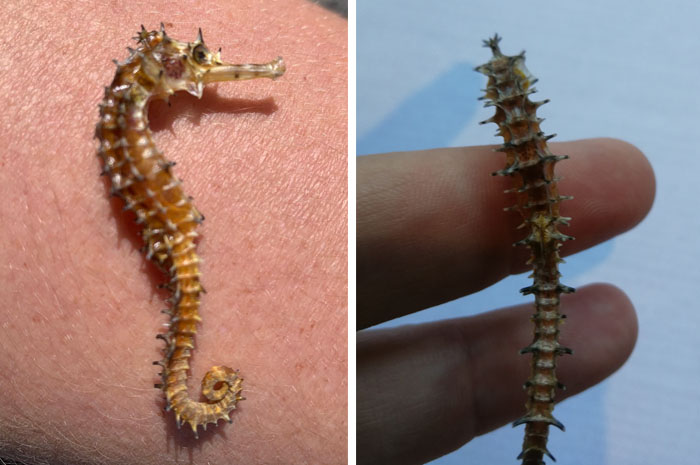 사람의 팔뚝 피부 위에 놓인 가시해마(왼쪽)와 등면을 보여주고 있는 손가락 위의 가시해마(오른쪽). The Spinous Seahorse on the skin of a human forearm(left) and a Spinous Seahorse on a finger showing its dorsal view(right). Location/both; Amathole, Eastern Cape, South Africa. Author/both photo by Aiden. (CC BY-NC) |
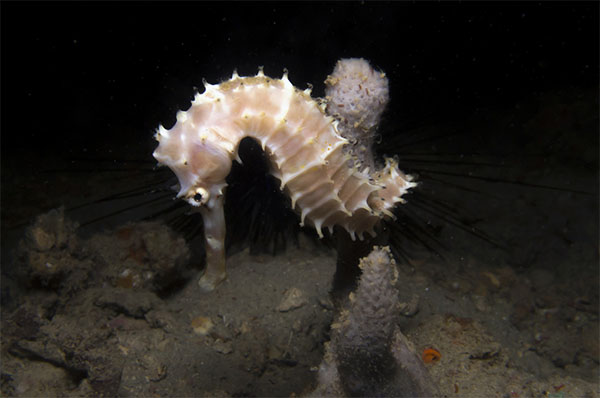 가시해마. 장소; 케냐. Spiny seahorse(Hippocampus histrix). location/Kenya. Author/Ewout Knoester. (CC BY-NC) |


|
| Copyright ⓒ FISHILLUST.COM All rights reserved. All contents can not be used without permission of the copyright holder. |


 검색
