
사이트 로그인
사이트 로그인
경골상강→조기강→실고기목(Syngnathiformes)→실고기과(Syngnathidae)→대해마(Great seahorse; Hippocampus kelloggi) |
Copyright by Kim In Young. 김인영 그림 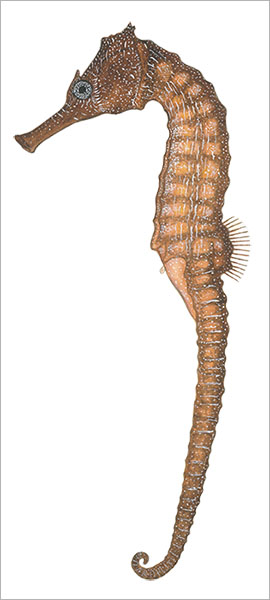 [Painting 1] 대해마 수컷 기본 모습.색상은 암수 구별과 관계없음. Lateral view of male Great seahorse(Hippocampus kelloggi).Color is not gender-specific. |
Copyright by Kim In Young. 김인영 그림  [Painting 2] 대해마 수컷 몸의 기본 틀과 치수 계측 도해. Basic body frame and measurements diagram of male Great seahorse(Hippocampus kelloggi). |
Copyright by Kim In Young. 김인영 그림 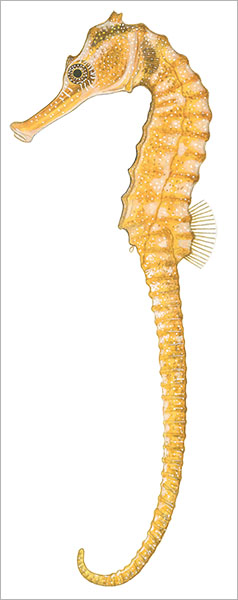 [Painting 3] 대해마 암컷 기본 모습.색상은 암수 구별과 관계없음. Lateral view of female Great seahorse(Hippocampus kelloggi). Color is not gender-specific. |
Copyright by Kim In Young. 김인영 그림  [Painting 4] 대해마 암컷 몸의 기본 틀 도해. Basic body frame diagram of male Great seahorse(Hippocampus kelloggi). |
[참고] 해마류 몸 각 부위 측정 [Note] Measuring each part of seahorse body |
 |
[4면체의 몸] 해마류의 체형을 입체적으로 잘 보여준 사진, 몸통(머리 이하)과 꼬리 전체가 4면체이며 여러 개의 벽돌 모양 골질판이 연결된 구조이다. 각 이음새는 융기된 경계선을 가지고 있다. 각각의 골질판을 체륜(體輪)이라 부른다. 사진의 개체는 반 건조된 샘플이다. 살아있는 상태에서는 살이나 돌기물이 붙어있고 배가 부른 경우가 많아서 몸의 각진 모서리가 불분명하게 보일 수 있다. 특히 거의 모든 사진들이 정 측면을 향해 찍혀 있어서 몸통이나 꼬리가 둥근 것처럼 인식되기 쉽다. 사진의 해마 이름은 큰배해마(Big-belly seahorse/Hippocampus abdominalis)이지만 종에 관계없이 해마류의 4면체 체형 특징은 모든 해마류에 적용된다. [Tetrahedral body] A photo that clearly shows the body shape of seahorse in three dimensions. The trunk(below the head) and tail are tetrahedral, and are structured with multiple brick-shaped bony plates connected. Each seam has raised ridge border. Each bony plate is called “body ring”. The specimen in the photo is half dried. When alive, they often have flesh or protrusions and bellies are often swollen, so the angled edges of body can be seen unclearly. In particular, almost all photos are images of straight body side, so it is easy to perceive the body or tail as being round. The name of the seahorse in the photo is Big-belly seahorse(Hippocampus abdominalis), but the tetrahedral body characteristics applies to all seahorses regardless of species. Author of the photo/heymilly. Location/Rodney, Auckland, New Zealand. Source/inaturalist. |
실고기목 실고기과 분포; 인도-태평양/한국의 남해(마산과 진해), 일본 남부, 대만, 동중국해, 베트남, 타일랜드, 필리핀, 인도네시아 발리, 바누아투, 오스트레일리아 동남부, 인도 동남부, 오만 만, 홍해 북부에 분포. 대해마(大海馬)는 영명 Great seahorse를 직역한 이름이다. “큰해마”라고 해도 된다. 그러나 이 이름들은 번역명이며 아직 국명은 없다. “진질해마”를 국명으로 추천하는 저자들이 있다. 영명으로 켈로그 해마(Kellogg's seahorse)라고도 부른다. 대해마(Great seahorse)라는 이름을 가진데다 해마류 중에서 가장 큰 종이라는 설명이 있으나 이는 오래 전 기록인 것 같고 해마류 중 큰 몇 종들 중의 하나이다. 2024년 현재 정보로는 가장 큰 해마는 오스트레일리아와 뉴질랜드에 분포하는 전장 35cm 기록을 가진 대복해마(big-belly seahorse/Hippocampus abdominalis)이다. 머리가 말 머리를 닮았고 몸 모양도 특이한 물고기로 머리와 몸통이 거의 직각으로 만난다. 대해마의 특징은 꼬리의 길이가 체장의 57%를 차지하여 다른 종들보다 상대적으로 약간 더 길다는 점이다. 머리와 몸통은 옆으로 약간 납작하고 등면은 지붕 기왓장을 1열로 이어놓은 것처럼 편평하다. 등지느러미 이후의 꼬리는 4각목형이며 4각형 벽돌들이 연결되어 있는 모양새다. 주둥이는 긴 튜브형이며, 주둥이 끝 부분은 확장되어 있다. 주둥이 맨 앞에 작은 입이 있다. 입에 이빨이 없다. 안경 전방에 가시가 없고 안경 상단의 가시는 끝은 무디나 분명하다. 주둥이 길이는 눈 후연에서부터 가슴지느러미 기점 전 사이의 길이보다 약간 짧다. 머리 위의 정관은 돌출된 융기선 같이 생겼으며 높이가 낮고 뒤로 기울어져 있다. 몸은 골질의 체륜으로 덮여 있고 각 체륜의 가장자리는 융기되어 있다. 몸통(뒷지느러미 위쪽의 몸)의 체륜들은 등쪽 것과 배쪽 것의 높이가 동일하다. 등 쪽 면의 가시들은 끝이 무디고 짧다. 몸통부 체륜의 중앙부의 가시들은 끝이 무디지만 가시로 취급된다. 복부의 가시들은 발달되어 있으나 날카롭지는 않다. 배지느러미와 꼬리지느러미가 없다. 뒷지느러미는 매우 작아서 흔적적이다. 뒷지느러미는 등지느러미 기저 후단에 위치한다. 긴 꼬리의 뒤쪽 가는 부분을 사용하여 해조 줄기나 물체를 감아 쥐고 매달려 있을 수 있다. 가슴지느러미는 길이가 짧다. 등지느러미 기저는 몸통 체륜 2개와 꼬리자루체륜 1개에 걸쳐있다. 수컷은 복부에 육아낭을 가지고 있으며 그 위치는 항문 후방의 4-5개 꼬리자루 체륜에 걸쳐 형성되어 있다. 육아낭에는 가시가 없다. 몸색은, 황색, 갈색, 검정색 등 여러 가지이다. 여러 경우에서 성어는 머리와 몸에 매우 작은 수많은 백색 점들과 가느다란 백색 줄 무늬가 있으며 색이 어두운 부분에서 선명하게 보인다. 어린 개체와 암컷은 크림 색이나 노란 색 바탕에 하얀 안장 무늬나 반점 무늬를 가지는 경우가 많다. 가슴지느러미와 뒷지느러미는 투명하다. 대해마는 꼬리로 잡고 매달려 있을 수 있는 산호나 해조류가 많은 환경을 선호한다. 얕은 수심에 자주 발견되지만 100m 이상에서도 발견되며, 최대 152m에서 발견되어 해마류 중에서 가장 깊은 수심을 기록하고 있다. 기수역에서도 발견된다. 대해마는 주로 혼자 있거나 여러 마리가 멀리 거리를 유지한 상태의 무리로 발견된다. 저서성 소형 무척추동물을 주로 섭식한다. 베트남 등 열대 해역에서는 연중 산란을 실시하는 것으로 알려졌으나, 우리나라에서는 6월부터 9월 사이에 주로 산란한다. 야생에서 수명은 2년 내지 4년이다. 재생산/암컷이 500개 알을 수컷의 육아낭에 넣어주는 순간 알이 수정되고 알은 여기서 부화되고 성장한다. 수컷의 임신 기간은 몇 주 정도이며 부화된 새끼가 독립 생활을 할 정도로 발육되면 새끼를 한 마리씩 육아낭 밖으로 뱉어낸다. 수컷은 거의 출산 직후 바로 임신할 준비가 되어 있다. 대해마 자체의 생식 습관은 알려진 것이 별로 없지만 다른 해마 종들의 연구에서 보면 해마들은 일부일처제인 경우가 자주 발견된다. 해마들은 짝짓기 의사를 표현할 때 파트너를 찾을 때까지 꼬리를 비틀고 머리를 끄덕이는 행동을 한다. 대해마의 이용과 멸종 위기/다른 해마류와 마찬가지로 대해마(Hippocampus kelloggi)도 한약재와 수족관 또는 애완 물고기로 사용된다. 구하기도 어렵고 기르기도 어려운 종이다. 수족관에 가둔 상태에서 다른 경쟁자들과 먹이 경쟁에서 뒤지기 때문에 잘 죽는다. 구하기가 어려운 가장 큰 이유는 중국과 동아시아 국가에서 발기부전 같은 증상에 약효가 있다고 알려져 있기 때문이다. 수족관과 한약재 수요 외에도 건조된 해마를 집안 장식용 선물로 거래되는 일도 많다. 이 3가지 원인 때문에 대해마는 멸종 위기 종으로 분류되어 있다. |
Order Syngnathiformes Family Syngnathidae(pipefishes and seahorses) Distribution; Indo-Pacific/Distributed in the South Sea of Korea (Masan and Jinhae), southern Japan, Taiwan, East China Sea, Vietnam, Thailand, Philippines, Bali, Indonesia, Vanuatu, southeastern Australia, southeastern India, Gulf of Oman, and northern Red Sea. The Korean name "dae-hae-ma(대해마)" is a direct translation of the English name “Great seahorse”, it is not official Korean name, no official Korean name yet. The great seahorse (Hippocampus kelloggi), also known as Kellogg's seahorse. As the name "Great Seahorse" suggests, some explanations describe it as the largest species among seahorses, but this seems to be a long-ago record. It is appropriate to say that Great Seahorse is one of the few large species of seahorses. As of 2024, the largest seahorse is the Big-belly seahorse(Hippocampus abdominalis) with a record of 35 cm in total length, distributed in Australia and New Zealand, The body shape is unique, the head resembles a horse's head and the head and trunk forming an almost right angle. They can be identified through their comparatively slightly longer tails, which account for about 57% of their bodies. The head and body are slightly flat on the sides, and the dorsal surface is flat like a row of roof tiles connected together. And the tail after the dorsal fin is shaped like a square bar that composed of series of square bricks. The snout is shaped like a long tube, with a small mouth at tip of the snout. The snout tip is expanded. There are no teeth in the mouth. There are no spines in front of eye, and the spine on the top of eye have blunt end. The length of the snout is slightly shorter than the length between the posterior edge of eye and the origin of the pectoral fin. The coronet protrusion on the top of the head looks like ridge, low in height, slanted backwards, and has five spines Entire body is covered with bony rings, and each body ring has raised edges. The height of the upper and ventral plates of the trunk rings(part before the anal fin) is the same. The spines on the dorsal side have blunt ends and are short. The spines in the central part of trunk have blunt ends, but also defined as spines. The spines on the abdomen are developed but also not sharp. Pelvic and caudal fins absent. The anal fin is very small and rudimentary. The anal fin is located below the rear end of the dorsal fin base. Can use the slender posterior part of their long tail to hang by wrapping around seaweed stems. The pectoral fin is short. The base of the dorsal fin spans two body rings and one caudal ring. Males have a brood pouch on their abdomen which is located across 4-5 caudal body rings behind the anus. There are no spines on the brood pouch. The body color varies, from yellow, brown to black. In often cases, adults with distinctive fine white lines and tiny spots, appears especially clearly in dark areas. Juveniles and female sometimes cream or yellow, often with pale saddles or blotches. The pectoral and anal fins are transparent. They frequent areas with an abundance of coral or seaweeds so they can latch on to something. Although it is often found in shallow water, it is also found at depths of over 100 m, and is found at a maximum depth of 152 m, making it the deepest seahorse recorded.. In addition, the giant sea horse can be found in brackish waters. Feed mainly on small invertebrates. It is generally found alone or in very sparse groups. It is known that spawning occurs all year round in tropical waters such as Vietnam, but in Korea, spawning occurs mainly between June and September. They live for two to four years in the wild. Reproduction/The moment the female deposits 500 eggs into the male's brood sac, the eggs are fertilized, where they hatch and grow. The male's gestation lasts a few weeks, and when the hatched chicks are developed enough to live independently, they are spit out one by one out of the brood pouch. Generally, males are ready to breed again almost immediately after giving birth. Though little is known about the great seahorse's specific breeding habits, many related seahorses have been studied and were found to occasionally be monogamous. Their mating ritual involves twisting their tails and head nods, until they find a partner. Captivity and use/Like many other species of seahorse, the great seahorse is used both medicinally and for aquariums. It's one of the harder types to purchase and care for, as it is large and does not compete well with others for food, often resulting in early death. One of the major reasons the great seahorse is removed from captivity is due to its medicinal effects in China and other east Asian countries. It is said to help with problems such as impotence, and its prevalence on the market has increased in recent years. Aside from personal aquariums and medicine, the great seahorse is also used as a souvenir, often available dried for people to take home. The combination of these three has led the great seahorse to be labeled as vulnerable. |
 대해마 분포도. Distribution map of Great seahorse(Hippocampus kelloggi). Edited by Kim in young(derived work from GBIF). |
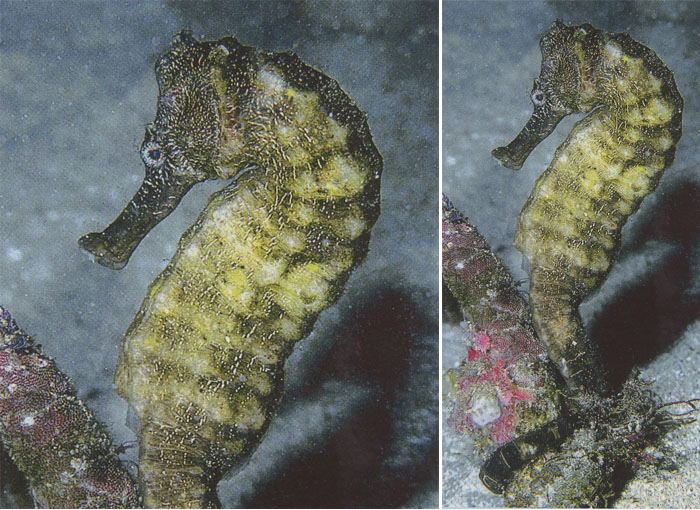 대해마. 작은 백색 점과 가는 백색 줄 무늬를 나타내기 위해 확대한 사진(왼쪽). Great seahorse(Hippocampus kelloggi). Photo(left) enlarged to show white tiny spots and fine lines. Author/Rudie Hermann Kuiter(born 1943) is an Australian underwater photographer, taxonomist, and marine biologist. He has described many new species of seahorse. |
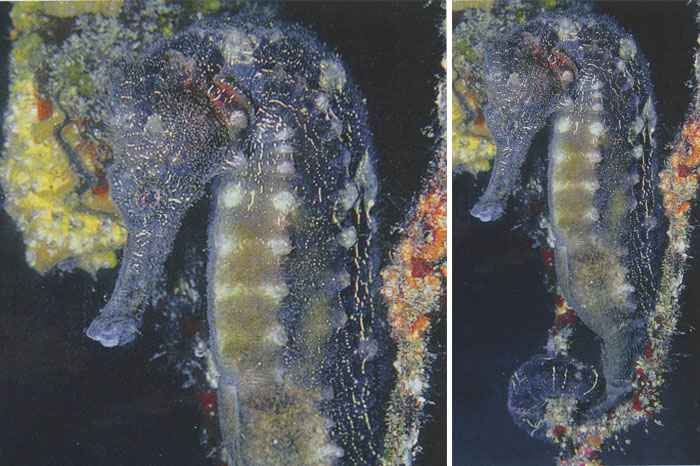 대해마. 작은 백색 점과 가는 백색 줄 무늬를 나타내기 위해 확대한 사진(왼쪽). Great seahorse(Hippocampus kelloggi). Photo(left) enlarged to show white tiny spots and fine lines. Author/Rudie Hermann Kuiter(born 1943). He has described many new species of seahorse. |
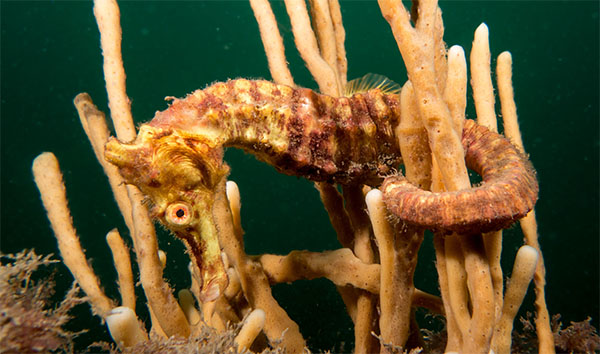 대해마. Great seahorse(Hippocampus kelloggi). Location/Randwick, New South Wales, Australia. Author/Marine Explorer (Dr John Turnbull). (CC BY-NC-SA) |
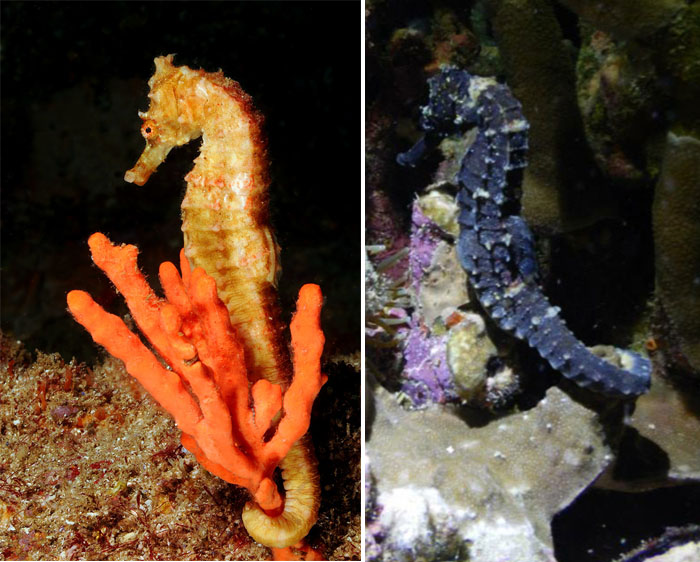 대해마. Great seahorse(Hippocampus kelloggi). Left/Location; Kempsey, New South Wales, Australia. Author/David Harasti.(CC BY-NC). Right/location; Bogo City, Cebu, Philippines. Author/calebtoh.(CC BY-NC). |
 대해마. Great seahorse(Hippocampus kelloggi). Left/location; Fujayrah, United Arab Emirates. Author/searcaigh. (CC BY-NC). Right/Location; Toba Aquarium, Japan. Author/OpenCage. (CC BY-NC) |
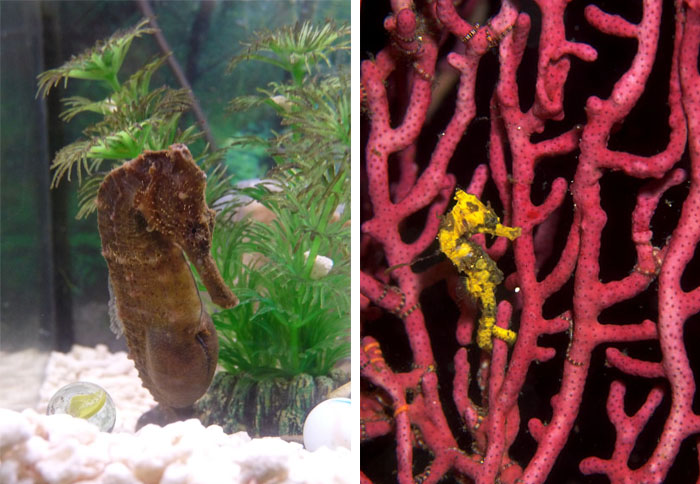 left/대해마. Great seahorse(Hippocampus kelloggi). in pet fish tank. Author/Show ryu.(CC BY-NC). Right/대해마. Great seahorse(Hippocampus kelloggi). On fan coral. Author/ Izuzuki.(CC BY-NC). |
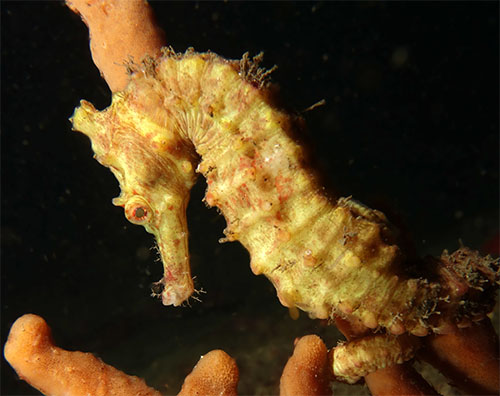 대해마. Great seahorse(Hippocampus kelloggi). Location/Randwick, New South Wales, Australia. Author/Marine Explorer(Dr John Turnbull). (CC BY-NC). |
 대해마. Great seahorse(Hippocampus kelloggi). In an aquarium, Japan. Author/opencage (CC BY-NC). |
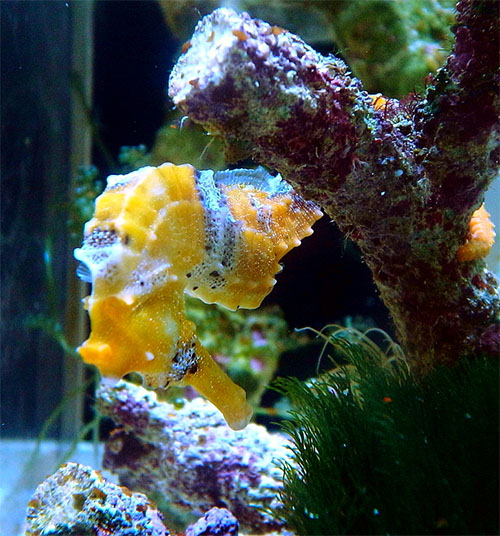 대해마. Great seahorse(Hippocampus kelloggi). location/in aquarium, Kobe Environmental School of Animals and Plants. Author/opencage (CC BY-NC). |
 대해마 보존 표본 사진. Preserved specimen of Hippocampus kelloggi collected in Japan. (A) lateral view(측면), (B) dorsal view(등면), (C) ventral view(복면). Author/California Academy of Sciences. (CC BY-NC). |


|
| Copyright ⓒ FISHILLUST.COM All rights reserved. All contents can not be used without permission of the copyright holder. |


 검색
