
사이트 로그인
사이트 로그인
경골상강→조기강→실고기목(Syngnathiformes)→실고기과(Syngnathidae)→신도해마 |
Copyright by Kim In Young. 김인영 그림  [painting 1]. 신도해마의 수컷 모습. 몸에서 뻗어나간 부속물들은 피질돌기이며 환경에 따라 모양, 수 등에 변화가 있다. 피질돌기가 없는 경우도 있다. 색상은 암수 구별과 관계 없다. Lateral view of male Shiho's seahorse(Hippocampus sindonis). The appendages extending from the body are cortical projections, and their shape and number vary depending on the environment. In some cases, there are no cortical projections. Color is not gender-specific. |
Copyright by Kim In Young. 김인영 그림
 [painting 2]. 신도해마의 수컷 몸의 기본 틀. 고정적이 아닌 피질돌기 제외. Basic body frame of male Shiho's seahorse(Hippocampus sindonis). Excluding non-stationary cortical projections. |
Copyright by Kim In Young. 김인영 그림  [painting 3]. 신도해마의 암컷 모습. 몸에서 뻗어나간 부속물들은 피질돌기이며 환경에 따라 모양, 수 등에 변화가 있다. 피질돌기가 없는 경우도 있다. 색상은 암수 구별과 관계 없다. Lateral view of female Shiho's seahorse(Hippocampus sindonis). The appendages extending from the body are cortical projections, and their shape and number vary depending on the environment. In some cases, there are no cortical projections. Color is not gender-specific. Color is not gender-specific. |
Copyright by Kim In Young. 김인영 그림
 [painting 4]. 신도해마의 암컷 몸의 기본 틀. 고정적이 아닌 피질돌기 제외. Basic body frame of female Shiho's seahorse(Hippocampus sindonis). Excluding non-stationary cortical projections. |
 |
[4면체의 몸] 해마류의 체형을 입체적으로 잘 보여준 사진, 몸통(머리 이하)과 꼬리 전체가 4면체이며 여러 개의 벽돌 모양 골질판이 연결된 구조이다. 각 이음새는 융기된 경계선을 가지고 있다. 각각의 골질판을 체륜(體輪)이라 부른다. 사진의 개체는 반 건조된 샘플이다. 살아있는 상태에서는 살이나 돌기물이 붙어있고 배가 부른 경우가 많아서 몸의 각진 모서리가 불분명하게 보일 수 있다. 특히 거의 모든 사진들이 정 측면을 향해 찍혀 있어서 몸통이나 꼬리가 둥근 것처럼 인식되기 쉽다. 사진의 해마 이름은 큰배해마(Big-belly seahorse/Hippocampus abdominalis)이지만 종에 관계없이 해마류의 4면체 체형 특징은 모든 해마류에 적용된다. [Tetrahedral body] A photo that clearly shows the body shape of seahorse in three dimensions. The trunk(below the head) and tail are tetrahedral, and are structured with multiple brick-shaped bony plates connected. Each seam has raised ridge border. Each bony plate is called “body ring”. The specimen in the photo is half dried. When alive, they often have flesh or protrusions and bellies are often swollen, so the angled edges of body can be seen unclearly. In particular, almost all photos are images of straight body side, so it is easy to perceive the body or tail as being round. The name of the seahorse in the photo is Big-belly seahorse(Hippocampus abdominalis), but the tetrahedral body characteristics applies to all seahorses regardless of species. Author of the photo/heymilly. Location/Rodney, Auckland, New Zealand. Source/inaturalist. |
실고기목 실고기과 분포; 서북태평양/한국의 여수(거문도), 제주도, 일본의 혼슈(本州) 중부 이남과 규슈(九州), 대만의 펑후제도(澎湖海域)에 분포한다. 모든 체륜의 등 쪽 면에 끝이 무딘 가시가 있으며, 불규칙하게 몇 개의 가시 말단에는 매우 긴 피질돌기가 있으며 특히 머리의 눈 위 가시와 정관 가시에는 대부분의 경우 비정상적으로 보일 정도의 매우 긴 나뭇가지 같은 피질 돌기가 돋아나 있다. 이 현상은 긴 풀이나 산호 가지 사이에 숨어 있을 때 나타나며 은폐물이 없는 밋밋한 환경에서는 나타나지 않는다. 대부분의 경우 해조류나 산호 같은 복잡한 환경 속에 들어가 있다. 복부의 골질 융기선은 끝이 날카롭게 뾰족하다. 몸통 체륜의 체측 중앙부에도 작고 무딘 가시가 있다. 등지느러미는 몸통 후단에 위치하며 등지느러미 기저부는 몸통 체륜 2개와 꼬리 체륜 1개에 걸쳐있으며 주둥이 길이와 비슷하다. 등지느러미 기저부 체륜에 1-2개의 길고 무딘 가시가 있다. 가슴지느러미는 길이가 짧다. 배지느러미와 꼬리지느러미는 없다. 주둥이는 튜브형이며 길이는 약간 짧은 편이며 그 말단에 입이 있다. 안경 전방과 상단에 끝이 무딘 가시가 있다. 주둥이 길이는 눈 뒤 가장자리에서부터 가슴지느러미 기점 사이의 길이보다 짧다. 머리 위의 정관 골판은 중간 높이이며 뒤로 기울어져 있지 않고 위로 솟아있다. 뺨에 1개의 가시가 있다. 수컷은 육아낭을 가지고 있으며 항문 후방의 7-8개 체륜에 걸쳐 있다. 육아낭에는 융기선이나 가시가 없다. 뒷지느러미는 등지느러미 기저 중앙에 위치하며, 길이는 매우 짧아 흔적적이다. 살아 있을 때 전체 체색은 연황색, 연적색 녹회색 및 황색과 적색의 혼합색 등으로 다양하다. 체측에 얼룩이나 점무늬가 있을 수 있다. 수컷의 육아낭은 다른 부위에 비하여 색채가 약간 연하다. 모든 지느러미는 투명하다. 난태생(Ovoviviparous)이다. 암컷이 육아낭에 알을 넣어주면 수컷이 알을 보관하고 다니다가 부화시킨다. 주로 해조류가 있는 바닥에서 살며 얕은 수심에서부터 20 m 수심까지 발견된다. 작은 동물플랑크톤을 잡아먹는다. 가끔 다이빙이나 그물로 채집된다. 연구용이나 관상어 이용되며 식용 가치는 없다. 한약재로 사용된다. 국제적 보호종이다. 관상어 초보자에게는 추천할만하지 아니하다. 작은 동물성 플랑크톤만 먹는데다 온대성이어서 약간 찬 물 온도에서 길러야 하기 때문이다. [Note] 신도해마는 “왕관해마 복잡계(Hippocampus coronatus complex)”에 포함되어 있던 종이다. |
Order Syngnathiformes Family Syngnathidae (pipefishes and seahorses) Distribution; Northwest Pacific/Yeosu(Geomundo) and Jeju Island in Korea, south of central Honshu and Kyushu in Japan, and the Penghu Islands in Taiwan. On dorsal surface of all body rings with blunt, well-developed spines, and some of them with very long cortical projections at tips. In most cases, the supraorbital and coronet spines on the head have unbelievably long tree branch-like cortical projections. This phenomenon occurs when hiding among weeds or coral branches, but does not occur in plain environments without cover for camouflage. In most cases, they are in complex environments such as seaweed or coral. The bony ridges of the abdomen have developed spines. Also small spines in the central part of the trunk rings. The dorsal fin is located at the rear end of the trunk, and the dorsal fin base spans two trunk rings and one tail ring and similar in length to the snout. There are 1-2 large blunt spine at the dorsal fin base. The pectoral fin is short. No pelvic and caudal fins. The snout is tube-shaped and slightly short in length, with a mouth at the end. A blunt-tipped spine on the front and top of eye. The snout length is shorter than the length between posterior margin of eye and origin of pectoral fin. The coronet plate on the top of head is medium high, raised upward rather than tilted backward, and the left and right spines at coronet tip are with very long cortical protrusions. One spine on the cheek. Males have brood pouch that spans 7-8 tail rings behind the anus. Brood pouch has no ridges or spines. The anal fin is located opposite the center of the dorsal fin base, and its length is very short and vestigial. When alive, the overall body color varies from light yellow, light red, greenish gray, and a mixture of yellow and red. There may be mottles or spots on the body. The male's brood pouch is slightly lighter in color than other parts. All fins are transparent. It is ovoviviparous. Female puts eggs into male’s brood pouch, the male stores the eggs and hatches them. It mainly inhabits reef areas with seaweed beds, and its habitat depth can reach 20 meters. It feeds on small zooplankton. Occasionally caught by diving or netting, have no edible value except for academic research and aquarium viewing. They are used as medicinal materials in traditional Chinese medicine. In case of ornamental fish, it is not suitable for beginners because it requires small plankton to feed on, and because it is a temperate species, it needs to be kept at a slightly lower water temperature. [Note] Shiho's seahorse(Hippocampus sindonis) is a species previously included in the “Hippocampus coronatus complex.” |
 신도해마 분포도. Distribution map of Shiho's seahorse(Hippocampus sindonis). Author/Kim in young(fishillst.com). |
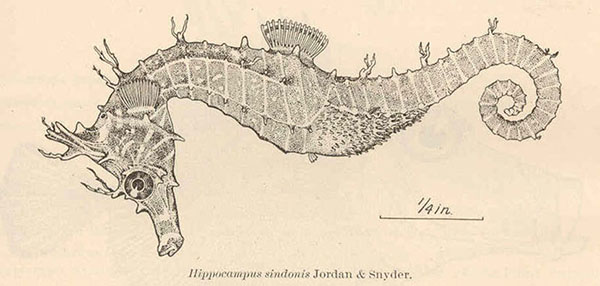 신도해마 묘사도. 세계 최초의 미국 증기 기관 해양 탐사선 알바트로스(USS Albatross) 호는 1900년대 초에 일본 해역에서 물고기 샘풀을 채집하였다. 과학자들이 연구한 결과 샘풀들 중 하나는 신종(Hippocampus sindonis)이었으며 이때 그려진 묘사도이다. Illustration of Shiho's seahorse(Hippocampus sindonis). Date/1904. The USS Albatross was the world's first steam-powered ocean exploration ship. The Albatross collected fish samples from Japanese waters in the early 1900s. As a result of the scientists' research, one of the samples was a new species (Hippocampus sindonis), and this is the depiction drawn at that time. Author/David Starr Jordan. |
 신도해마. 특징 관찰/머리에 난 나뭇가지 같은 큰 피질돌기. Shiho's seahorse(Hippocampus sindonis). Key points/large cortical protrusions like tree branch on the head. Location/Shizuoka, Japan. Author/honutomo. (CC BY-NC) |
 신도해마. 특징 관찰/머리에 난 나뭇가지 같은 큰 피질돌기. Shiho's seahorse(Hippocampus sindonis). Key points/large cortical protrusions like tree branch on the head. Location/Shizuoka, Japan. Author/honutomo. (CC BY-NC) |
 신도해마. 특징 관찰/머리에 난 나뭇가지 같은 큰 피질돌기 그리고 등에도 드문드문하게 긴 피질돌기들이 있다. Shiho's seahorse(Hippocampus sindonis). Key points/large cortical protrusions like tree branch on the head and a few long cortical protrusions on the back. Location/Shizuoka, Japan. Author/honutomo. (CC BY-NC) |
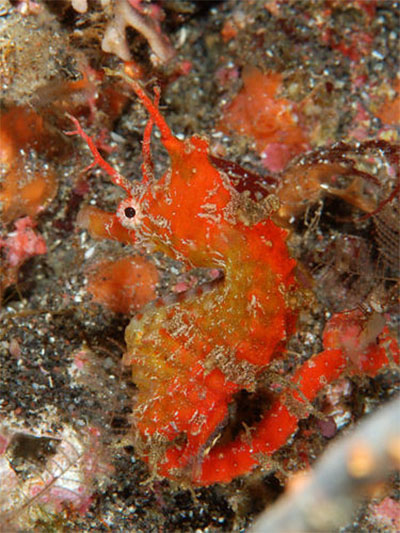 신도해마. 특징 관찰/머리에 난 나뭇가지 같은 큰 피질돌기 Shiho's seahorse(Hippocampus sindonis). Key points/large cortical protrusions like tree branch on the head. Location/probably Japan. Author/Izuzuki. (CC BY-NC) |
 신도해마. Shiho's seahorse(Hippocampus sindonis). Location/Shizuoka, Japan. Author/Tse-Lynn Loh (CC BY-NC) |
 신도해마. 특징 관찰/주변에 해초 같은 은폐 구조물이 없어서 머리와 몸에 긴 피질돌기가 없다. Shiho's seahorse(Hippocampus sindonis). Key points/no long cortical projections on the head and body because no hiding structures such as seaweed around it. Location/Shizuoka, Japan. Author/honutomo. (CC BY-NC) |
 신도해마. 특징 관찰/주변에 해초 같은 은폐 구조물이 없어서 머리와 몸에 긴 피질돌기가 없다. Shiho's seahorse(Hippocampus sindonis). Key points/no long cortical projections on the head and body because no hiding structures such as seaweed around it. Location/Shizuoka, Japan. Author/honutomo. (CC BY-NC) |
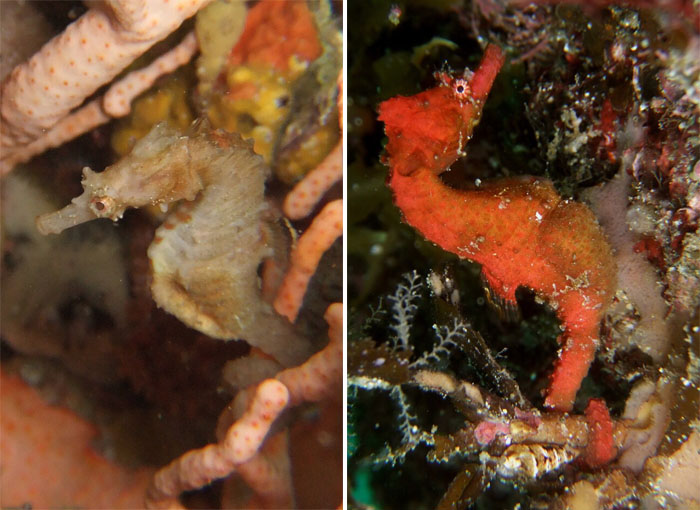 Left and right/신도해마. Shiho's seahorse(Hippocampus sindonis). Location/Shizuoka, Japan. Author/honutomo. (CC BY-NC) |
| text on preparation |


|
| Copyright ⓒ FISHILLUST.COM All rights reserved. All contents can not be used without permission of the copyright holder. |


 검색
