
사이트 로그인
사이트 로그인
|
분류계통/경골상강→조기강→청어목→청어과→전어(Dotted gizzard shad; Konosirus punctatus) Copyright by Kim In Young. 김인영 그림
|

|
| 전어 기본 모습. Lateral view of Dotted gizzard shad(Konosirus punctatus) |
[소하성/Anadromous] 분포; 서북태평양/한국의 전 해역에 분포하며 서남해안에 많이 분포한다. 동중국해와 황해의 중국, 일본, 대만, 러시아의 블라디보스톡에도 분포한다. 등쪽은 청색 내지 암청색이며 배쪽은 은백색이다. 아가미 구멍 뒤쪽 위에 짙고 큰 암청색 점이 있으며 몸의 위쪽 부분 비늘마다 검은 점이 찍혀 있어서 비늘 선을 따라 이어진 10개 내외의 수평 방향 줄을 나타낸다. 살아있을 때 지느러미들은 진한 노랑색이다. 연근해성 어류로 여름에는 외해에서 살다가 가을부터 초봄까지 내만이나 기수, 담수까지 이동한다. 깨끗한 곳보다는 유기물질이 많은 장소에 무리를 지어 서식한다. 주로 식물플랑크톤을 먹는다. 작은 갑각류, 해조류 등도 먹는다. 3~6월에 강 하류에서 산란하며 알은 부유성으로 물에 떠다닌다. 한 시즌에 2번 이상 알을 낳는다. 보통 암컷 1마리가 낳는 알은 10~14만 개 정도이다. 1년 후 어미가 되며 수명은 약 3년이다. 고전 문헌에서는 한자로 錢魚(돈 ‘전’ 자) 또는 箭魚(화살 ‘전’ 자)라고 하였는데 현대 문헌에서는 대부분 “錢魚”를 채택하고 있다. 맛이 좋아 사람이 돈을 생각하지 않고 사기 때문에 전어(錢魚)라는 유래가 있다. 전어와 관련한 속담은 한 두 가지가 아니다. '가을 전어 머리엔 깨가 서 말, 가을 전어 굽는 냄새에 집 나가던 며느리 돌아온다, 봄 도다리, 가을 전어, 가을 전어는 며느리 친정간 사이 문을 걸어 잠그고 먹는다'는 속담이 대표적이다. 최근에는 전국 곳곳에서 전어축제가 열리고 있다. 2006년 전후하여 양식에 성공하였으나 수온의 변화로 자연어획량이 크게 늘어 양식업은 어려움을 겪는다고 한다. 2015년 경에는 자연수확량으로도 수요량을 충족했다. 전어는 일본과 중국에서도 상업적으로 중요한 위치에 있는 생선이다. ※청어과 한국 분포 11종 명단 Korea distributing 11 species in family Clupeidae |
 전어의 부포도. Distribution map of Dotted gizzard shad(Konosirus punctatus). Author/Kim in young(fishillust.com) |
|
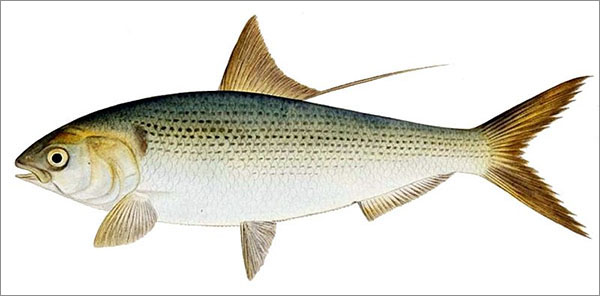
일본 고전 자료 속의 전어 그림을 리메이크한 그림. Dotted gizzard shad(Konosirus punctatus). This image is a derivative work of an old scientific publication in Japan. Artist/Kawahara Keiga(1786–). |
 중국에서 표현된 전어 그림. Drawing of Dotted gizzard shad(Konosirus punctatus). Author/CAFS(Chinese Academy of Fishery Sciences). |
[소하성/Anadromous] Distribution; Northwestern Pacific/Coasts of Korean Peninsula, especially abundant in west southern coasts of south Korea, Yellow Sea, including Gulf of Pohai and East China Sea south to Taiwan Island and Hong Kong. Japan north to Vladivostok. Blue or dark blue dorsally, silvery white ventrally. A large dark spot behind upper opercula. Several dark lateral lines on upper body side, a dark spot within each scales makes out these stripe patterns. Fins with yellow color in life. Coastal fish. Live offshore waters in summer, migrate to bays, estuaries and even fresh water arrears. Prefers rather turbid water with abundant organic materials. Schools in groups of moderate numbers. Feed mainly on phytoplankton including small crustaceans and algae. Spawn in March to July in lower reaches of rivers. Eggs are pelagic. Individuals apparently spawn twice or more during the season. A female spawns 100,000~140,000 eggs. Hatchlings grow to adult hood in a year, life span about 3 years. This is a food fish of some commercial importance, particularly in Asia. In Korea, these fish are a seasonal specialty and consumed in a wide variety of ways including raw, grilled, dried, etc. There are several "Jeon-eo" regional festivals in fall which attract large crowds. There are several proverbs or sayings in Korea; one of them goes as “the taste of ‘Dotted gizzard shad’ in autumn will make a runaway bride come back’. It is known as "Konoshiro"(コノシロ) in Japan. Konosirus punctatus is also an important fish consumed in China, Japan. |
 회집 수조의 전어. Dotted gizzard shad(Konosirus punctatus) in water tank of a fish food market. Author/Jjw |

전어 초밥. Sushi of Dotted gizzard shad(Konosirus punctatus). Author/City Foodsters |


|
| Copyright ⓒ FISHILLUST.COM All rights reserved. All contents can not be used without permission of the copyright holder. |


 검색
 일본 생선 시장에서 구입한 전어. 전장; 29㎝. Dotted gizzard shad(Konosirus punctatus) bought in fish market of Japan. Author/四葉亭四迷
