
사이트 로그인
사이트 로그인
|
분류계통/분류계보/경골상강→조기강→대구목→모오케 과→모오케 Copyright by Kim In Young. 김인영 그림
|
 |
| 모오케 기본 모습. Lateral view of Burbot(Lota lota). |
[담수어 Freshwater] 분포; 환북극해 담수 수계/유럽; 프랑스 동부 루아르(Loire) 지방의 담수 수계, 백해, 바렌트 해, 및 북극해 담수 수계, 볼가강, 가스피해, 흑해 담수 수계, 프랑스 중동부의 론(Rhône) 지방 담수 수계, 이탈리아의 펌강(Po river), 시베리아 동부. 중국 북부, 한반도의 압록강 상류(장진, 갑산), 북아메리카; 캐나다, 알래스카, 미국의 북부 담수 수계에 분포한다. 모오케 과 중에서 유일하게 담수에 사는 종이다. 야행성으로 황혼과 밤에 활동한다. 성어는 산소가 잘 공급되는 흐르는 물과 크고 깊은 호수와 물 흐름이 느린 큰 강에도 서식한다. 큰 강 하류의 기수에서부터 산간 지대의 작은 하천에서도 발견된다. 여름에는 깊은 수심을 선호한다. 강둑의 바위 아래나 틈, 나무 뿌리 사이, 수초가 우거진 곳에서 숨어 지낸다. 강에 사는 개체들은 산란기 외에는 일년 내내 깊은 구멍 속에 떼지어 모여있는 일이 잦다. 여름에 얕은 물로 이동하는 경우는 먹이를 찾아가는 현상으로 보인다. 작은 개체들은 곤충의 애벌레, 가재류, 연체동물, 기타 무척추동물을 먹으며 커갈수록 물고기를 잡아먹는다. 중부 유럽에서는 수컷은 2년 성장 후 성어가 되고 암컷은 3년만에 성어가 된다. 산란기는 11월과 3월 사이이며 강 하구에서 산란한다. 수온이 6°C 이하일 때이다. 산란은 야간에 실시되는데 여러 마리가 가깝게 모여 서로 가운데로 들어가려고 밀치면서 거대한 공 모양을 형성하며 이 상태로 굴러가면서 알과 정자를 분비한다. 산란기에는 짧은 거리의 이동을 할 수 있다. 암컷은 약 20만개의 알을 낳는다. 알은 부유성이며 지름은 1.2-1.8 mm 크기이고 40-70일 후에 부화한다는 설명(fishbase.org)이 있고 수온이 9~13°C 인 조건에서 7-10일 뒤에 부화한다는 설명(한국; 수산생명자원정보센터)이 있다. 약간 점착성을 가진 새끼가 부화된다. 갓 부화된 자어는 주광성이어서 3월과 4월에 수면 아래에서 부유한다. 자어는 부유하는 무척추동물과 동물플랑크톤을 먹는다. 자어는 성장이 빠르며 1 년에 약 8 cm SL로 자란 새끼는 저서 생활을 한다. 부화 후 3~4년이면 성숙한다. 생선 기름의 원료가 되고 주로 염장어로 매매된다. 유럽에서 간은 훈제나 통조림으로 가공 판매된다. 어분으로도 가공된다. 야행성이고 행동이 느려서 스포츠 낚시인들이 좋아하지 않은 편이다. 살은 맛이 있으나 다소 퍽퍽하다. |
[Freshwater] Distribution; Circumarctic in freshwater. Europe/Loire drainage, France eastward to White, Barents and Arctic Sea basins; upper Volga drainage; western Caspian basin; rivers draining to Black Sea; Rhône drainage(France); in Italy native only in Po drainage. In Siberia eastward to River Lena, northern China, northernmost Korean peninsula(upper reach of Yalu river). North America: Throughout Canada, Alaska and northern USA(south to Pennysylvannia, Kentucky, Missouri, Wyoming and Washington. The only member of Lotidae family which lives in freshwater. Crepuscular and nocturnal. Adults are found in well oxygenated flowing waters and large, deep lakes as well as large rivers with slow-moving current. They occur from estuaries of large lowland rivers as well as from small mountain streams, preferring deep waters in summer. They seek shelter under rocks, in crevices on the river banks, among roots of trees and dense vegetation. Those in rivers tend to congregate in deep holes throughout the year, except at spawning. Movements into shallower water during summer nights are related to feeding. Smaller individuals feed on insect larvae, crayfish, mollusks and other invertebrates with a changing preference for fishes in larger individuals. In Central Europe, males mature at 2 years while females at 3 years. Spawning occurs in lower reaches of rivers from November to March, at temperatures below 6°C. Spawning occurs at night, with spawners forming a great globular mass, which constantly moves and rolls on the bottom, each pushing toward the center, or at least milling around close together, releasing eggs or sperm. May undertake short spawning migrations. Female lay 200,000 eggs. Eggs are semipelagic, 1.2-1.8 mm in diameter and slightly sticky hatching. There is a description of hatching after 40-70 days(fishbase.org), and a description of hatching after 7-10 days under the condition of 9-13°C water temperature(Korea; Fisheries Life Resources Information Center). Larvae are positively phototactic, floating below the surface in March and April. Larvae feed on drifting invertebrates or zooplankton. Juveniles are benthic, grow rapidly, reach about 8 cm SL within first year. Source of oil. Sold mainly salted. Liver is sold smoked or canned in Europe. Processed into fishmeal. Because of its nocturnal habits and its slow movements, this fish is not very much appreciated by sport fishermen. Flesh is tasty but a little dry. |
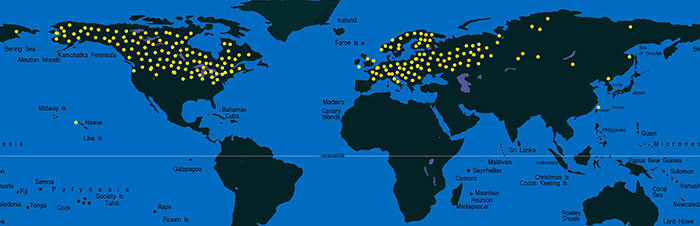 모오케의 분포도. Distribution map of Burbot(Lota lota). Author/Kim in young(fishillust.com) ※포인트 참고처(main source/discoverlife.org/mp/20q?search=Lota+lota |
 모오케 . Burbot(Lota lota). Country:/Hungary. Author/ Harka, Akos |
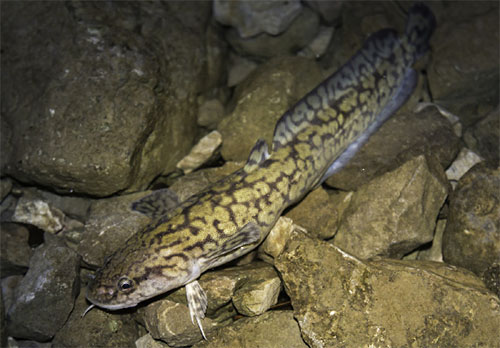 모오케 . Burbot(Lota lota). Country/Lake Walenstadt, Switzerland. Author/Daniel Luther. |
 모오케 . Burbot(Lota lota). A Burbot at the ground of Lake Walchensee, Germany(Bavarian). Author/Achim R. Schloeffel |
 겨울철 호수 얼음 낚시에서 잡은 모오케 두 마리를 눈이 내린 풀이 자란 땅 바닥에 놓은 장면. 국가 불명. Raw freshwater fish burbot closeup on snow. Winter fishing. Ice fishing. Live in the river. Two Lota lota on the grass. Lake habitat. Locality/unknown. Source/ROYALTY-FREE STOCK PHOTO |
 모오케 . Burbot(Lota lota). Country/observed in Canada. Author/kkrievins. licenses/by-nc/4.0/) |
 모오케 . Burbot(Lota lota). Country/observed in Canada. Author/katdrier. licenses/by-nc/4.0/) |


|
| Copyright ⓒ FISHILLUST.COM All rights reserved. All contents can not be used without permission of the copyright holder. |


 검색
