
사이트 로그인
사이트 로그인
|
분류계통/경골상강→조기강→실고기목(Syngnathiformes)→실고기과(Syngnathidae)→짧은꼬리실고기 Copyright by Kim In Young. 김인영 그림
|
 |
| [painting 1] 짧은꼬리실고기 기본모습. lateral view of Short-tailed pipefish(Microphis brachyurus) |
|
Copyright by Kim In Young. 김인영 그림
|
 |
| [painting 2] 짧은꼬리실고기 몸의 형태와 골판 틀. Body shape and basic plate frame of Short-tailed pipefish(Microphis brachyurus) |
|
Copyright by Kim In Young. 김인영 그림
|
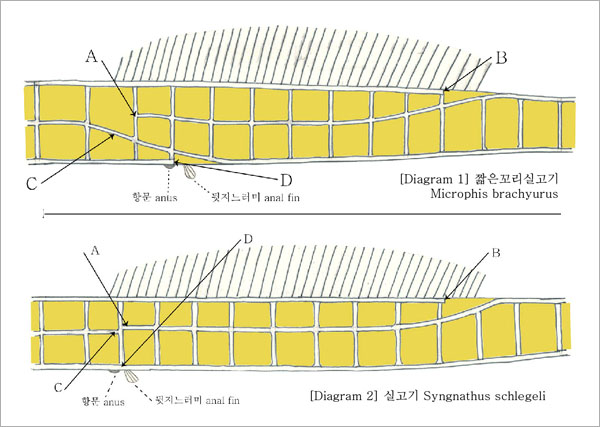 |
[Figure 1] 짧은꼬리실고기와 실고기의 체륜 융기선 연결 구조의 차이. |
|
Copyright by Kim In Young. 김인영 그림
|
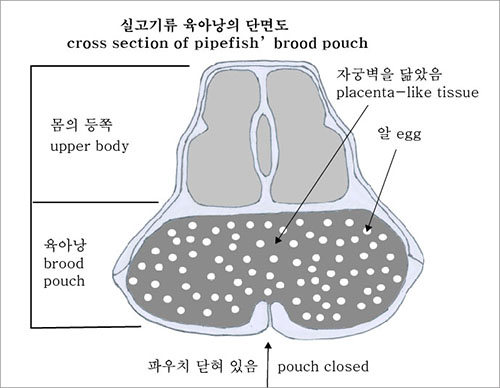 |
| [Figure 2] 실고기류 육아낭의 단면도 Cross section of pipe fish’s brood pouch. Author/Kim in young |
[소하성 담수어] 분포; [Note].아래는 2024년 5월 현재 주요 관련 사이트에 나와 있는 짧은꼬리실고기의 분포 데이터이다. 그러나 Microphis brachyurus의 4 아종이 독립 종으로 분류되기 전 자료인 것으로 보인다. 4 아종이 각각 분리 독립된 후의 Microphis brachyurus(짧은꼬리실고기)의 분포지는 많이 축소되었을 것이다. 특히 대서양 전체와 아프리카 동부 인도양은 해당되지 않을 것으로 짐작된다. 이 의견은 나의 개인적인 생각이다. 인도 태평양/남아프리카의 나탈, 케냐, 마다가스카르, 모리셔스, 홍해, 스리랑카, 인도 남부, 인도네시아, 파푸아뉴기니, 오스트레일리아 퀸즐랜드 주, 뉴칼레도니아 New Caledonia 산호해, 솔로몬 제도, 프랑스령 폴리네시아, 필리핀, 동중국해, 대만, 일본 혼슈 남부, 한국의 남해, 동대서양/기니 만. 서대서양/미국의 플로리다, 멕시코만 남부, 바하마, 쿠바, 카리브해 전역, 베네수엘라, 브라질. 일반개요; 짧은꼬리실고기는 2013년 부산에서 처음으로 1마리가 채집되었고 2014년에 한국 미기록 종으로 발표된 종이다. 짧은꼬리실고기는 과거 오래 동안 “Microphis brachyurus”는 다음 4 아종으로 구성되어 있었다; “Microphis brachyurus brachyurus(모식종; 模式種)”, “Microphis brachyurus aculeatus”, “Microphis brachyurus lineatus”, “Microphis brachyurus millepunctatus”이다. 지금은 각각 독립된 종으로 재분류되어 각각 “Microphis brachyurus”, “Microphis aculeatus”, “Microphis lineatus”, “Microphis millepunctatus” 가 되었다. 짧은꼬리실고기의 학명을 “Microphis brachyurus brachyurus” 표기한 사례들이 발견되는데 이는 4 아종으로 분류되어 있을 때의 모식종(模式種, type species)의 지위를 나타낸 학명이다. 영어 일반명에서도 4종이 독립되기 전 것과 독립된 이후의 것들이 혼재되어 있어서 혼란스럽다. 실고기류(pipefishes) 중에서 드물게 있는 담수, 기수어(소하성)이다. 짧은꼬리실고기는 몸이 매우 길고 가늘다. 주둥이는 매우 길며 눈 뒤 경계선에서부터 가슴지느러미 기부 사이의 거리보다 길다. 아래턱이 위턱보다 앞으로 나와 있다. 입이 작고 주둥이 위쪽에서 위를 향해 있다. 몸의 단면은 기본적으로 4각형이며 몸통 부분에서 약간 마를모꼴일 수 있다. 비늘이 없고 대신 전체가 골질 판으로 덮여 있다. 몸통과 꼬리는 많은 수의 골질 체륜들이 연속적으로 있다. 체륜들의 이음선은 모두 융기되어 있다. 몸통 상부(등면의 수평 축 융기선은 등지느러미 기부 끝에서 끝나고 꼬리의 등쪽 융기선과 연결되어 있지 않다. 몸통의 배쪽 융기선은 항문 위치에서 끝나며 꼬리의 배쪽 융기선과 연결되지 않았다. 몸통의 중앙부 융기선은 후미 쪽에서 아래로 휘어져 꼬리의 배쪽 융기선과 이어진다. 머리 부분의 융기선들은 희미하다. 주둥이 측면 위쪽 융기선은 콧구멍 앞에서 두 갈래로 갈라져 모두 안구의 위쪽으로 나란히 가다가 아래 선은 안구 위쪽 경계선과 이어지고 위쪽 선은 안구를 타고 넘어 눈 뒤 위쪽 융기선과 이어진다. 주둥이 끝에서 시작되는 주둥이 측면 아래 쪽 융기선 2개는 안구의 아래 경계선을 휘감는 식으로 진행한다. 아가미뚜껑에는 5개 정도의 융기선이 희미하게 보인다. 가슴지느러미 짧고 뒤 가장자리는 가운데가 안으로 패였다. 꼬리지느러미 뒤는 둥글지만 살(ray)들이 지느러미 막 밖으로 뻗어 있어서 톱니처럼 심하게 삐죽삐죽하다. 배지느러미는 없다. 등지느러미는 몸통 뒤쪽에 멀리 위치한다. 등지느러미 기저부는 주둥이 길이보다 약간 짧거나 비슷하다. 뒷지느러미는 등지느러미 기저부의 2번째 체륜 건너편 복부에 위치하며 작고 짧아서 흔적적이다. 항문은 등지느러미 기저부의 1번째 체륜 맞은 편에 있다. 색상은 일정하지 않다. 살아있을 때 바탕색은 밝은 황갈색, 진한 노란색, 녹갈색, 검은 갈색 등이 있으며 복부 색은 연하거나 희다. 주둥이에서부터 눈을 관통하여 꼬리 초입까지 동공 크기의 검은 선 무늬 하나가 있으며 뒤 부분에서 희미해 진다. 그러나 이 선 무늬는 아가미뚜껑 바로 뒤에서 끝나는 경우도 많다. 주둥이와 몸에 아주 작은 백색 점들이 있을 수 있다. 아가미뚜껑에 작은 검은 점들이 몰려 있을 수 있다. 유어는 꼬리 부분 전체에 걸쳐 3–4개 갈색 밴드 무늬가 배열되어 있을 수 있다. 알코올 보존 개체는 흑갈색이다. 등지느러미, 가슴지느러미, 뒷지느러미는 투명하다. 꼬리지느러미는 몸색을 따라 간다. 어떤 짧은꼬리실고기는 몸의 앞 1/3 부분에 진 빨간색의 줄무늬가 1개 있는 경우가 발견되는데 이 현상은 암수에서 모두 나타날 수 있다. 이 줄 무늬가 왜 나타나는 지 이유는 알 수 없다. 수족관 관찰에서 보면 짝짓기 할 때 수컷의 주둥이와 육아낭은 갑자기 순식간에 진한 검정색이 되었다가(켜졌다가) 또 갑자기 순식간에 검정색이 사라지기도 한다(꺼진다) 짧은꼬리실고기는 해수, 기수, 담수에 살며 알을 낳으러 강을 거슬러 올라가는 소하성(遡河性) 어류이며 난태생이다. 수심 5m 이내 얕은 수심에서 발견된다. 비교적 얕은 수심의 유속이 느리거나 정체되어 있는 하천과 기수에서 잘 발견된다. 유어와 미성어는 기수에서 잘 발견되며 성어는 하천 상류에서 잘 발견된다. 수컷은 몸통 복부에 길게 육아낭이 있으며 몸통 앞쪽 1번 내지 3번 체륜에서 시작된다. 육아낭 덮개는 막 형태이며 20~300개의 알을 담을 수 있다. 알 크기는 1.16 mm이다. 갓 부화한 새끼는 지느러미가 발육되어 있고 체륜은 불분명하게 있다가 곧 완성되며 외해에 아직 머물고 있는 유어는 꼬리지느러미가 매우 크고 배지느러미는 축소되어 있다. 암컷이 수컷의 육아낭에 알을 넣어주면 알은 수정되고 육아낭 속에서 보호된 상태로 몇 주 동안 발육하여 부화된다. 수컷은 몸 크기 12 cm(SL)에서부터 육아낭을 사용할 수 있다. 담수에 사는 성어가 알을 부화시키면 새끼는 2-3 일 안에 바다로 떠내려가 한동안 외해에서 플랑크톤 생활을 하다가 다시 기수와 담수로 돌아온다. 갯지렁이, 갑각류, 동물플랑크톤을 먹는다. 식용으로 시장에 나와 있지는 않다. |
[anadromous freshwater fish] Distribution; [Remark]. Below is the distribution data for Short-tailed pipefish listed on major related sites as of May 2024. However, the data appears to be from before the four subspecies of Microphis brachyurus were classified as independent species. After the four subspecies became independent, the distribution area of Microphis brachyurus(short-tailed pipefish) would have been greatly reduced. In particular, it is believed that this does not apply to the entire Atlantic Ocean and east coasts of Africa. This is my personal opinion. Indo-Pacific/Natal in South Africa, Kenya, Madagascar, Mauritius, Red Sea, Sri Lanka, southern India, Indonesia, Papua New Guinea, Coral Sea, Queensland of Australia, New Caledonia, Solomon Islands, French Polynesia, Philippines, East China Sea, Taiwan, southern Honshu Island in Japan, South Sea of Korea. Eastern Atlantic/Gulf of Guinea. Western Atlantic/Florida in the United States, southern Gulf of Mexico, Bahamas, Cuba, throughout the Caribbean, Venezuela, and Brazil. General; Single specimen of Short-tailed pipefish was collected for the first time in Korea(Busan) in 2013, and a paper was published in 2014 as an unrecorded species in Korea. For a long time in the past, Short-tailed pipefish. “Microphis brachyurus” consisted of 4 subspecies; “Microphis brachyurus brachyurus(type species)”, “Microphis brachyurus aculeatus”, “Microphis brachyurus lineatus” and“Microphis brachyurus millepunctatus”. Today, each has been reclassified as an independent species, becoming “Microphis brachyurus,” “Microphis aculeatus,” “Microphis lineatus,” and “Microphis millepunctatus” respectively. There are cases where the scientific name for the Short-tailed pipefish is written as “Microphis brachyurus brachyurus,” which is invalid scientific name. Even English common names are confusing, with a mix of pre-independence and post-independence. One of only a few pipefishes found in freshwater streams and estuaries(anadromous). The Short-tail Pipefish is particularly elongated and slender. The snout is very long, longer than the distance between the posterior margin of eyes and the base of the pectoral fin. Lower jaw more protruded than upper jaw. The mouth is small and faces upward from upper snout. The cross-section of the body is basically quadrangular and may be slightly rhombic in the torso. Without scales, and instead the entire body is covered with bony plates. and is composed of a series of bony rings. The joint lines of the body rings are all raised. The lateral ridge of upper trunk ends at the posterior dorsal fin base and not connected to the adjacent dorsal ridge of the tail. The lower lateral ridge end near the bony rings of the buttocks and do not connect with the tail. The central ridge of trunk curves downward at the posterior end and connected with the ventral ridge of the tail. The ridges on snout and head are weak. Upper lateral ridge in snout bifurcating in front of nares, arching and dorsally tangent to orbit, and one of those continuing to upper postorbital ridge. 2 lower ridges in snout arching and ventrally tangent to orbit. About 5 ridges are faintly visible on the gill covers. Pectoral fin emarginated. Caudal fin rounded but very jagged like sawtooth. Lack pelvic fins The dorsal fin is located far behind the body. The base of the dorsal fin is slightly shorter or similar to the length of the snout. The anal fin is located on the abdomen across from the second ring of dorsal fin base and is very small and short, giving rudimentary appearance. The anus is located opposite the first ring of dorsal fin base. Color variable, when fresh, bright brown, brownish-green, yellow, or dark brown and pale to white ventrally. One black stripe the size of pupil from the snout tip through the eye to the beginning of the tail, and it becomes faint at the posterior. However, this stripe often ends just behind the gill cover, absent in body. May have very small white spots on snout and body. Operculum may be freckled. Juveniles may have 3–4 broad brownish bands along the tail. Dark brown in alcohol. The dorsal fin, pectoral fin, and anal fin are transparent. The caudal fin follows the body color. Some specimens of M. brachyurus have a deep red stripe on the front third of the body. It is unknown what this stripe, which can occur in both sexes, means. In aquarium observation, during courtship, male’s snout and brood pouch turn deep black in a flash. Just as fast the male can switch off the black color again. It is an anadromous fish that lives in seawater, brackish water, and freshwater and swims up rivers to lay eggs. Ovoviviparous. It is found in shallow water, less than 5m deep. Occurs in relatively shallow still to slow-flowing freshwater streams, rivers and estuaries. Juveniles and subadults are usually found in estuaries while adults are found upstream in freshwater areas. Males have a long brood pouch on the abdomen of trunk, starting from the 1st to 3rd ring in front of trunk. The brood pouch cover is membranous and can contain 20 to 300 eggs. The egg size is 1.16 mm. Newly hatched larvae have developed fins and the body ring is unclear but soon complete, juveniles still staying in the open sea have very large caudal fin and reduced pelvic fin. Feeds on worms, crustaceans and zooplankton. The males can be easily recognized by the brood pouch on their stomach. The male carries the eggs in a brood pouch which is found under the tail. Female deposits eggs on the ventral surface of the male trunk's or tail, where they are incubated for several weeks. Males may be brooding at 12 cm SL. As an adult animal M. brachyurus lives in freshwater, where the tiny young are born. However, these drift into the sea within 2-3 days, where they live for some time in plankton, until they migrate back into estuaries or freshwater. Not seen in markets. Differences between Short-tailed pipefish and Seaweed pipefish/Short-tailed pipefish(Microphis brachyurus) is different from the Seaweed pipefish(Syngnathus schlegeli) which is commonly found in Korea in a few ways. The short-tailed pipefish has a longer body than the tail, and the pipefish has a longer tail than the body. In other words, the Short-tailed pipefish has a shorter tail because its dorsal fin and anus are much further back than Seaweed pipefish. That's probably why it got the name Short-tailed pipefish. In Short-tailed pipefish, the centro-lateral ridge on the body side is connected to the lower ridge of the tail, but in Seaweed pipefish, the centro-lateral ridge goes straight and joins the central ridge of the tail which is starting from the dorsal fin. The number of rays in the caudal fin is 9 for short-tailed pipefish and 10 for Seaweed pipefish. |
This distribution map is a remake based on distribution data of Microphis brachyurus presented by major related sites as of May 2024. However, this data appears to be from before the 4 subspecies of the Microphis brachyurus were classified as independent species. In other words, it is assumed that this is distribution data for the entire 4 subspecies and not for the independent “Microphis brachyurus” alone. In particular, it seems that the Atlantic distribution and east African areas should be excluded at least. ※ Citation data/AquaMaps (2019, October). Copy right/Derived work by fishillust.com |
The above distribution map(source/OpenStreetMap, OpenMapTiles, GBIF) is “Microphis brachyurus brachyurus” data when the “Microphis brachyurus” had been consisted with 4 subspecies. Subspecies “Microphis brachyurus brachyurus” was independently separated as “Microphis brachyurus” and renamed the same as its previous common name “short-tailed pipefish,” therefore this distribution map is that of Microphis brachyurus. The remaining three subspecies were also promoted to independent species and given new names. Afterwards, the distribution data of “short-tailed pipefish” would have been updated over time. For example, the Australian distribution is missing in this map, but if you look at many other data, the Australian distribution is included. In conclusion, the distribution information of Microphis brachyurus(short-tailed pipefish) is not well organized and is confusing. Copy right/Derived work by fishillust.com |
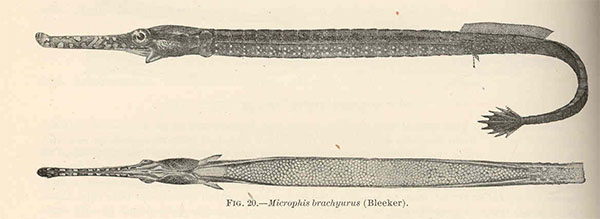 짧은꼬리실고기(Microphis brachyurus)의 측면(위 그림)과 복면의 육아낭(아래 그림) 묘사도. 육아낭에 알이 들어찬 모습이 그려져 있다. 이 그림은 육아낭의 덮개가 개방된 경우이다. 육아낭은 가슴지느러미 뒤에서 시작되는 몸통 거의 전체에 걸쳐 마련되어 있다. Upper illustration/depiction of lateral view of Short-tailed pipefish(Microphis brachyurus). Lower illustration/depiction of brood pouch on the ventral side. The brood pouch is shown filled with eggs, shows the case when the cover of the brood pouch is opened. The brood pouch is provided over almost the entire trunk belly, starting behind the pectoral fin. Date/1906. Author/David Starr Jordan(1851–1931) |
 짧은꼬리실고기 측면 묘사도. Depiction of Short-tailed pipefish(Microphis brachyurus). Author/FAO. (CC BY NC) |
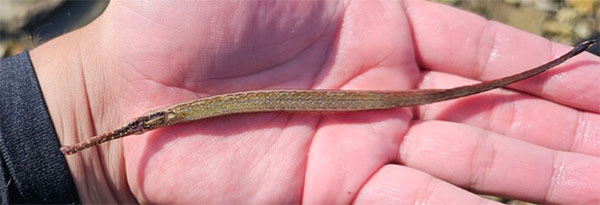 짧은꼬리실고기. 남해 동부 하천에서 채집됨. 2023년 11월 6일. Short-tailed pipefish(Microphis brachyurus). Collected from a stream of eastern South Sea of Korea. Nobember. 6, 2023. Author/김기은(Kim ki-eun). (CC BY NC) |
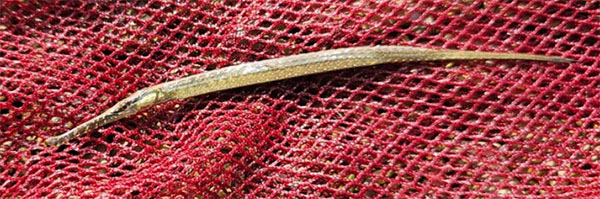 짧은꼬리실고기. 남해 동부 하천에서 채집됨. 2023년 10월 24일. Short-tailed pipefish(Microphis brachyurus). Collected from a stream of eastern South Sea of Korea. October, 24, 2023. Author/김기은(Kim ki-eun). (CC BY NC) |
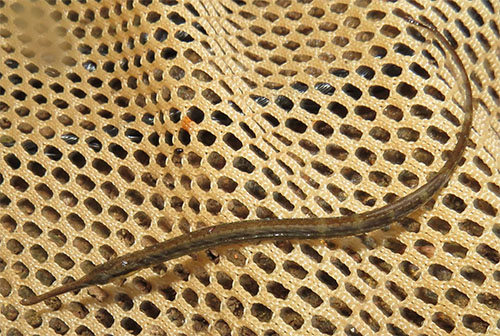 짧은꼬리실고기. Short-tailed pipefish(Microphis brachyurus). Location/Nueva Guinea, Atlantico Sur, Nicaragua. 니카라과. Author/ Eric van den Berghe. (CC BY NC) |
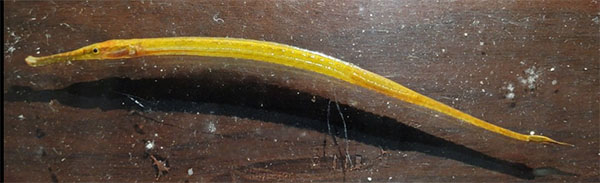 짧은꼬리실고기. 2024년 3월 13일 채집. Short-tailed pipefish(Microphis brachyurus). Location/south Korea. March, 13, 2024. Author/SuNi. (CC BY NC) |
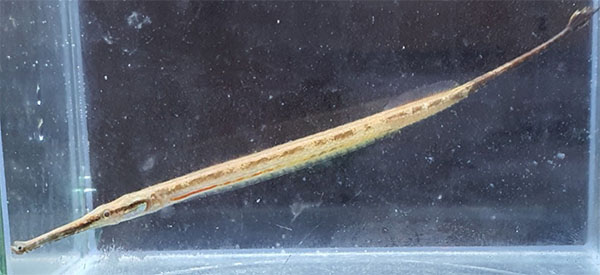 짧은꼬리실고기. 2024년 3월 14일 채집. Short-tailed pipefish(Microphis brachyurus). Location/south Korea. March, 14, 2024. Author/SuNi. (CC BY NC) |
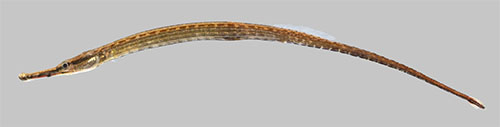 짧은꼬리실고기. Short-tailed pipefish(Microphis brachyurus). Location/collected in United States of America. Nicaragua. Author/Florida Museum of Natural History Ichthyology. (CC BY NC) |
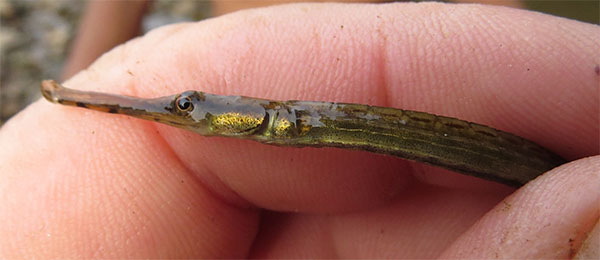 짧은꼬리실고기. Short-tailed pipefish(Microphis brachyurus). Location/Nueva Guinea, Atlantico Sur, Nicaragua. 니카라과. Author/ Eric van den Berghe. (CC BY NC) |
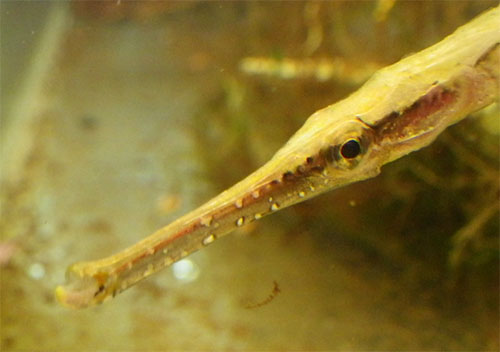 짧은꼬리실고기. Closeup of the head and mouth of Short-tailed pipefish(Microphis brachyurus). Location/, AuthorAndrew Bogott. (CC BY NC) |
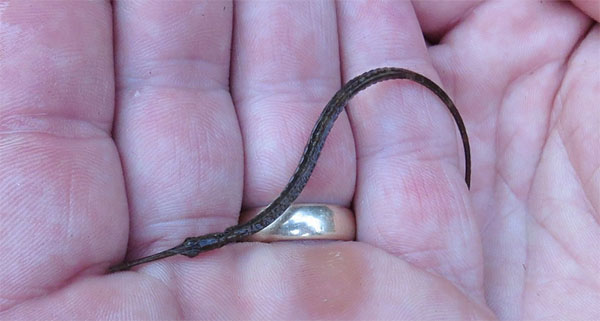 짧은꼬리실고기. Short-tailed pipefish(Microphis brachyurus). observed in Nicaragua. Author/Eric van den Berghe. (CC BY NC) |
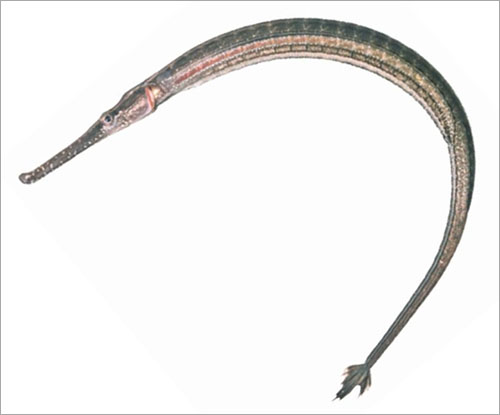 짧은꼬리실고기. Short-tailed pipefish(Microphis brachyurus). Creator/G. Allen, Western Australian Museum. Rights holder/CSIRO. (CC BY NC) |
 짧은꼬리실고기 묘사도. Depiction of Short-tailed pipefish(Microphis brachyurus). Observed in South Africa. Rights holder/South African Institute for Aquatic Biodiversity. (CC BY NC) |
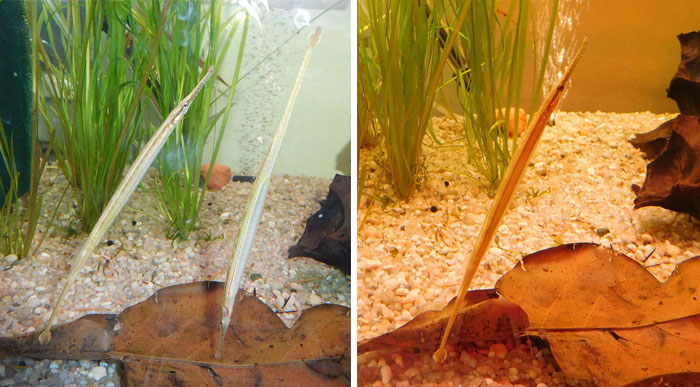 수족관의 짧은꼬리실고기. Short-tailed pipefish(Microphis brachyurus) in aquarium. Rights holder/Yuriy Kvach. (CC BY NC) |
| text on preparation |


|
| Copyright ⓒ FISHILLUST.COM All rights reserved. All contents can not be used without permission of the copyright holder. |


 검색
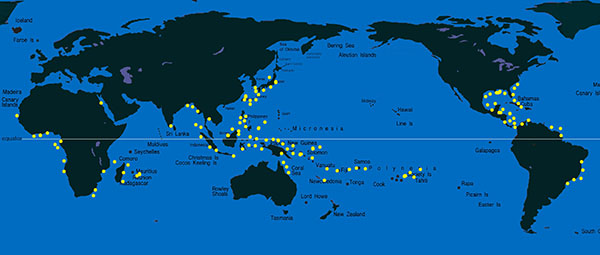 이 분포도는 2024년 5월 현재 주요 관련 사이트에 나와 있는 짧은꼬리실고기(Microphis brachyurus)의 분포 데이터를 이용한 것이다. 그러나 Microphis brachyurus의 4 아종이 독립 종으로 갈라지기 전 자료인 것으로 보인다. 즉 Microphis brachyurus의 4 아종 전체의 분포 데이터이지 독립 종이 된 Microphis brachyurus 단독의 분포 지역은 아닌 것으로 추측된다. 특히 대서양 분포 지역은 해당되지 않을 것으로 보인다. ※인용데이터/AquaMaps(2019, October).
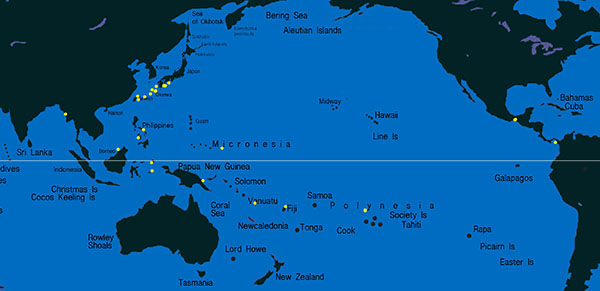 위 분포도는 짧은꼬리실고기가 4 아종으로 구성되어 있을 때의 “Microphis brachyurus brachyurus” 의 분포 데이터이다(출처/OpenStreetMap, OpenMapTiles, GBIF). 이 아종은 “Microphis brachyurus(짧은꼬리실고기)”로 독립 분리되었고 그대로 “짧은꼬리실고기” 이름을 재 명명 받았으므로 이 분포도는 Microphis brachyurus의 분포인 것이다. 다른 3 아종은 각기 다른 이름이 부여되었다. 그러나 시간이 지나면서 업데이트가 실시되었을 것이다. 예를 들어 오스트레일리아 분포는 위 지도에서 빠져 있는데 다른 여러 자료들을 보면 오스트레일리아 분포가 포함되어 있다. 결론적으로 짧은꼬리실고기의 분포 현황은 잘 정리되어 있지 않아 혼란스럽다는 것이다.
