
사이트 로그인
사이트 로그인
|
분류계보/경골상강→조기강→잉어목→잉어과→모래무지 아과→배가사리(Bae-ga-sari; Microphysogobio longidorsalis) Copyright by Kim In Young. 김인영 그림
|
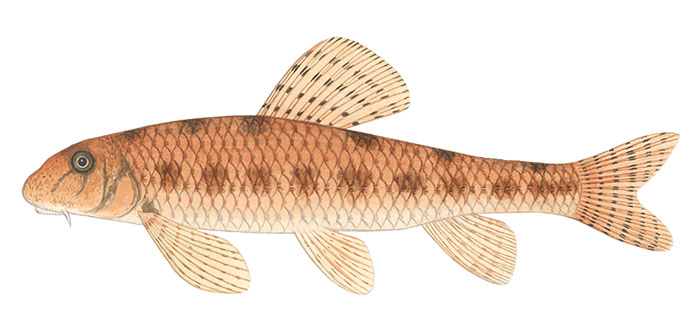 |
| 배가사리 기본 모습. Lateral view of Bae-ga-sari (Microphysogobio longidorsalis). |
[담수어] 분포; 아시아/한국 고유종으로 대동강, 임진강, 한강, 금강 등지에 분포한다. 등지느러미는 뒷지느러미보다 크고 배지느러미보다 앞에서 시작한다. 등지느러미 가장자리는 밖으로 둥근데 특히 수컷에서 두드러지게 불룩하다. 배지느러미는 편평하다. 꼬리지느러미는 끝이 깊이 갈라지고 아랫조각(하엽)과 윗조각(상엽)의 크기가 비슷하다. 측선은 뚜렷하고 몸의 양 옆 가운데를 거의 직선으로 달리지만 앞쪽에서 조금 배쪽으로 휜다. 비늘은 큰 편으로 기와처럼 배열되어 있다. 머리와 앞가슴의 배 쪽에는 비늘이 없다. 몸 빛깔은 등쪽의 윗부분이 암갈색이고 배쪽은 흰색이다. 몸 중앙에는 분명하지 않은 어두운 횡 방향 띠가 있으며, 이 띠 안에는 8∼9개의 어두운 색 반점이 나란히 있다. 등쪽으로는 분명하지 않은 갈색의 반점들이 흩어져 있다. 등지느러미와 꼬리지느러미에는 작은 흑점이 규칙적으로 배열하여 줄무늬를 이룬다. 산란기 수컷은 몸 전체가 검게 변하며 등지느러미 가장자리에는 아주 붉은 색깔을 띤다. 중, 상류의 물이 맑고 바닥에 자갈이 깔려 있는 하천에 서식한다. 바닥 가까이에서 주로 부착조류를 먹고 작은 곤충과 모래도 먹는다. 겨울이 시작되기 바로 전과 알을 낳을 무렵에는 큰 무리를 이룬다. 산란기는 6∼7월경이며 2년이면 성숙한다. |
[Freshwater fish]] Distribution; Asia/endemic to Korean peninsula. Dae-dong river, Im-jin river, Han river, and Geum river. Corner of mouth reaches to front margin of eye, and with a pair of barbels; it’s length slightly shorter than eye diameter. Gill opening relatively large. Eye located slightly above the center of head. Dorsal fin larger than anal fin, its’ origin placed ahead of pelvic fin. Margin of dorsal fin convex; distinctly convex in males. Pelvic fin flat. Caudal fin deeply emarginated; both lobes of caudal fin almost equal in size. Lateral line complete and slightly curved down in the anterior portion. Scales embedded like roof tile system. Scales absent on head and breast. Body color dark brown dorsally, whitish ventrally. 8∼9 dark blotches along flank laterally. Indistinct dark blotch series on dorsal side. 3~4 dark stripes on dorsal fin and 5 ones on caudal fin. Nuptial body color of male is black with deep red hue on dorsal fin outskirt. Inhabit mid and upper reaches of streams with sand and gravel bottoms. Feed mainly on attached algae including aquatic insects and grain of sand. Forming large school in spawning season and in the beginning of winter season. Spawn in June to July. Mature in 2 years. |


|
| Copyright ⓒ FISHILLUST.COM All rights reserved. All contents can not be used without permission of the copyright holder. |


 검색
