
사이트 로그인
사이트 로그인
|
분류계보/경골상강(硬骨上綱)→조기강(絛鰭綱)→잉어목→미꾸리과→미꾸리(Asian weather loach; Misgurnus anguillicaudatus) Copyright by Kim In Young. 김인영 그림
|

|
| 미꾸리 기본 모습 lateral view of Asian weather loach(Misgurnus anguillicaudatus) |
[담수어] 분포; 아시아/시베리아, 사할린, 한국, 일본, 중국, 베트남에 분포. 유럽/유럽 여러 나라에 이입되어 있다.; 독일의 나일강, 이탈리아의 미라노, 아랄해 수계, 북아메리카, 오스트레일리아, 하와이등에 분포하며 관상어 시장에서 활발히 거래된다. 몸이 가늘고 긴 원통형이며 뒤쪽으로 갈수록 점차 옆으로 납작해진다. 머리는 원추형으로 위아래로 약간 납작하다. 미병부의 등 중심축과 배쪽 중심축에 지방질의 벼슬 같은 융기부가 뚜렷하게 있다. 미꾸라지보다 몸이 전체적으로 둥그스름한 편이다. 눈이 작고 머리 위쪽에 붙어 있으며 눈 밑에는 움직일 수 있는 가시인 안하극이 없다. ※ 안하극(眼下棘/Suborbital spines); 미꾸리과 물고기들은 거의 대부분 눈 아래에 끝이 갈라진 가시 1개가 있는데 평소에는 피부 주머니 안에 숨겨져 있다가 바닥을 후벼 팔 때와 위협을 당했을 때 튀어나와 세워진다. 관상어로 기를 때 관리하다가 그물에 이 가시가 결려 엉킬 수도 있고 큰 개체일 경우 미꾸리를 잡은 손에 상처를 낼 수도 있어서 조심해야 한다. 주둥이는 길며, 입은 주둥이 끝에서 아래쪽으로 향해있으며 밑에서 보면 말굽모양이다. 아랫입술의 중앙에는 잘 발달된 구엽이 있다. 입은 3쌍의 입수염으로 둘러싸여 있고 이중 가장 긴 수염은 미꾸라지에 비해 짧다. 미꾸리는 먹이를 찾기 위해 바닥을 후빌 때 수염을 사용하지만 위협을 느꼈을 때 진흙이나 자갈 속으로 숨기 위해 바닥을 팔 때도 사용한다. 다른 미꾸리과 종들은 눈 아래 가시를 이용해 바닥을 파고 들어가지만 미꾸리는 이 가시가 없다. 가슴지느러미가 암컷은 둥글고 짧은데 반해 수컷은 가늘고 길다. 수컷의 가슴지느러미 기부에는 긴 골질반이 있다. 옆줄은 매우 짧아서 불완전한 형태를 띠고 있다. 몸 바탕 색은 황색 내지 황갈색이며 배는 연하다. 그러나 핑크 색, 오렌지 색, 백색 돌연변이, 회색 등 변이가 있다. 몸과 체측에 어두운 녹회색 내지 어두운 황갈색의 작은 반점들이 산재한다. 등지느러미와 꼬리지느러미에는 작은 반점들이 여러 줄 규칙적으로 배열되어 있다 꼬리지느러미가 시작되는 부분의 위쪽에는 1개의 작은 검은 점이 있다. 몸 표면에서는 점액을 분비한다. 강의 하류나 습지, 연못, 논처럼 물 흐름이 느리거나 물이 고여 있는 곳에서 살지만 미꾸라지와 달리 강 중•상류에서 발견되기도 한다. 산소가 부족한 경우에도 수면 위의 공기를 마셔 장으로 호흡할 수 있기 때문에 3급수 정도의 물에서도 잘 견디며, 피부에 점액을 분비하기 때문에 물 밖에서도 건조되는 시간이 길어져 빨리 죽지 않는다. 온도가 낮아지거나 가뭄이 들면 진흙으로 들어간다. 잡식성으로 식물성인 조류를 비롯해 동물성 플랑크톤, 모기 유충인 장구벌레, 실지렁이 등을 먹는다. 산란기는 6∼7월이다. 번식기에 수컷의 가슴지느러미 기조 위에는 미세한 추성(번식기에 사마귀 모양으로 돌출되는 돌기)들이 나타난다. 짝짓기가 시작되면 수컷은 암컷 몸을 감아서 알을 낳도록 자극하며 알이 쏟아지면 동시 정액을 뿌려 수정시킨다. 약 2,000~15,000개의 알을 낳아서 진흙이나 모래 속에 묻으며 보통 2~6일 후에 부화한다. 몸길이가 15mm 정도 되면 다 자란 미꾸리의 모습이 되며, 1~2년이 지나면 짝짓기를 할 수 있을 정도로 성숙한다. 동아시아 지역에서 흔히 음식으로 이용하며 양식으로 대량 생산된다. 한국에서는 미꾸라지와 함께 추어탕 재료로 쓰인다. |
[Freshwater fish] Distribution; Asia/Native to Siberia(Tugur and Amur drainages), Sakhalin, Korea, Japan, China south to northern Vietnam. Europe/Introduced in several localities in Rhine (Germany) and Ticino (Italy, north of Milano) drainages, Aral Sea basin, North America, Australia and Hawaii. This species proved successful in the aquarium fish trade and has also been introduced to other countries Like many other loaches, slender and eel-like; body slender and cylindrical, compressed posteriorly. Head in conical shape and slightly depressed. Conspicuous adipose crests along the ventral and dorsal mid-lines of the caudal peduncle. The whole body profile is slightly rounder than Chinese loach(Misgurnus mizolepis). Eye small, placed dorso-head. Suborbital spine absent(hidden in the skin). The mouth surrounded by 3 sets of barbels. the longest barbel shorter than Chinese loach. It uses them to sift through silt or pebbles to find food. It also uses them to dig under gravel and sand to conceal itself out of nervousness or defence unlike the other loaches who use the suborbital spine beneath the eyes. Snout elongated, mouth placed below the snout and directed downwards. Mouth with horse shoe shape when seen below. Lower lip with a groove in center that separates the lip into 2 labial lobes. Pectoral fin of male longer than female, tip of pectoral fin pointed in male and rounded in female. Pectoral fin of male with lamina circularis(small bony plate) under it’s base. Lateral line incomplete and very short. Body is mottled with darker greenish-gray to dark brown small markings, against a yellow-brown to brown color; also comes in a variety of colors, such as pink, orange, albino and gray with lighter undersides. Several bands of small spots on dorsal and caudal fins. A black spot on upper side of caudal fin. Secrete mucus onto skin. Inhabit slow flowing or stagnant waters in lower reaches of streams, swamps, ricefields or ponds, but occasionally found in mid or upper reaches of streams unlike the Chinese loach(Misgurnus mizolepis). Have adapted to low oxygen levels in warm, muddy rivers or dirty ponds by being able to gulp up atmospheric oxygen as well as survive for long periods of time outside of water by producing a layer of mucus to keep themselves damp they can survive short periods of desiccation. Feeds on worms, small crustaceans, insects, insect larvae, and other small aquatic organisms. Spawn in June to July. Small nuptial tubercles appear on pectoral fin of males in spawning season. Male wraps his body around the female and stimulates her to release a cloud of eggs, which he simultaneously fertilizes. 2,000~15,000 eggs in a litter. Eggs are buried under mud or sand, hatch in 2~6 days. Larvae get adult form when grew 15mm and can reproduce after 1~2 year growth. The pond loach is a common culinary fish in East Asia, raised on a large scale in fish farming. In Korea, chueo-tang(loach soup) is made with pond loaches. |
 미꾸리. Asian weather loach(Misgurnus anguillicaudatus). Author/CAFS; 중국수산과학연구원) |
 미꾸리. Asian weather loach(Misgurnus anguillicaudatus). Author/Manoel Jr. |
 미꾸리의 변색; 핑크 미꾸리. Pink loach(Misgurnus anguillicaudatus). Author/Gourami Watcher |
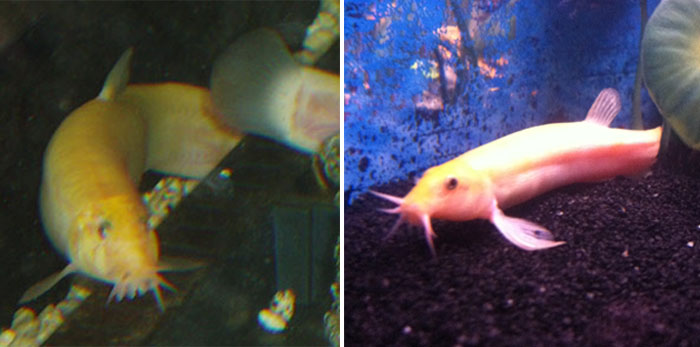 Left/오렌지 미꾸리(미꾸리 변색). Orange loach(Misgurnus anguillicaudatus). Author/Maksim Right/금미꾸리(미꾸리변색). Gold loach(Misgurnus anguillicaudatus). Author/A.england85 |
 일본 시장에서 판매되고 있는 미꾸리. Loach(Misgurnus anguillicaudatus) sold at the markets in Japan. Left/Author; Naotake Murayama. Right/Author; Daiju Azuma |
 Left/추어탕. 미꾸리와 미꾸라지를 사용한다. Korean cuisine. Chueotang(pond loach soup) served with chopi powder and deulkkae powder. Author; 도매지기. Right/추어탕. Chueotang, made from Misgurnus mizolepis, Misgurnus anguillicaudatus in Korean cuisine. Author/Dalgial |
 에도 시대부터 내려온 일본 도쿄의 200년 전통 식당 “코마카타 도제우(Komakata Dozeu restaurant)”의 추어탕. 왼쪽은 양념을 얹기 전, 오른 쪽은 양파를 듬뿍 얹은 모습. 숯불에 끓이고 있는 상태. Pond loach soup of restaurant Komakata Dozeu in Japan. On boiling. Before put spices and after put onion. Author/Edomura no Tokuzo |


|
| Copyright ⓒ FISHILLUST.COM All rights reserved. All contents can not be used without permission of the copyright holder. |


 검색
