|
Oder Anguilliformes Family Nemichthyidae(Snipe eels).
Slender snipe eel
Nemichthys scolopaceus (Richardson 1848) Max length/130 cm TL
Japanese name/Shigi-unagi
Chinese name/線鰻
D/spines 0, soft ray around 350. A/spine 0. soft ray around 350. Vertebrae/around 750.
Distribution; Worldwide in tropical and temperate seas. Western Atlantic/Nova Scotia, Canada and northern Gulf of Mexico to Brazil. Eastern Atlantic/Spain to South Africa, including western Mediterranean; reported from Iceland. Regularly found in the Skagerrak. Northwest Pacific/Japan and Arafura Sea. Eastern Pacific/Alaska to Chile including the Gulf of California.
General; A fish that can weigh only 80-400g. yet reach 1.5 m in length. The body is extremely slender, long, flat on the side. Posterior end of body narrow, ending as a long filament. The head is narrow. Upper and lower jaws are elongated, curved up and down in a "V" shape, with a dot-shaped top. Upper and lower jaws have small conical teeth densely distributed, Mouth is split to the posterior margin of the eye. Eyes large, occupying more than 1/2 of the height of the head. Dorsal fin with about 350 rays. Anal fin with about 320. The dorsal and anal fins are connected at the posterior tip of tail. Caudal fin not recognizable. It has more vertebrae in its backbone than any other animal, around 750. Anus has moved forward during its evolution and is now located below the base of the pectoral fin. The anterior and posterior nostrils located ahead of the eye. The fish has no scales. Lateral line complete. The height of anal fin is much higher than the dorsal fin and approximately equal to the body height of the fish(※ However, on the contrary, there are other depictions describing the dorsal fin as being much higher, so it is impossible for the author to draw a conclusion as to which one is correct. The base of the anal fin has small spikes protruding from the body surface. The tail is extremely long and easily damaged, making it difficult to collect complete individuals. The gill slit are long and are located below the pectoral fins. The gill slits account for more than 1/2 of the body height of the fish.
Dark brown or grey in color, Head black when fresh, the back side of the occiput is transparent, the ventral side is dark with melanin precipitation, the pectoral fin is transparent, and the end is black. The head of the specimen in formalin is black, the dorsal side of the fish body is white, the ventral side is black, the pectoral fins are white, and the end is black. Anal fin almost black. Mesopelagic and bathypelagic. Occur in midwater, usually below 400 m and occasionally in shallow water in the northern part of its range.
Oviparous, Its larvae with planktonic leptocephali life, shaped like leaves, which actually get smaller before transforming into adults. Feed on crustaceans while swimming with its mouth open. The male fish is smaller than the female fish, and the prolonged snout will shrink after sexual maturity to the position of the front nostril. It has a lifespan of ten years. Many specimens found in museums were spat up from larger fish that were caught in trawls.
|


 검색
 도요새장어의 수컷은 완전히 성숙되면 긴 부리가 사라진다. The male snipe eel loses its long beak when it is fully mature. Illustrated by Kim In Young(derived work)
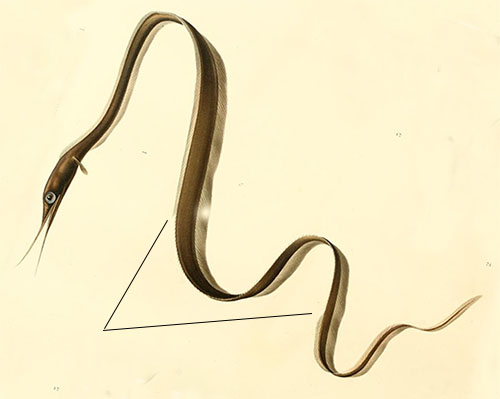 Figure 1. Author/Friedrich Wilhelm Winter. Date/1908
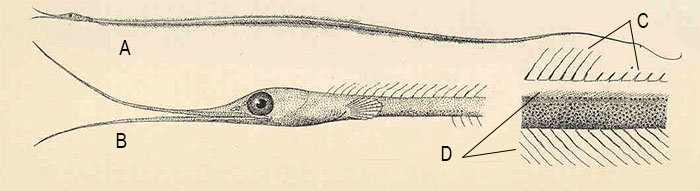 Figure 2. Author/David Starr Jordan(1851–1931)
 Figure 3. Author/Adams, Arthur; Gray, John Edward. Date/1850
 Figure 4. Author/George Brown Goode(1887).
 Figure 5. Author/Bleeker. Date/1911


