
사이트 로그인
사이트 로그인
|
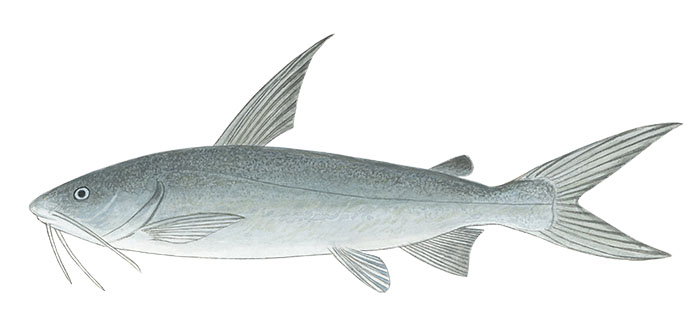
분류계통/경골상강→조기강→메기목→바다동자개과→큰바다동자개(Giant catfish; Netuma thalassina) Copyright by Kim In Young. 김인영 그림
|
|
| 큰바다동자개 기본 모습. Lateral view of Giant catfish(Netuma thalassina) |
 큰바다동자개. Giant catfish(Netuma thalassina). 장소(Locality): Kuwait, Kuwait Bay. by Randall, J.E |
메기목 바다동자개과 Order Siluriformes Family Ariidae(sea catfishes). 분포; 인도-서태평양/일본 남부, 필리핀, 태국에서 오스트레일리아에 이르는 서부태평양, 인도양(홍해)의 연근해에 분포한다. 희귀하지만 메콩강 델타에서도 발견된다. 최대 150cm 이상까지 성장하나 일반적으로 25∼70cm 이다. 해양성 종이나, 때때로 기수역이나 드물게는 강에서도 발견된다. 수심 100m 이내의 대륙붕 주변에 서식한다. 주로 게류나 새우류를 먹지만 두족류나 어류 등을 먹기도 한다. 수컷이 알을 입에 보호하여 구강 부화를 시킨다. 부화된 자어는 2개월 간 수컷의 입을 피난처로 삼아 성장하다가 떠난다. 새끼들이 떠난 후 어미 수컷은 먹이를 게걸스럽게 찾아먹으며 자신의 새끼도 일부 잡아먹을 수 있다. 식용으로 중요한 물고기이며 주로 저층 트롤어업, 통발어업, 낚시어업 등으로 어획된다. |
Order Siluriformes Family Ariidae(sea catfishes). Distribution; Indo-West Pacific/From southern Japan, Philippines Thailand to Australia and Indian ocean(Red Sea). Rarely in the Mekong delta. A marine species often found in estuaries, but rarely enters freshwater. Reported to occasionally ascend into fresh water. Inhabit continental shelf within 100m depth. Feeds mainly on crabs, prawns, mantis shrimps(Squilla species) but also on fishes and mollusks. Incubates eggs in the mouth of male. The fry continue to take refuge in the mouths of the male fish for the first 2 months and once they leave, the males start to eat avidly and may consume their own young. An important food fish. Marketed mostly fresh; often dried. |
 큰바다동자개 일러스트. Illustration of Giant catfish(Netuma thalassina). by FAO |
 큰바다동자개. Giant catfish(Netuma thalassina). 장소 place; Karachi. Author/Hamid Badar Osmany |
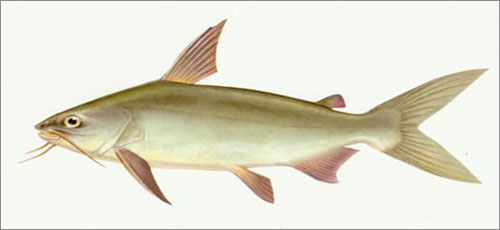 큰바다동자개 일러스트. Illustration of Giant catfish(Netuma thalassina). by CAFS |
 태국 음식. 큰바다동자개 알탕(ka-phrao khai pla riu-kiu). 향신료 바질 음식이며 계란 노른자위가 가운데에 있다. A bowl of ka-phrao khai pla riu-kiu, literally "giant catfish eggs stir-fried with basil". served with steamed rice and an egg, as sold at a restaurant named "Forget Me Not" in Bangkok, Thailand. 큰바다동자개. Giant catfish(Netuma thalassina). Author/Bitterschoko |


|
| Copyright ⓒ FISHILLUST.COM All rights reserved. All contents can not be used without permission of the copyright holder. |


 검색
