close_btn

송어/산천어(Masu salmon). Oncorhynchus masou masou(Brevoort, 1856). Family 175

분류계통/경골상강→조기강→연어목(Order Salmoniformes; salmons)→연어과(Family Salmonidae; Salmonids)→송어/산천어(Masu salmon; Oncorhynchus masou masou)
Superclass Osteichthyes→Class Actinopterygii→Order Salmoniformes→Family Salmonidae(Salmonids)→Masu salmon; Oncorhynchus masou masou)

Copyright by Kim In Young. 김인영 그림
Oncorhynchus_masou_masou_oceanphase_mypainting_700.jpg
[painting 1] 바다 생활기의 송어 성어의 모습. Lateral view of adult Masu salmon(Oncorhynchus masou masou) in ocean phase. 참고한 원본 그림 출처(Referenced painting source/fishbiosystem.ru/ SALMONIFORMES/Salmonidae/ Oncorhynchus_masou_masou2.html

Copyright by Kim In Young. 김인영 그림
Oncorhynchus_masou_masou_anadromous_nuptial-male_mypainting_700.jpg
[painting 2] 강해형 송어 수컷의 혼인색. Nuptial color of anadromous male Masu salmon(Oncorhynchus masou masou). 참고한 원본 그림 출처(Referenced painting source/wildsalmoncenter.org/salmon-species/masu/

Copyright by Kim In Young. 김인영 그림
Oncorhynchus_masou_masou_landlocked_mypainting2_colordarkened_700.jpg
[painting 3] 산천어(山川魚). 또는 담수 생활기의 송어 유어. Masu salmon or Cherry salmon(Oncorhynchus masou masou), Landlocked specimen or juvenile in freshwater phase. 

[소하성/Anadromous]
연어목 연어과 Order Salmoniformes Family Salmonidae(Salmonids)
송어/산천어(松魚/山川魚, Masu salmon/Cherry salmon). 
Oncorhynchus masou masou (Brevoort, 1856). Max length; 79.0 cm TL.
Korean name/Song-eo(송어; 강해형/anadromous) or San-cheon-eo(산천어; 육봉형/land-locked)
Japanese name/Amago or Sakuramasu
D/spine 0, soft ray 10~16.  A/spine 0, soft ray 14~15. LL/112~140. Vertebrae/63- 65.GR/16~22

분포; 서북태평양/러시아의 캄차카 반도, 쿠릴열도, 프리모르스키 지방, 남쪽으로 한국, 대만, 일본에 분포한다. 한국은 경상남도 이북의 동해안에 분포한다.
일반개요; 한국 고서에서 보면 송어(松魚)라는 이름은 살의 빛깔이 붉고 선명하여 소나무 마디와 같으므로 송어라고 하였다는 설, 몸에서 소나무 향기가 남으로 송어라고 하였다는 설, 송어의 살결이 소나무(松)결 같아서 송어라고 하였다는 설 등이 있다. 송어는 영명으로 마수 살몬(masu salmon), 마수(masu)라고 부르며 학명이 같으면서 다른 이름으로 불리는 것에는 체리 살몬(cherry salmon/land locked trout)이라고는 것이 있는데 이것은 육봉형인 산천어를 의미한다. 육봉형은 일본(Oncorhynchus masou macrostomus와 Oncorhynchus rhodurus)과 대만(Oncorhynchus masou formosanus)에도 있다. 학명은 “Oncorhynchus masou”로 같지만 지역에 따라 다른 송어의 육봉형은 아종명의 차이로 구분한다. 완전이 정리된 것 같지 않고 좀 혼란스럽다. 아래에 별도로 설명해 놓았다.

몸통은 두껍고 옆으로 다소 납작한 방추형이다. 주둥이는 뭉툭하고 양턱의 길이가 같다. 입이 크고 위턱의 뒤는 눈의 뒤쪽 가장자리를 지난다. 비늘은 매우 작고 측선은 체측 중앙에 일직선으로 놓여있다. 꼬리지느러미 뒤 가장자리는 심하지는 않게 안으로 패였다. 

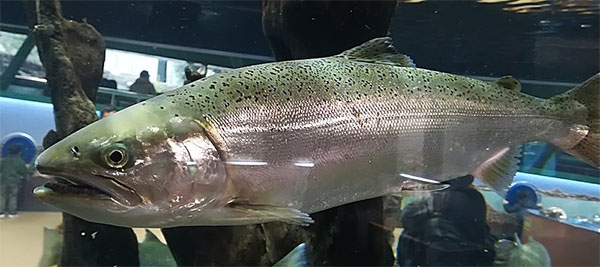
송어의 유어(담수에 사는 것) 또는 육봉형(산천어)은 등 쪽과 체측은 연두색이 섞인 연한 황갈색이며 배쪽은 은백색이다. 등쪽에 작은 검은 점들이 흩어져 있고 체측 중앙에는 짙은 갈색의 큰 타원형 수직 무늬가 7~10개가 있고(파마크; parr marks) 그 아래 배쪽에는 동공 크기의 갈색 반점이 산재되어있다. 바다에 사는 강해형의 송어는 등쪽이 짙은 청색, 배쪽은 은백색이며 등쪽에는 작은 점들이 산재해 있다. 성적으로 성숙한 산란기의 성어는 등이 검어지고 체측의 수직 띠들이 진홍색조의 밝은 적색을 띠면서 불규칙한 모양으로 복부 쪽으로 늘어나고 배 아래쪽에 있는 수평 방향의 밝은 부분과 합류한다. 적색 때문에 체리 살몬(cherry salmon 뻐찌 연어)이라는 이름은 나왔다. 번식기에는 수컷은 주둥이가 연장된다. 성어의 보통 크기는 50 cm 길이에 2.0 ~ 2.5 kg 나간다. 최대는 71 cm, 9 kg 이다. 

송어는 65-58°N 범위에 사는 냉대성 물고기이며 표면층에서부터 수심 200m 까지 발견된다. 다른 태평양 연어류와 마찬가지로 해수와 담수 양쪽에 걸쳐 산다. 모천회귀성을 지니고 있어서 바다에서 유어 때 살던 하천으로 되돌아간다. 5, 6월경에 하천을 올라와 8∼10월경에 하천 상류에서 산란을 한 다음에 죽어버린다. 부화된 치어는 1년 내지 2년간(최대 3년) 하천에서 살다가 9, 10월에 바다로 내려간다. 바다로 나가지 아니하고 담수에서만 사는 개체(육봉형)로 고착되는 개체들도 있다. 이 개체군을 한국에서는 산천어라고 하며 일본과 대만에도 각기 학명(아종명)이 다른 송어의 육봉형들이 있다. 송어와 산천어는 동일종임으로 바다에서 소상한 송어와 산천어 수컷 간에 교배 현상이 일어난다. 산천어는 성체가 되어도 20~25cm로 작고 어린 시기의 무늬(파 마크; parr marks)가 없어지지 않는다. 바다로 이주해 성장한 송어는 40~60cm로 크고 어린 시기의 파 마크가 사라지고 은빛이 된다. 

해수 생활 기간은 해수로 나갔을 시기의 나이에 따라 차이가 있는데 2년에서 3.5년 사이이다. 바다에서는 갑각류를 비롯한 동물성 플랑크톤을 먹으나 작은 물고기를 잡아먹는 수도 있다. 나이가 3년생 내지 7년생이 되어 성적으로 성숙한 것은 강으로 올라가 산란을 한다. 산란을 위해 담수로 이동하는 시기는 다른 연어류보다 일찍 시작된다. 산란후에는 대부분 죽으며 살아남은 개체는(대개 크기가 작은 수컷) 다음 해에도 산란에 참여한다. 부화한 자어는 바로 바다로 이동하지 않고 산란지인 상류의 물살이 약하고 수심이 얕은 곳에 머물러 산다. 좀 더 자란 새끼들은 작은 웅덩이 물이나 골이 파진 물에서 깔따구, 곤충 강도래, 파리 유충, 또는 낙하하는 육상 곤충을 잡아먹는다. 담수에서 2년을 자란 후(드물게는 3년) 바다로 이동한다. 송어는 다른 연어류와 다름 없이 상업적으로 어획되는 물고기이다. 양식업도 발달해 있고 낚시 대상어로도 인기가 높다. 

Masu_salmon_2old-illiustrations.jpg서양 고전 문헌 속의 송어(Oncorhynchus masou) 성어 그림
Illustrations of adult Masu salmon(Oncorhynchus masou) in old literatures. Left/Author; Brevoort, James Carson, 1818-1887. Right/Author; David Starr Jordan(1851–1931).

Oncorhynchus_masou_masou_Jony_600.jpg산천어 또는 송어. 성어로 추정됨. Cherry salmon(Oncorhynchus masou masou). Presumably adult. Author/Jony Cooper

Oncorhynchus_masou_masou_Gaeho77_600.jpg산천어. 단양 아쿠아리움. Land-locked Masu salmon(Oncorhynchus masou masou). Danyang aquarium in Korea. Author/Gaeho77

Oncorhynchus_masou_2_Σ64_600.jpg
송어의 유어 또는 산천어. Juvenile of Masu salmon or Land-locked Masu salmon. Author/Σ64 

Oncorhynchus_masou_Σ64_600.jpg송어의 유어 또는 산천어. Juvenile of Masu salmon or Land-locked Masu salmon. Author/Σ64

Oncorhynchus_masou_masou_Apple_crop600.jpg송어의 성어. 편집 편의상 세로 사진을 오른쪽으로 90° 회전시킨 것임. Adult Masu salmon(Oncorhynchus masou masou). Rotated 900 clockwise from original picture. Capture place; the Nagano Chikuma River. Author/Apple2000.

혼동되는 송어의 아종 또는 근인종.
붉은점송어(또는 붉은점산천어), Red-spotted masu salmon(Oncorhynchus masou macrostomus)
붉은점송어(또는 붉은점송어), red-spotted masu salmon는 바다와 담수를 오가는 소하성 개체군과 담수에만 사는 개체군 양쪽이 존재한다. 크기는 50cm까지 자란다.  일본 고유종으로 일본명은 아마고(amago)이다. 담수 개체군을 한국 자료에서는 산천어에 비유하여 “붉은점산천어”라고 부르고 있다. 산천어와 붉은점산천어(또는 붉은점송어)는 송어(학명; Oncorhynchus masou)의 아종으로 산천어의 아종학명은 “Oncorhynchus masou masou”이며 붉은점산천어의 아종명은 “Oncorhynchus masou macrostomus”이다. 붉은점산천어(또는 붉은점송어)와 산천어의 다른 점은 산천어(일본명; 야마메/yamame)의 파 마크(parr mark; 대부분의 어린 연어류가 공통적으로 가진 체측에 있는 여러 개의 검은 수직 반점 무늬)가 모두 검정색(검은 갈색)인데 반하여 붉은점산천어(또는 붉은점송어)는 붉은 색인 점이다. 종전에는 비와송어(Biwa trout/Oncorhynchus rhodurus)의 아종으로 알려져 있다가 송어의 아종으로 수정되※다. 비와송어도 일본 고유종으로 붉은점송어(amago)와 겹치는 분포지역에 살고 있다. (※ 아종명 “Oncorhynchus masou macrostomus”는 WoRMS(세계해양생물종등록소)가 인정한 학명임/accepted name)

Oncorhynchus_masou_ishikawae_OpenCage_crop600.jpg일본의 붉은점송어(또는 붉은점산천어), Red-spotted masu salmon(Oncorhynchus masou macrostomus or Oncorhynchus masou ishikawae). 또는 아종명을 Oncorhynchus masou ishikawae라고도 한다. Location/Osaka Suido Kinenkan (water supply memorial museum), Japan. Author/OpenCage

이시카와이(Oncorhynchus masou ishikawai)
붉은점산천어(붉은점송어)의 학명에는 혼동이 있다. 일본 매체에서는 붉은점산천어(붉은점송어)의 아종명을 O. m. 이시카와이(Oncorhynchus masou ishikawai(Jordan & McGregor, 1925)”라 부르기도 한다. IUCN(세계자연보전연맹)은 이시카와이(Oncorhychus ishikawai 를 사추키마수 연어(satsukimasu salmon)라 부르며 일본의 나가라 강에 사는 개체군만 지칭한다. 이 강은 붉은점송어(붉은점산천어)의 분포지 안에 포함된 일부 지역이다. 그러나 또 다른 소스에서는 이시카와이(O. m. ishikawai)는 송어(yamame)의 육봉형만을 지칭한다. 그러나 또한 FishBase에서는 소하성 개체군(송어)과 육봉형 개체군(산천어)을 다 포함한 송어의 동종 이명으로 정리한다. 또 이와메 송어(Iwame trout)라고 부르는 것도 있는데 육봉형 붉은점산천어 서식지의 일부 강 상류에서 발견되는 개체들로 이것들은 몸에 파 마크가 전혀 없다. 참으로 복잡하다. 세계해양생물종등록소(WoRMS)는 Oncorhynchus masou ishikawai를 인정하지 않고 Oncorhynchus masou masou로 정리하고 있다.

비와송어 (Biwa trout/Japanese Amago) Oncorhynchus rhodurus(Jordan & McGregor, 1925)
비와송어는 일본 비와호수에 사는 고유종으로 연어류의 하나이다. 바다와 담수를 오가는 소하성이다. 서태평양 연어류인 송어와 아주 가까운 인척관계이며 송어의 아종 학명(Oncorhynchus masou rhodurus)으로 설명될 때가 있으나 이는 인정된 것이 아닌 별칭의 하나이다. 보통 40~50cm이며 최대 70cm이다. 비와호수의 북부에서만 발견된다. ※세계해양생물종등록소(World Register of Marine Species)가 인정(accepted)한 학명이다. 

Oncorhynchus_masou_rhodurus_Totti_600.jpg비와송어 Biwa trout or Japanese Amago(Oncorhynchus rhodurus). Endemic to Biwa lake Japan. Author/Totti

이와메 트라우트(Iwame trout). Oncorhynchus iwame(Kimura & Nakamura, 1961)
이와메 송어(iwame trout)는 일본 담수에서 발견되는 송어류인데 이종간 교배로 생긴 돌연변이이다. 어린 연어들 대부분이 갖고 있는 체측의 파 마크가 없는 것이 특징이다. 바다로 나가지 않는 담수어이며 표준 표현형(standard phenotype; 파마크가 있는 표준형)을 갖고 있는 일부 개체군과 섞여 산다. 이 형태는 열성 유전(recessively inherited)이다. 무무늬 돌연변이는 일본 서부의 이시카와이(Oncorhynchus masou ishikawai)와 산천어(야마메; yamame/orhynchus masou masou)에서 나타날 수 있으나 구별하기는 어렵다. 이 돌연변이 형태는 1961년에 처음 보고되었고 신종으로 취급하여 학명을 Oncorhynchus iwame(Kimura & Nakamura, 1961)라고 부여했으나 이후 인정되지 않았고 단순히 송어의 다형(多形) 현상일 뿐이라고 증명되었다. Fishbase. Org 등 여러 자료에서 아직 살아있는 학명이지만 세계해양생물종등록소(World Register of Marine Species)에는 등재되어 있지 아니하다.

대만산천어(Taiwanese salmon). Oncorhynchus masou formosanus
대만산천어는 대만에만 있는 육봉형 송어이다. 대만연어라고도 부른다. 송어(Oncorhynchus masou)의 아종이다. 멸종 위기종이다. 대만산천어의 학명에는 논란도 많다. 어떤 학자는 산천어(O. masou masou/한국에도 분포하는 종)와 동일하다고 주장하고 어떤 학자는 지역적 아종 “O. masou formosanus”이 맞다 하고 또 어떤 학자는 완전이 별개의 종 “O. formosanus”이라고 주장한다. 여하튼 대만 연어는 아시아의 연어류 중 가장 남쪽에 분포하는 연어이다. 

Oncorhynchus_masou_formosanus_Colinwen_crop600.jpg대만산천어. Taiwanese salmon(Oncorhynchus masou formosanus). Author/Colinwen.tw


[Anadromous]
Order Salmoniformes Family Salmonidae(Salmonids)
Masu salmon/Cherry salmon
Oncorhynchus masou masou(Brevoort, 1856). Max length; 79.0 cm TL.
Korean name/Song-eo(송어)
Japanese name/Amago or Sakuramasu
D/spine 0, soft ray 10~16.  A/spine 0, soft ray 14~15. LL/112~140. Vertebrae/63- 65.GR/16~22

Distribution; Northwest Pacific/Kamchatka, Kuril Islands, Sakhalin, and Primorsky Krai south through Korea, Taiwan, and Japan. Eastern coasts in north of Gyeong Sang Namdo province, Korea..
General; Oncorhynchus masou masou, known as the masu salmon, masu, or the cherry salmon(land locked population). Some specimens are landlocked, and lives entire life in fresh water, in Korean case they are called as San-Cheon-Eo(산천어), they are critically endangered. Both sea water and fresh water specimens share common taxonomical name, thus crossbreeding occurs in nature. Landlocked Taiwanese or Formosan salmon Oncorhynchus masou formosanus found in certain freshwater systems of Taiwan, the Biwa trout(Oncorhynchus rhodurus) endemic of Lake Biwa, and the anadromous or stream-dwelling amago Oncorhynchus masou macrostomus restricted to western Japan. On average, this salmon prefers a temperate climate, around the area of 65-58°N, and in the sea, it prefers a depth range of 0–200 m.

Body of Masu salmon is fusiform in shape. Body moderately compressed and chubby. Snout rounded, length of both jaws almost equal. Mouth large. Posterior end of upper jaw surpass the posterior margin of eye. Scale very small. Lateral line straight and located at middle of body side. Posterior margin of caudal fin moderately emarginated. 

Juveniles of anadromous specimens and landlocked specimens with pale brown color dorsally and silvery white ventrally; Small dark spots scattered on back; 7~10 large, vertically oval, dark brown blotches(parr marks) arranged along body sides, and dark brown spots of eye size on ventral side. Adults of anadromous specimens in sea water with deep blue dorsally and silvery white ventrally and small blackish spots on back. A masu salmon which has reached sexual maturity has a darkened back, and the stripes on the body sides become bright red with crimson tinge to merge on the abdomen into one common longitudinal band of lighter color. For this reason, it was given the name cherry salmon.

Adults of land locked specimens grows to max 20~25cm; much smaller than anadromous ones and not lost their parr marks even in adult. While adults of anadromous masu salmon tend to weigh 2.0 to 2.5 kg and measure roughly 50 cm in length. The maximum size that can be attained is 71 cm long and 9 kg in weight. 

Like other Pacific salmon, Masu salmon’s lifecycle is subdivided into marine and freshwater periods; in rivers, this species lives from 1 to 3 years and can form living freshwater forms. The sea lifecycle, depending on the age of the young, continues for 2.0 to 3.5 years. In the sea, the masu salmon feeds intensely on crustaceans, less often on young fish. On attaining sexual maturity, in its third to seventh years of life, it enters rivers to spawn. Its spawning run starts earlier than that of other salmon species. 

After spawning, most passing fish die, and those that remain alive(preferentially dwarf males) participate in spawning the next year, too. Emerging from the nest, the young do not travel to the sea immediately, but remain in spawning areas, in the upper reaches of rivers, and on shallows with weak currents. The young move to pools and rolls of the river core to feed on chironomid, stone fly, and may fly larvae, and on airborne insects. The masu salmon travels to the ocean in its second, or occasionally even third year of life. This salmon, like most others, is a highly commercial species caught in fisheries, raised for aquaculture, and sought after as a game fish. It is marketed fresh and frozen and is often eaten broiled or baked.

==========================================

Subspecies of Oncorhynchus masou or nearest species.

Oncorhynchus masou macrostomus
The amago or the red-spotted masu salmon(Oncorhynchus masou macrostomus) is a salmonid fish endemic to Japan, and a subspecies of the more widespread Northwest Pacific masu salmon or cherry salmon(Oncorhynchus masou). It is distinguished by the presence of red or vermilion spots on the body along with black ones, while the nominate form O. masou masou, known as the yamame(산천어), only has black ones. The subspecies is a subject of aquaculture. It can grow up to 50 cm length. There are both anadromous(sea-run) and persistently stream-dwelling populations of the amago. Previously it was considered a subspecies of Oncorhynchus rhodurus, a name that currently only refers to the Biwa trout, which has a restricted distribution within the range of the amago.

Oncorhynchus masou ishikawae
Varying scientific nomenclature has been used of the various forms of cherry salmon. The vermilion-spotted amago has been referred to alternatively as O. m. ishikawae Jordan & McGregor, 1925, in Japanese media. The IUCN Red List indicated "Oncorhychus ishikawai " from the Nagara River only, which is within the amago range, and called it satsukimasu salmon. In other sources however the name O. m. ishikawae has been used of the non-anadromous forms of the widespread, black-spotted yamame, and the FishBase lists it as a synonym of O. masou masou that comprises both the anadromous and non-anadromous black-spotted morphs. 

Biwa trout(Oncorhynchus rhodurus)
The Biwa trout(Oncorhynchus rhodurus) is an anadromous salmonid fish of the genus Oncorhynchus, endemic to Lake Biwa in Shiga Prefecture, Japan, but also introduced to Lake Ashi and Lake Chūzenji. While called trout, the fish is most closely related to the masu salmon Oncorhynchus masou of the western Pacific, and is most often considered a subspecies of it, Oncorhynchus masou rhodurus, but scientifically invalid name. Adult Biwa trout usually range from 40 to 50 cm in length and 1.5 to 2.5 kg in weight although, large specimens can be up to 70 cm long and 5.0 kg in weight. It is found only in the waters of northern Lake Biwa.

Iwame trout
The iwame trout or markless trout is a variety of salmonid fish inhabiting some fresh waters of Japan. It is an intra-specific mutant morph of the masu salmon(Oncorhynchus masou) that is characterized by a lack of the lateral spot marks typical of the young fish in most populations. The iwame is a stream-resident morph that does not migrate to the sea. It occurs together with the standard phenotype in some populations. This morph is recessively inherited. This morph occurs in the amago subspecies(Oncorhynchus masou ishikawae) in Western Japan, and apparently also in the nominate subspecies yamame(Oncorhynchus masou masou), if these are not identical. The morph was scientifically described as a distinct species Oncorhynchus iwame in 1961 by Kimura & Nakamura. In the 2000s, the iwame morph was shown to occur as a polymorphism in random mating populations of O. masou, and is no more thought to have taxonomical value.

Taiwanese salmon(Oncorhynchus masou formosanus)
Oncorhynchus masou formosanus, the Formosan landlocked salmon or Taiwanese salmon, is a freshwater salmonid fish(land-locked salmon) endemic to Taiwan. The Formosan landlocked salmon is a subspecies of the more widespread West-Pacific cherry salmon(or masu salmon). This Taiwanese subspecies is critically endangered. The taxonomic rank of the endemic Taiwanese salmon is in dispute. Some authors consider it not distinct from the nominate cherry salmon(O. masou masou), others as a regional subspecies O. masou formosanus, and still others list is as a full species O. formosanus. At this time, these salmon represent the southernmost natural distribution of members of the family Salmonidae in Asia.


Masu_salmon_pelican_crop500.jpg일본의 산천어(아종명 미상). A kind of masu salmon. But they don't go to the sea. They live in a river all through their life. Shinagawa aquarium, Tokyo, Japan. Author/pelican from Tokyo, Japan

Masu_salmon_tapeworm_Daizennosuke_crop600.jpg일본의 고전에 나오는 그림. 항문 밖으로 나오고 있는 촌충. 산천어 초밥을 먹은 후에 나왔으며 길이가 2–3 m였다고 기록되어 있다. Date/1850. Author/Daizennosuke Koan. Source/Centers for Disease Control and Prevention


Copyright ⓒ FISHILLUST.COM  All rights reserved. All contents can not be used without permission of the copyright holder.

