
사이트 로그인
사이트 로그인
경골상강/Superclass Osteichthyes(bony fishes)→조기강/Class Actinopterygii(ray-finned fishes)→ 앨퉁이목은 아주 많은 여러 가지 외형의 물고기들이 모여 있는 목이며 5개 과로 구성되어 있다. 과들의 이름은 디플로포스과(Diplophidae), 브릿슬마우스과(Gonostomatidae/bristlemouths;솔니빨입과), 라이트피시과(Phosichthyidae/Lightfishes), 앨퉁이과(Sternoptychidae/Marine hatchetfishes;바다 손도끼과), 스토미아스과(Stomiidae/Barbeled dragonfishes; 수염용고기과 또는 Viperfish; 독사고기과)이다. 앨퉁이목에는 약 50속에 약 410 종이 알려져 있다. 다른 심해어류가 다 그렇듯이 앨퉁이목 어류들도 일반명을 갖지 못한 것들이 대부분이다. 앨퉁이목 전체를 일컷는 일반 영명은 “dragonfishes(용고기)”이며 아니면 목의 학명 영어식 발음대로 “stomiiforms(스토미폼스)”라고 한다. 학명 Stomiiformes는 "Stomias-shaped(스토미아스 모양)" 이라는 뜻인데 이는 그리스어 “stóma (mouth)"와 라틴어 “forma(form/shape)”의 합성어이다. 입이 매우 커서 그리스어 입(stoma)이 사용된 경위이다. ※ 한국말 이름 “앨퉁이”의 어원은 빛(열)을 발산하는 특징을 나타낸 “열퉁이”이가 변한 말 같으며 “퉁이”는 어떤 태도나 성질을 가진 것이라는 뜻의 접미어이다(출처; https://blog.naver.com/mistnote/221658895174 물고기 이름 유래와 어원) 앨퉁이목 물고기는 깊은 수심에 사는 표영성(漂泳性; 바닥에 살지 않고 부유해 다니는) 물고기이다. 전 세계 아열대와 온대 해역에 널리 분포하며 아북극해와 남극해에 까지 분포해역이 확대되어 있다. 앨퉁이목 어류 중 가장 작은 종은 지중해 고유종인 브릿슬마우스(bristlemouth, 학명; Cyclothone pygmaea)이며 다 자란 크기는 1.5 cm 밖에 안 된다. 가장 큰 종은 50cm인 바벨드 드래곤피시(barbeled dragonfish, 학명;Opostomias micripnis)로 대서양, 인도양, 태평양에 모두에서 발견되는 종이다. 앨퉁이목 물고기들은 매우 기괴하게 생겼으며 마치 악마의 모습인 것 같은 것들이 많다. 이 물고기들은 위턱 바깥쪽에도 이빨이 나있다. 대부분 입이 크고 눈 뒤까지 닿는다. 일부 종들은 턱에 수염이 1개 있다. 등지느러미 또는 가슴지느러미가 없는 것들이 있다. 기름 지느러미를 갖고 있다. 배지느러미 기조 수는 4-9개, 새파 수는 5-24 개이다. 비늘은 둥근비늘이며 잘 떨어져 나간다. 비늘이 없는 종도 있다. 몸색은 암갈색 내지 검정 색이 기본이며 일부 종들(Gonostomatoidei)은 은빛이다. 발광기관; 심해 동물들이 대부분 발광 기능을 갖고 있듯이 앨투이 목도 1종을 제외하고 모두 발광포(photophores/빛을 생산하는 기관)를 갖고 있으며 발광기가 앨퉁이류 특유의 구조적 특징을 갖고 있다. 다소 밝는 빛을 내며 빛의 색은 노랑, 백색, 보라, 적색일 수 있다. 이 물고기들에게서 나오는 빛은 먹이감 물고기들에게는 보이지 않는다. 발광 메커니즘은 단순하다. 체측에 작은 발광점들이 열 지어 있는데 이 발광점에는 렌즈와 반사경이 들어 있다. 대부분 종들은 발광점이 체측 아래 복부 쪽에 수평방향으로 한 줄 또는 두 줄로 나있다. 이 줄은 머리에서부터 꼬리 끝까지 연장되어 있다. 스토미아스과(Barbeled dragonfishes) 종들은 턱 수염에도 발광포가 있다. 빛이 생성되는 원리는 칼슘 이온의 효소 작용(an enzymatic reaction, a catylization of coelenterazine by calcium ions)이다. 주야간 수심 이동; 앨퉁이목 어류는 낮에는 깊은 수심에 있다가 해가 저무는 시간에 희미한 수면 빛을 향해 상승한다. 수면 쪽에 작은 물고기와 부유하는 무척추동물 같은 먹거리가 많기 때문이다. 야간에 열심히 사냥해 먹은 다은 동이 트는 시간에 다시 하강한다. 앨퉁이류는 태양광의 밝기를 세밀하게 몸으로 느끼는 것 같다. 그래서 낮에는 빛이 전혀 없는 것은 아닌 아주 낮은 빛 환경의 수심에서 머물러 있는다. 주야간 수심 이동은 모든 종이 하는 것은 아니다. 일부 큰 종들은 깊은 수심에 계속 머물러 있다가 수면에 갔다가 내려오는 작은 물고기들은 잡아먹는다. 번식; 앨퉁이목 어류는 깊은 수심에서 산란하지만 알은 가벼워서 수면으로 뜬다. 수면에서 부화한다. 치어는 탈바꿈하여 어미 모습으로 변한 뒤에 깊은 수심으로 내려가 동족 무리에 합류한다. 다른 저서형 물고기들처럼 앨퉁이류의 일부, Gonostomatidae과의 Cyclothone속과 Gonostoma속은 일생을 통해 성 전환이 일어난다. 먼저 수컷으로 성어가 되었다가 나중에 암컷이 된다. |
 디플로포스과(Diplophidae) 종의 예. “Nelson, 2006” 분류에서 신설된 과. Example species of Diplophidae. Valid family according to Nelson, 2006. 영명 없음. No common name. 학명; Triplophos hemingi. Author/Friedrich Wilhelm Winter. Date/1908 |
 디플로포스과(Diplophidae) 종의 예. “Nelson, 2006” 분류에서 신설된 과. Example species of Diplophidae. Valid family according to Nelson, 2006. 리바인스 포트홀피시(Rebains' portholefish). 학명; Diplophos rebainsi. Author/GrahamBould. |
 브릿슬마우스과(Gonostomatidae/Bristlemouths) 종의 예. Left/롱그레이 팽죠(Longray fangjaw). 학명/Bonapartia pedaliota. Author/unknown. Right/딮워터 브릿슬마우스. Deep-water bristlemouth. 학명/Cyclothone atraria. Date/1905. Author/Gilbert |
 브릿슬마우스과(Gonostomatidae/Bristlemouths). Left/베일드 앵글마우스(Veiled anglemouth). 학명; Cyclothone microdon. Author/Emma Kissling. Date/1911. Right/스파크 앵글마우스. Spark anglemouth. 학명; Sigmops bathyphilus. Author/Emma Kissling. Date/1911 |
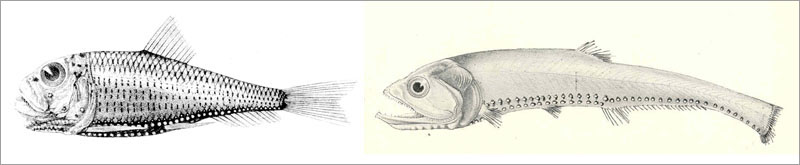 라이트피시과(Phosichthyidae/Lightfishes). Left/라이트 피시. Lightfish. 학명; Ichthyococcus ovatus. Author/Bideault. Date/1888. Right/랑데뷰 피시 Rendezvous fish. 학명; Polymetme corythaeola. Author/Alfred William Alcock. Date/1902 |
 라이트피시과(Phosichthyidae/Lightfishes), left/실버 라이트피시. Silver lightfish. 학명; Phosichthys argenteus. Author/Unknown. Date/1888. Right/파나마 라이트피시. Panama lightfish. 학명; Vinciguerria lucetia. Author/Emma Kissling. Date/1911 |
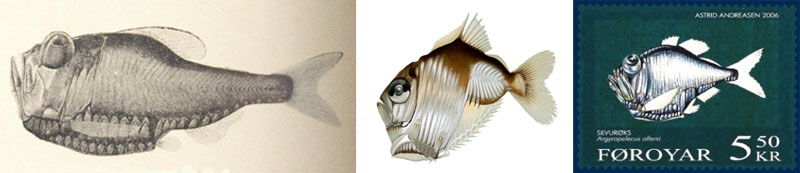 앨퉁이과(Sternoptychidae/Marine hatchetfishes;바다 손도끼고기). left/패시픽 햇치트피시. Pacific hatchet fish. 학명; Argyropelecus affinis. Author/Jules Richard. Date/1907. Center/디아파노스 헷치트피시. Diaphanous hatchet fish. 학명; Sternoptyx diaphana. Author/Emma Kissling. Date/1911. Right/페로제도(Faeroe Island/덴마크의 자치령) 우표에 들어간 손도끼고기(학명; Argyropelecus olfersii). Hatchetfish(Argyropelecus olfersii). Stamp of Faroe Islands. Date of issue: 13 February 2006. Artist/Astrid Andreasen |
 앨퉁이과(Sternoptychidae/Marine hatchetfishes;바다 손도끼고기). Left/한국명;앨퉁이(Silvery lightfish/실버리 라이트피시). 학명; Maurolicus muelleri. Author/Dr Tony Ayling. Source/Guide to the Sea Fishes of New Zealand(1982). Right/한국명;앨퉁이(Silvery lightfish/실버리 라이트피시). 학명; Maurolicus muelleri. Author/Christian Frederik Lütken. Date/1892 |
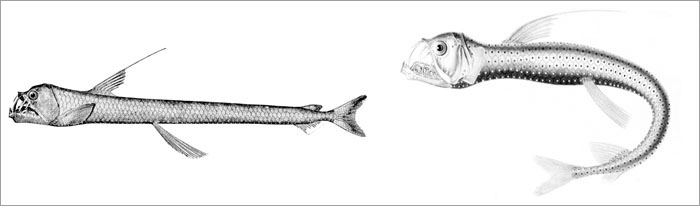 스토미아스과(Stomiidae/Barbeled dragonfishes/턱수염 용고기). Left/슬론스 바이퍼피시. Sloane's viperfish. 학명; Chauliodus sloani. Oceanic Ichthyology by G. Brown Goode and Tarleton H. Bean, published 1896. ※Sloane; 상류 사회 출신 젊은 여성. Right/슬론스 바이퍼피시. Sloane's viperfish. 학명; Chauliodus sloani. Author/Mlle Alberti. |
 스토미아스과(Stomiidae/Barbeled dragonfishes/턱수염 용고기). Left/스내글투스(Snaggletooth/뒤죽박죽이빨). 학명; Astronesthes niger. Oceanic Ichthyology by G. Brown Goode and Tarleton H. Bean, published 1896. Right/라지바브 스캐일리 드래곤피시. Longbarb scaly dragonfish. 학명; Stomias longibarbatus. Author/Carl Chun. Date/1903. |
Order Stomiiformes(lightfishes and dragonfishes) Stomiiformes is an order of deep-sea ray-finned fishes of very diverse morphology. It includes, for example, dragonfishes, lightfishes(Gonostomatidae and Phosichthyidae), loosejaws, marine hatchetfishes and viperfishes. The order contains 4 families(5 according to some authors) with more than 50 genera and at least 410 species. As usual for deep-sea fishes, there are few common names for species of the order, but the Stomiiformes as a whole are often called dragonfishes and allies or simply stomiiforms. The scientific name means "Stomias-shaped", from Stomias(the type genus) + the standard fish order suffix "-formes". It ultimately derives from Ancient Greek stóma (στόμᾶ, "mouth") + Latin forma ("external form"), the former in reference to the huge mouth opening of these fishes. Description and ecology; These fish have a highly unusual and often almost nightmarish appearance. They all have teeth on the premaxilla and maxilla. Most have large mouths extending back past the eyes. Some also have a chin barbel. The dorsal and/or pectoral fins are missing in some, but others have an adipose fin. The pelvic fin has 4-9 rays, and the stomiiforms possess 5-24 branchiostegal rays. Their scales are cycloid, delicate and easily sloughed off; some are scaleless. The coloration is typically dark brown or black; a few (mostly Gonostomatoidei) are silver. Bioluminescence; Daily migration; Reproduction; |


|
| Copyright ⓒ FISHILLUST.COM All rights reserved. All contents can not be used without permission of the copyright holder. |


 검색
