
사이트 로그인
사이트 로그인
분류계보/경골상강/Superclass Osteichthyes(bony fishes)→조기강/Class Actinopterygii(ray-finned fishes)→드렁허리목 Order Synbranchiformes(spiny eels).
드렁허리목 물고기(늪뱀장어류)들은 크기가 20cm에서부터 150cm까지 다양하게 있다. 외관은 뱀장어 같지만 진짜 뱀장어(뱀장어목/Anguilliformes)는 아니다. 전상악골(위턱의 앞부분)은 별개의 뼈로 존재하며 앞으로 튀어나가지 않는 구조이다. 아가미는 잘 발전되지 못했고 아가미 구멍은 대개 1개이며 작고 가슴을 가로지르며 유합되어 있고 몸의 아래쪽 반 범위에 제한되어 있다. 산소는 목구멍이나 내장에 있는 막에서 흡수된다. 등지느러미와 뒷지느러미가 있는 것은 높이가 낮으며 꼬리 끝까지 돌아가며 연장되어 있다. 배지느러미는 없으며 비늘은 없거나 있어도 매우 작다. 부레가 없다. 분포; 드렁허리목 물고기(늪뱀장어류)의 분포지는 아메리카의 열대지방, 동남아시아와 동아시아, 동인도, 오스트레일리아이다. 그러나 3개과의 각 분포지는 서로 다른 면이 있다. 드렁허리과는 멕시코, 중남부 아메리카, 서아프리카(리베리아), 아시아, 하와이, 및 인도-오스트레일리아 열도에 분포하고 걸장어과는 아프리카와 시리아, 해양을 낀 동남아시아 국가, 중국, 한국에 분포한다. 스파인레스 일과(Spineless eels/Chaudhuriidae)는 동북부 인도에서부터 태국, 말레이시아와 보르네오 일부, 맟 한국에 분포한다. 서식 환경; 드렁허리목 물고기(늪뱀장어류)는 120종 중 극 소수 종을 제외하면 나머지 모두가 민물고기이다. 늪이나 동굴, 매우 느리게 흐르는 민물과 기수에 산다. 고여있는 물의 경우 둑을 따라 있는 나뭇잎 쌓인 곳이나 가는 뿌리들이 겹겹이 쌓여 있는 곳에서 발견된다. 늪뱀장어류는 땅으로 올라가 돌아다닐 수 있고 물 밖에서 장시간 살 수 있다. 일부 종은 굴을 파고 들어가 살며 일부 종(약 4종)은 동굴 속에서만 발견된다. 1종(Ophisternon bengalense)은 동남아시아의 해안에 산다. 생태; 일부 종들은 공기호흡을 한다. 목구멍에 혈관이 발달한 입인두 파우치(buccopharyngeal pouches)가 있어서 여기서 산소를 순환시킨다. 늪뱀장어류는 야간에만 활동한다. 저서 무척추동물(벌레류)과 물고기를 잡아먹는다. 드렁허리과(Synbranchidae)의 어떤 종은 암수의 외관이 다르다. 수컷 성어는 머리가 튀어나올 수가 있고 암컷 보다 클 수 있다. 한번 산란에 알을 약 40개 낳는다. 알에는 접착력이 있는 긴 필라멘트 덩굴손이 있어서 바닥에 붙을 수 있다. 번식기는 우기이며 수 개월 지속되는 우기에 한번 이상 산란을 한다. 수명이 짧은 것으로 보이며 1년 안에 성적으로 성숙하며 다음 해까지 살아서 번식하는 개체는 희소한 것으로 보인다(이 말은 확실하지 아니함).. 드렁허리류의 이용; 인도네시아, 캄보디아, 중국, 라오스, 미얀마, 타일랜드, 벳트남 등 아시아 일부 지역에서 드렁허리와 걸장어과의 파이어 뱀장어(Fire eel, 학명/Mastacembelus erythrotaenia)는 식용으로 이용되며 연못이나 논에서 양육시킨다. 걸장어류 몇 종은 관상어로 사용되는 일이 있지만 나머지 종들은 관상어 시장에 없다. 날카로운 가시가 많은 종들이 있고 몸이 매우 미끄러워서 손으로 잡기가 어렵다. 가시는 반드시 가위로 잘라내고 음식을 만들어야 한다. |
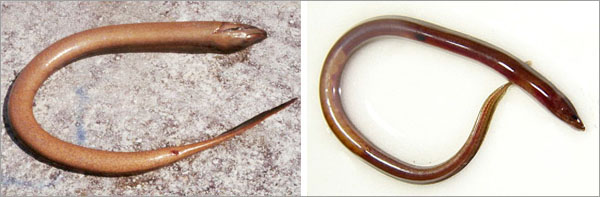 드렁허리과(Family Synbranchidae/Swamp-eels). Left/드렁허리(Asian swamp eel). Monopterus albus. Author/unknown. Right/마블드 드렁허리(Marbled swamp eel). 최대 150cm이며 가장 큰 종. Synbranchus marmoratus. The largest; recorded at up to 150 cm in length. Author/Clinton & Charles Robertson. |
 드렁허리과. Family Synbranchidae(Swamp-eels). Left/영명 없음. 학명; Macrotrema caligans. Right/리베리아 드렁허리(Liberian swamp eel). Monopterus boueti. |
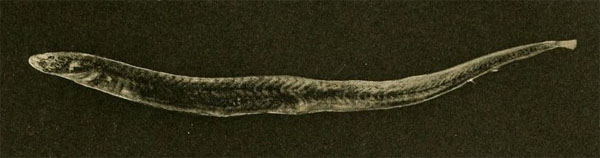 카우드후리아과(Family Chaudhuriidae/Spineless eels). 버마 스파인레스 일(Burmese spineless eel). 학명; Chaudhuria caudate. Author/Nelson Annandale. Date/1918 |
 걸장어과(Family Mastacembelidae/spiny eels). 걸장어(Macrognathus aculeatus). Left/Author; Bloch, Marcus Elieser. Date/1796. Right/Author; George Henry Ford(1808–1876) |
 걸장어과(Family Mastacembelidae/spiny eels). Barred spiny eel(Macrognathus pancalus). Left/Author; George Henry Ford(1808–1876). Right/ Author; Haplochromis |
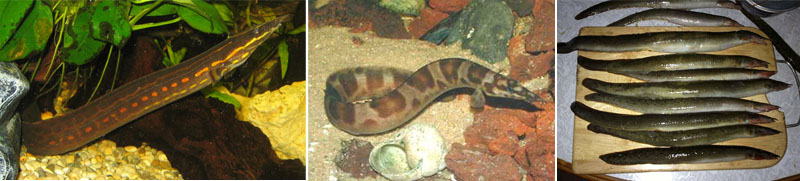 걸장어과(Family Mastacembelidae/spiny eels). Left/파이어 일(Fire eel). 학명; Mastacembelus erythrotaenia. Author/Llandor. Center/영명 없음. 학명/Mastacembelus ellipsifer. Author/Jtanganyika. Right/타이어 트랙 일(Tire track eel). 학명; Mastacembelus favus. |
Order Synbranchiformes(spiny eels) These eel-like fishes range in size from 20–150cm. Although they are eel-like, they are not related to true eels(Anguilliformes). The premaxillae are present as distinct bones and are nonprotrusible. The gills are poorly developed, and their openings are usually single, small, confluent across the breast, and restricted to the lower half of the body. Oxygen is absorbed through the membranes of the throat or intestine. The dorsal and anal fins are low and continuous around the tail tip. Pelvic fins are absent. Scales are either absent or very small. They lack a swim bladder. Distribution; These fishes are distributed in tropical America, tropical Africa, southeastern and eastern Asia, East Indies, and Australia. The three families each have a somewhat different distribution: The Synbranchidae are found in Mexico, Central and South America, West Africa(Liberia), Asia, Hawaii, and the Indo-Australian Archipelago. The Mastacembelidae are found in Africa and through Syria to Maritime Southeast Asia, China, and Korea. The Chaudhuriidae are found in northeastern India through Thailand to Korea(including parts of Malaysia and Borneo). Habitat; All except three species occur in fresh water. They usually are found in swamps, caves, and sluggish fresh and brackish waters. When found in pools, they typically are associated with leaf litter and mats of fine tree roots along the banks. Swamp eels are capable of overland excursions, and some can live out of water for extended periods of time. Some species are burrowers. Four species are found exclusively in caves: Monopterus eapeni and M. roseni from India, Ophisternon candidum from Australia, and O. infernale from Mexico. One species, O. bengalense, commonly occurs in coastal areas of southeastern Asia. Ecology; Some species are considered air-breathing fishes because of their ability to breathe by highly vascularized buccopharyngeal pouches(pharynx modified for breathing air). They usually are active only at night. They feed on benthic invertebrates, especially larvae, and fishes. At least some of the species of the family Synbranchidae, that is, O. infernale, are sexually dimorphic. Adult males grow a head hump, and males are larger than females. These fishes lay about 40 spherical eggs per clutch. The eggs measure between 1.2–1.5 mm in diameter and have a pair of long filaments for adhesion to the substrate. Reproduction takes place during the wet season, which lasts for several months, during which females probably spawn more than once. Data acquired from studying juvenile growth and the length of representative individuals within a population suggests that they are a short-lived species that matures during the first year, with few individuals surviving to the second breeding season(uncertain). Importance to humans; In some parts of Asia(Indonesia, Cambodia, China, Laos, Myanmar, Thailand, Vietnam), swamp eels and one species of spiny eel, Mastacembelus erythrotaenia, are valued as food and sometimes are kept in ponds or rice fields. Except for a few mastacembelids, they are rarely seen in home aquaria. The fish have numerous sharp dorsal spines and belly thorns which, together with its sliminess make them extremely difficult to handle. The spines must be cut off with scissors before consumption. |
 Left/인도네시아 수마트라의 미낭카바우족의 드렁허리 요리. 매운 튀김요리이다. Fried swamp eel, usually eaten with spicy gravy, one of the most popular dishes in Minangkabau cuisine(Indonesia). Author/Ramzy Muliawan. Center/드렁허리 덮밥. Rice With Swamp Eel(dishes of China). Author/Earthengine. Right/ 인도네시아 자바섬 순다족의 음식; 드렁허리와 닭 튀김 요리. Fried Chicken, Fried Swamp Eel, Sundanese cuisine(Indonesia). Author/Midori. |


|
| Copyright ⓒ FISHILLUST.COM All rights reserved. All contents can not be used without permission of the copyright holder. |


 검색
