
사이트 로그인
사이트 로그인
|
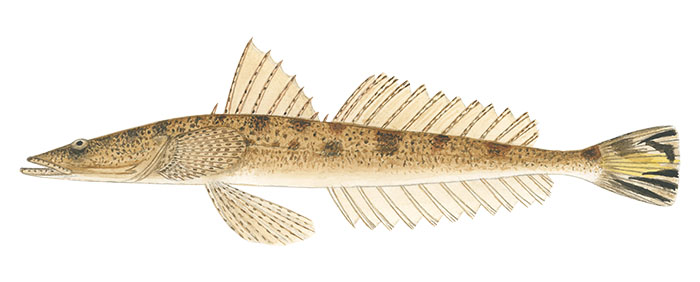
분류계통/분류계통/경골상강→조기강→쏨뱅이목→양태과→양태(Bar-tail flathead;Platycephalus indicus). Copyright by Kim In Young. 김인영 그림
|
|
| [painting 1]. 양태 측면 모습. Lateral view of Bar-tail flathead(Platycephalus indicus) |
|
Copyright by Kim In Young. 김인영 그림
|
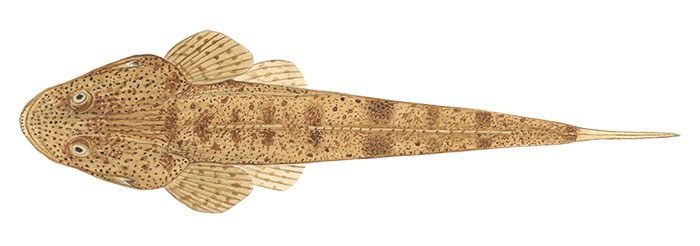 |
| [painting 2]. 양태의 등면 모습. Dorsal view of Bar-tail flathead(Platycephalus indicus) |
[해수, 가수; marine, brackishwater] 분포; 인도-서태평양/한국의 제주도를 포함한 서•남해안과 인접한 강 하구, 압록강 하구, 등곶포 및 남포에서 출현하고 일본 중부 이남에서부터 필리핀, 중국, 오스트레일리아 북부, 홍해, 동아프리카까지 온대와 열대 수역에 걸쳐 분포한다. 지중해에도 이입되었다. 등쪽과 체측 상단부의 체색은 전반적으로 연한 갈색이면서 동공 보다 작은 짙은 갈색 반점이 산재되어 있고 너비가 넓고 어두운 수직 방향 구름 무늬가 체측 상부에 여러 개 있다. 복부는 연한 회백색으로 반점이 전혀 없다. 등지느러미의 각 극조와 연조에는 짙은 갈색의 점들이 열 지어 있다. 꼬리지느러미의 위와 아래 부분에 굵은 검은 줄 무늬가 있고 살아있을 때 꼬리지느러미의 가운데 부분은 노란색을 띤다. 수심이 얕은 연안의 모래나 진흙 바닥에 살며 기수역에도 들어간다. 전장 25㎝이내의 어린 개체들은 대부분 강의 하구와 그 인접 연안에서 서식한다. 5~6월에 산란하며 근해의 모래펄에서 산란한다. 갑각류나 소형절지동물을 주로 먹는다. |
[marine, brackishwater] Distrubution; Indo-West Pacific: Red Sea and East Africa to the Philippines, north to south of central Japan and Korea, south to northern Australia. Introduced into the eastern Mediterranean Sea. Found in river mouths of western and southern coasts of Korean peninsula. Branchiostegal rays are fused with the isthmus. The ventral fin starts at the midpoint of the pectoral fin. Has 2 dorsal fins. Spine(1 or 2) at the most anterior dorsal fin are very small and separated. The first dorsal fin has a short base, but the second dorsal fin has a very long base, reaching almost as far as the peduncle. The anus is located behind the end of pelvic fin. The posterior edge of caudal fin is truncated. The lateral line is complete and straight. The body color of the dorsal and upper part of the body is generally light brown, with dark brown spots that are smaller than the pupil, and with several wide, dark vertical cloud patterns. Abdomen is light grayish white with no spots at all. Light brown and dark brown dots are arranged in each rays of dorsal fins. There are thick black stripes on the upper and lower parts of the caudal fin, and the middle part of the caudal fin is yellowish when it is alive or fresh. It lives on the sandy or muddy bottom of shallow water and enters brackish water. Most of the young individuals within 25cm in length inhabit the estuary of the river and the adjacent coast. It spawns from May to June, and spawns in the sand bottom of the offshore. It mainly feed on crustaceans and small arthropod. |
|
 양태(Bar-tail flathead; Platycephalus indicus)의 등면과 꼬리 모양의 사진. Photographs of dorsal view and caudal fin’ lateral view of Bar-tail flathead(Platycephalus indicus). Location/southern Thailand, lenght 9,5 cm. Author/Sahat Ratmuangkhwang. |
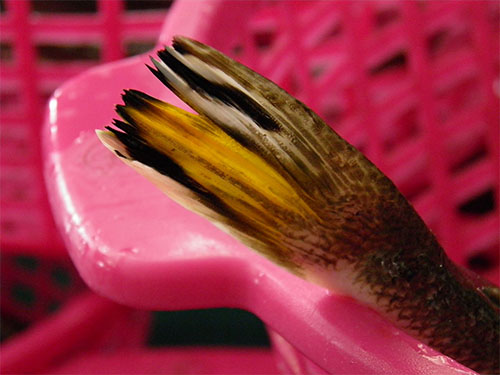 양태의 꼬리지느러미. 양태류 중에서 양태를 구별하는 방법의 하나로 꼬리지느러미의 무늬가 자주 강조된다. Caudal fin of Platycephalus indicus. As one of the distinguishing methods among the flatheads’ species, the pattern on the caudal fin is often emphasized. from fish market in Taiwan. Author/Micromesistius |
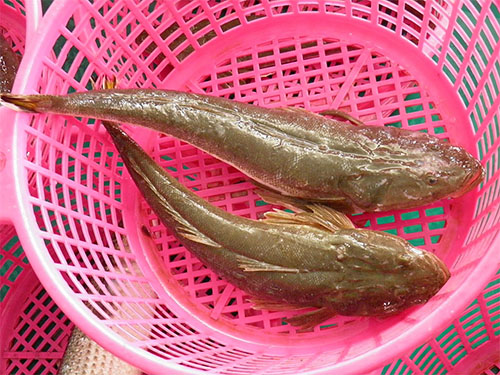 타이완 생선 시장의 양태. Bar-tail flathead(Platycephalus indicus) from fish market in Taiwan. Author/Micromesistius |


|
| Copyright ⓒ FISHILLUST.COM All rights reserved. All contents can not be used without permission of the copyright holder. |


 검색
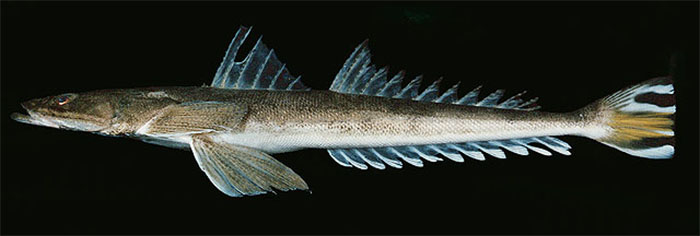 양태(良太) 측면 사진. 죽은 개체. Lateral view of Bar-tail flathead)Platycephalus indicus. Author/Randall, J.E.
