
사이트 로그인
사이트 로그인
|
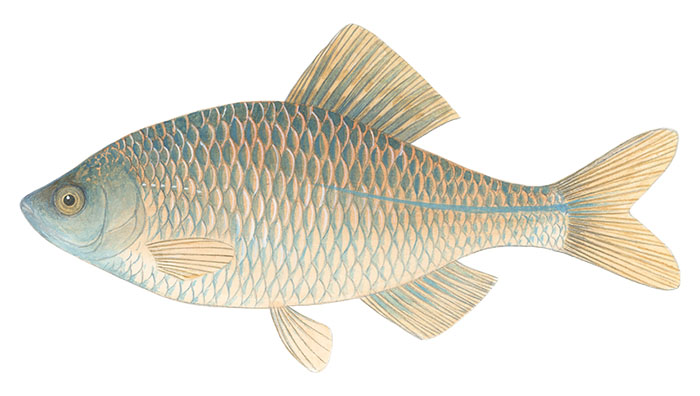
경골상강→조기강→잉어목→잉어과→납자루 아과→납줄개(Amur bitterling; Rhodeus sericeus) Copyright by Kim In Young. 김인영 그림
|
 |
|
납줄개 기본 모습. Lateral view of Amur bitterling(Rhodeus sericeus) |
[담수어] 분포; 아시아/한국(함남·함북의 동해로 흐르는 하천), 아무르 강 수계인 중국 북동부(헤이룽강), 시베리아 중부, 사할린섬 등지의 하천에 분포한다 몸길이 보통 5∼8cm이며 최대 10cm인 것도 있다. 몸은 옆으로 납작하고 체고가 높으며 달걀 모양이다. 머리는 매우 작고 위턱 전단이 앞으로 돌출되었다. 입은 주둥이 아래쪽에 있고 작으며, 수염은 없다. 측선은 불완전하며, 아가미구멍 상단에서 아래쪽으로 구부러지고 6~7개의 비늘에만 측선공이 있다. 몸 빛깔은 등 쪽이 암청색이고 옆구리에서 아래쪽은 은백색이다. 체측 후반 중앙에 흑갈색의 종대가 길게 이어지다가 꼬리 말단 부분에서 가늘어진다. 수초가 무성한 모래 진흙바닥의 흐름이 느린 하천이나 작은 호수 또는 연못에 서식한다. 먹이는 주로 동물플랑크톤과 식물플랑크톤이다. 산란기는 4∼6월이며 이때가 되면 수컷에 혼인색이 나타나 복부는 오렌지색으로, 지느러미는 붉은 색으로 변하며, 암컷에는 민물조개류의 아가미에 알을 부착시키기 위해 출수공 속으로 삽입할 긴 산란관이 발달한다. 암컷이 산란관을 조개의 수관 내에 삽입하여 산란하고, 암컷이 떠난 후 수컷이 그 수란관 입구에 사정하면 조개가 호흡하는 물의 흐름을 따라 정자가 조개 몸 안으로 흘러 들어가 수정된다. 수명이 짧아서 오래 살아도 5년을 넘기지 못한다. 관상용 물고기이다. |
[Freshwater fish]] Distribution; Asia/Streams flow to east coasts of northernmost Korean peninsula, Amur basin in China and Russia and Sakhalin Island. Introduced elsewhere. General; Not to be confused with Rhodeus amurensis, whose scientific name literally means "Amur bitterling" Common length 5∼8cm, max length 10cm. Body compressed, depth high, oval shape. With very small head, upper jaw protruded. Mouth small, posited under snout, barbel absent. Lateral line incomplete, lateral line pore found only on anterior 6~7 scales. Dark blue dorsally, silvery white ventrally. A dark brown stripe from mid center of posterior body to base of caudal fin. Inhabits slow flow streams, small lakes and ponds with weedy mud bottom. Feeds mainly on plant material but also on small larvae of insects. Spawn in April to June, male gets nuptial color of orangish abdomen and reddish fins. A long spawning duct grows out from female’s anus area. Female lay eggs by attaching the spawning duct to clam’s inhalent opening, and male jets sperm around it, sperm is sucked into inhalent opening. The fertilized eggs hatch within gill of the clam, later the juveniles come out through exhalent opening. Life span short, max age 5 year. Popular aquarium fish. |
 납줄개. Amur bitterling(Rhodeus sericeus). Author/CAFS |


|
| Copyright ⓒ FISHILLUST.COM All rights reserved. All contents can not be used without permission of the copyright holder. |


 검색
