Oder Scorpaeniformes Family Platycephalidae(Flatheads).
Olive-tailed flathead
Rogadius asper(Cuvier, 1829). max length/17.0 cm TL
Korean name/ba-neul-yang-tae(바늘양태)
Japanese name/マツバゴ(Matsubagochi)
Chinese Taiwan name/松葉倒棘牛尾魚(송엽도극우미어), 倒棘鲬(도극용)
D1/spines I+Ⅷ, D2/soft rays 11-12(mainly 12). A/soft rays 11. Pectoral fin/21~23. Pelvic fin/I, 5. LL/50-56. Gill rakers(새파)/1+6~7=7~8. Caudal/soft ray 21-25, branched ray 9-13(mainly 12).
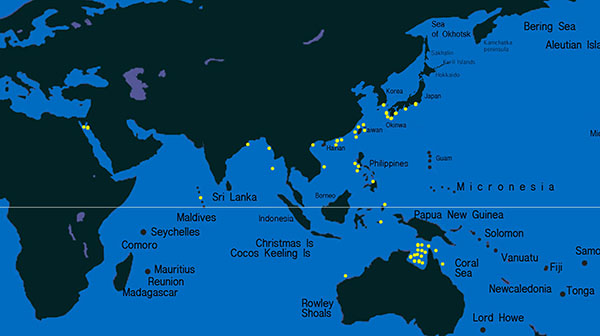
Distribution; Indo-West Pacific/South Sea of Korea, south of central Japan. Taiwan, East China Sea, Philippines, Vietnam, Northeast India, Myanmar, Andaman Sea, Maldives, Sulawesi(Indonesia), Australia's Broome and northern Gulf of Carpentaria, Arafura Sea, Papua New Guinea, North Red Sea.(as of 2023)
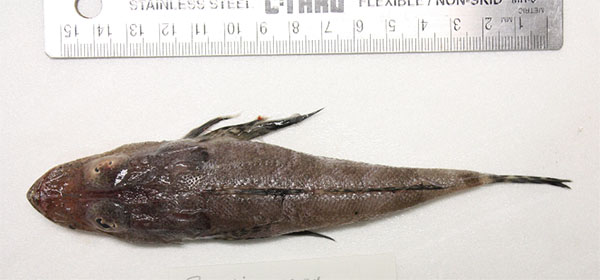
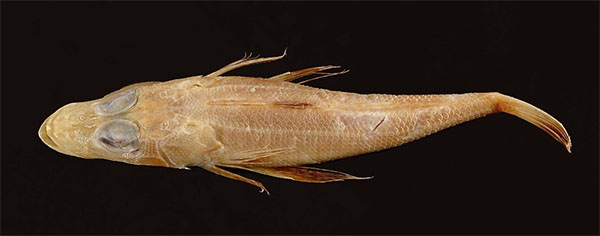
General; The Korean name, ba-neul-yang-tae(바늘양태), is literally translated into English as needle flathead, and it is said to be named for the needle-like spines on the gill cover. Body elongated, depressed, tapering posteriorly. Body length 2.4-2.6 times head length. Head greatly depressed, caudal peduncle slightly compressed. Snout depressed, slightly longer, about 1.1-1.3 times eye diameter. Mouth large, lower jaw slightly protruded than upper jaw, upper jaw extending backward to anterior margin of eye. Eyes large, without depression behind eyes. Eye located on dorsal of head. Eye diameter shorter than snout length. Interorbital space remarkably narrow, its width about one-fourth of eye diameter. No skin flap above the eyes. No skin flap on the interopercle. Flap located behind anterior nostril pore. Cheeks with single ridge. Subocular ridge serrated. Preoperculum with 4 spines above and a strong forward inverted spine below. No spines above orbit.
Scales are deciduous. Lateral line scales with two openings. Spinous scales in lateral line 8-11. Dorsal fin is two with shortest spine located prior to first dorsal fin. Pelvic fin placed behind pectoral fin base. Both jaws with teeth bands, the teeth band of lower jaw much narrower than that of the upper jaw. Vomer teeth are canine-like, placed sparsely in two irregular clusters of teeth. Palatine teeth are also placed sparsely in two rows behind the vomerine clusters, all uniformly large, sharply pointed and more or less canine-like. The lower and upper pharyngeal bones with band of teeth.
Upper half of head and body light brown, lower half white. Dorsum with 4-5 indistinct dark saddle blotches and a pale band behind head. First dorsal and caudal fins with dark brown bands, 3 or 4 dark bands vertically in the caudal fin. Pectoral and second dorsal fins with longitudinal lines formed by spots. Lower half of pectoral fin is blackish. Pelvic fins basally white, rest posterior part is black, with a white rim. Anal fins light colored. Benthic, living on sandy mud bottoms in shallow or deeper waters. Carnivorous, feeding on benthic fish and invertebrates. It uses color mimicry to hide in the sand and mud to deceive its enemies and to jump up to feed on its prey when it is not aware of them.
|

 text on preparation
 text on preparation
 text on preparation
 text on preparation
 text on preparation




 검색
