Order Aulopiformes(Grinners). Family Synodontidae(Lizardfishes).
Greater lizardfish
Saurida tumbil(Bloch, 1795). Max length/60.0 cm TL. max. reported age/7 years
Korean name/keun-mae-tung-i(큰매퉁이/임시명/equivalent to” large lizardfish”- temporary Korean name)
Japanese name/Minami-Wanieso
Chinese name/多齒蛇鯔(다치사치)Dorsal spines 0, Dorsal soft rays 11-13, Anal spines 0, Anal soft rays 10-11.
Distribution; Indo-West Pacific/Red Sea and east coast of Africa(except Kenya), including Madagascar to the Persian Gulf, Arabian Sea, and further east to southeast Asia, China, Taiwan, Japan and Australia. Does not appear to occur in the central or eastern Pacific.
General;
※ [ISSUE] The scientific name “Saurida tumbil” had been used as the scientific name of the fish with the Korean name of “Tumbil Mae-tung-I”, but it was founded that the correct scientific name of “Tumbil Mae-tung-I” is "Saurida wanieso". The Korean name “Tumbil Mae-tung-I” had been named after mistakenly identified "Saurida Tumbil," and the Korean name should be changed. But the incorrect name is being officially used, causing confusion. The Korean name “Keun-mae-tung-I” used in this site is temporary name that I arbitrarily named, the meaning is equivalent to the English name "Great lizardfish"
[Difference between tumbil and tumbil] It is difficult to distinguish between Saurida wanieso and Saurida tumbil. The difference in appearance is that in Saurida wanieso, the posterior end of the pectoral fin reaches or exceeds the origin of the pelvic fin, whereas in Saurida tumbil, the posterior end of the pectoral fin does not reach the origin of the pelvic fin. The invisible difference is that Saurida wanieso has 2 rows of palatal teeth, and Saurida tumbil has 3 or more rows of palatal teeth. In addition, the back side of the pelvic fin of Saurida wanieso is not black, whereas that of Saurida tumbil is black(Date of this article, July 2022).
==========================
Body elongate, slender, and cylindrical or slightly compressed. Head pointed and depressed. Snout broader than long. Eye moderate; laterally directed. Adipose eyelid on anterior and posterior margins of eye. Mouth large, gape tending to be oblique. Upper jaw not protractile, bordered its entire length by premaxilla, its length more than 1/2 head length and extending well past posterior margin of orbit. 2 teeth bands on palatines, and teeth on vomer and tongue. Branchiostegals 13. Head and body with cycloid scales, present on procurrent and primary caudal fin rays. Lateral-line scales with 50 to 55; scales not enlarged, not extending beyond base of caudal fin, Predorsal scales 16 to 19. Dorsal fin about midway on back, with 11-13 rays; anal fin with 10-11; pectoral fins short, not or only just reaching to pelvic-fin base; caudal fin forked. Body pale yellowish brown above and silver below. Inside of pectoral fins uniformly dusky. Traces of faint darker cross bands on back. Fins without dark bars or spots. The tips of the dorsal and pectorals and the lower caudal lobe blackish. Found on muddy bottoms and trawling grounds. Adults feed on fishes, crustaceans, and squids. Sold fresh.
|

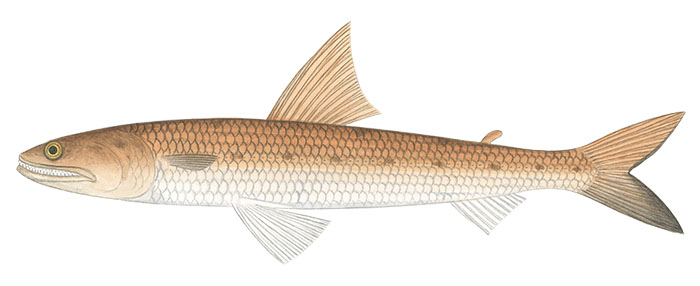
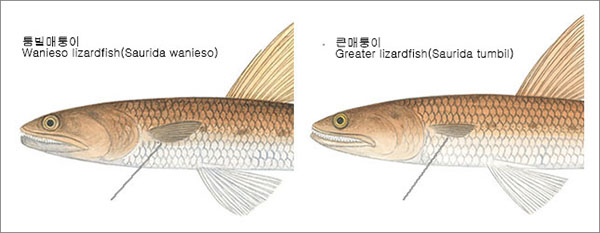 한국명 툼빌매퉁이(tum-bil-mae-tung-i=equivalent to tumbil lizardfish)는 학명이 Saurida wanieso인 종을 지칭하는데 “툼빌”이란 학명(Saurida tumbil/Greater lizardfish)을 가진 종이 따로 있어서 혼동이 일어나 있다. 툼빌매퉁이(좌)와 큰매퉁이(우/임시한글명)의 외관상 차이는 가슴지느러미의 크기뿐이다(본문의 설명 참조).
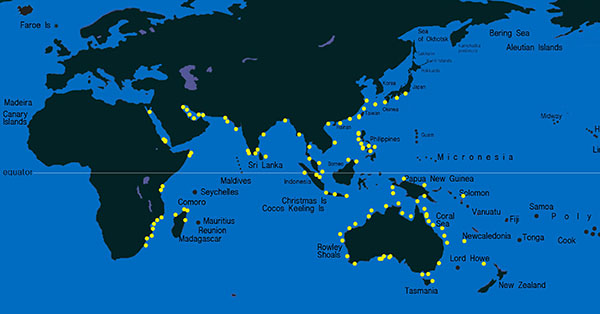 큰매퉁이 분포도. Distribution map of Greater lizardfish(Saurida tumbil). Derived work from GBIF. Author/fishillust.com.
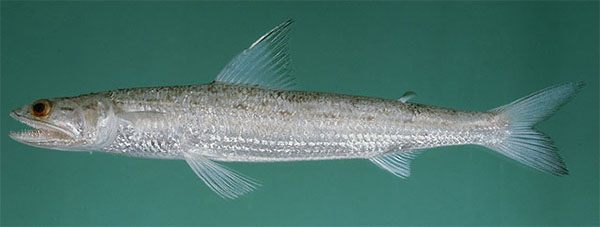 큰매퉁이 죽은 개체. Dead specimen of Greater lizardfish(Saurida tumbil). 14.3cm(TL). Locality/Kuwait, Kuwait Bay. Author/Randall, J.E.
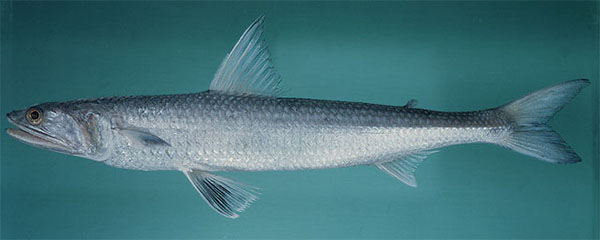 큰매퉁이 죽은 개체. Dead specimen of Greater lizardfish(Saurida tumbil). 14.3cm(TL) Locality/Bahrain. Author/Randall, J.E.
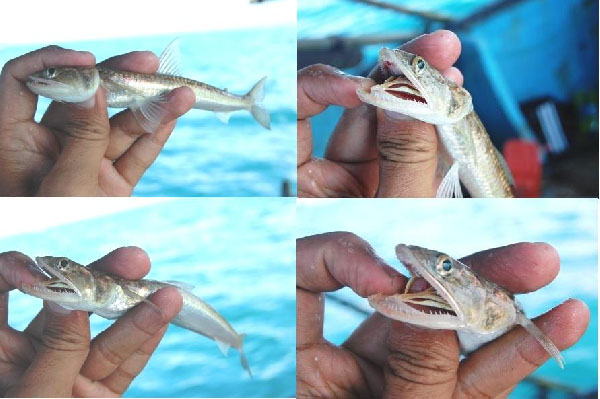 큰매퉁이의 입을 벌려보는 사진들. Opening the mouth of Greater lizardfish(Saurida tumbil). Locality/Central Java, Indonesia. Author/eko budi kuncoro
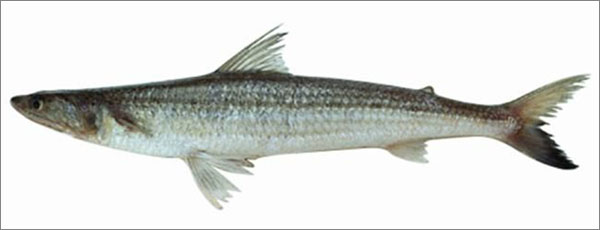 큰매퉁이 죽은 개체. Dead specimen of Greater lizardfish(Saurida tumbil). Author/T. Gloerfelt-Tarp & P.J. Kailola, 1984 Trawled fishes of southern Indonesia and Northwestern Australia. Attribution /CSIRO
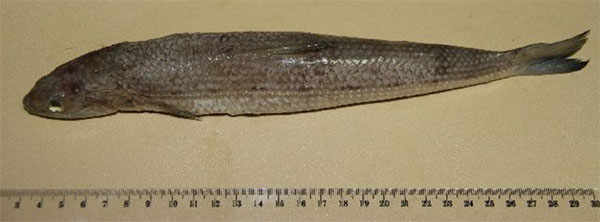 큰매퉁이의 보존 개체. Preserved specimen of Greater lizardfish(Saurida tumbil). collected in Saudi Arabia. creativecommons. Suggested attribution "SABF040-12 Lateral".
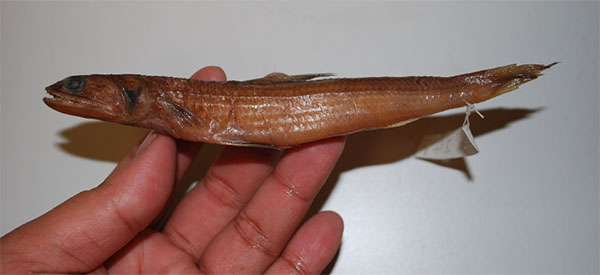 큰매퉁이의 보존 개체. Preserved specimen of Greater lizardfish(Saurida tumbil). collected in India. Author/Ho Hans
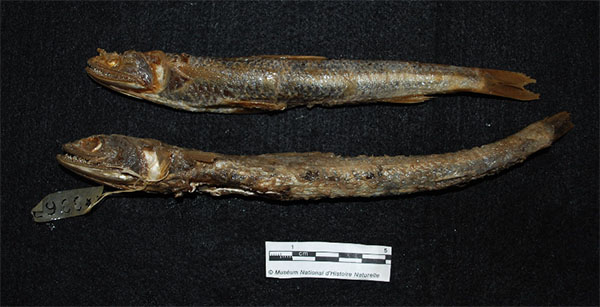 큰매퉁이의 보존 개체. Preserved specimen of Greater lizardfish(Saurida tumbil). collected in Egypt. Author/Ho Hans
 가정 집에서 찐 큰매퉁이 요리. A Steamed Greater Lizardfish at home. Locality not described. Date/May 2022. Author/Peachyeung316




 검색
