
사이트 로그인
사이트 로그인
|
분류계통/경골상강→조기강→쏨뱅이목→양볼락과→점감펭 Copyright by Kim In Young. 김인영 그림
|
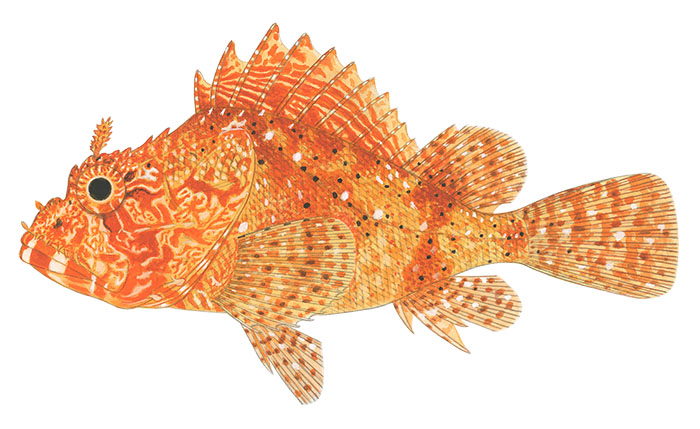 |
| [illustration 1]. 점감펭 기본 모습. Lateral view of Western scorpionfish(Scorpaena onaria). |
|
Copyright by Kim In Young. 김인영 그림
|
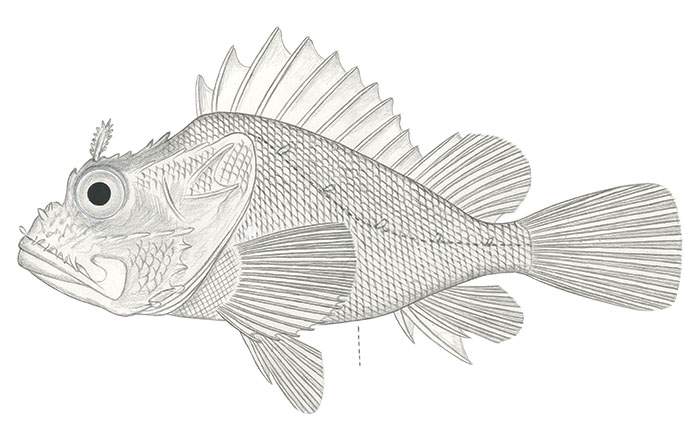 |
| [illustration 2]. 점감펭 암컷 외형의 기본 틀. Basic external body frame of female Western scorpionfish(Scorpaena onaria). |
|
Copyright by Kim In Young. 김인영 그림
|
 |
| [illustration 3]. 점감펭 수컷 외형의 기본 틀. Basic external body frame of male Western scorpionfish(Scorpaena onaria). |
쏨뱅이목 양볼락과 논쟁점/등지느러미의 큰 검은 반점이 수컷에게만 있다는 설명이 있고 또 다른 설명에서는 암수의 언급 없이 이 검은 반점이 있다 말하고 있어서 암수 모두에게 점이 있는 것인지 수컷에게만 있는 것인지 혼동이 일어나 있다. 인터넷을 검색해 보면 본종의 살아있는 개체 사진은 몇 개 안 된다. 아래 소개한 여러 사진들을 보면 살아있는 개체들의 사진에서는 이 검은 점을 찾아내기가 어렵고 알코올 보존 개체 사진(암수 구별이 안되어 있는)에서는 이 검은 점이 있는 예를 발견할 수 있다. 필자는 아마도 수컷에게만 검은 반점이 있는 것으로 믿고 이에 따라 내용을 정리하였다. 분포; 서태평양/서북태평양 개체군과 서남태평양 개체군으로 나뉜다. 서북태평양에서는 한국의 동해안 중부와 제주도를 포함한 남해안, 일본 중부 이남, 타이완, 동중국해에 분포하고 서남태평양에서는 뉴칼레도니아 북부에서부터 남쪽으로 뉴질랜드의 북부, 오스트레일리아 동부에서부터 통가-케르마덱 해령(Kermadec Ridge)까지 분포한다. 몸은 전체적으로 긴 타원형이고 옆으로 납작한 형태이다. 입은 크고, 위로 비스듬하게 놓여 있으며 위턱의 뒤끝은 눈의 후단부 아래에 이른다. 눈은 커다랗고 두 눈 사이가 패어 있다. 아래턱은 위턱에 비해 앞으로 튀어나와 있으며 양 턱에는 이빨이 띠를 이루어 놓여있다. 부레가 없다. 몸통에는 가시가 돋아있는 빗비늘(즐린, ctenoid scale)이 덮여있고 아가미뚜껑 위쪽과 가슴지느러미 앞 부분 몸에는 둥근비늘(cycloid scale)이 덮여 있다. 가슴지느러미는 짧지만 폭이 넓다. 가슴지느러미 기조들은 위쪽 것들은 분지기조이며 아래 쪽 약 8개 전후의 기조들은 불분지 기조이다. 등지느러미의 제1가시는 제2가시 길이의 반보다 길다. 제3, 4번 가시가 가장 길며 뒷지느러미의 제2가시보다 길다. 4번 가시에서부터 11번 가시는 길이가 점진적으로 짧아진다. 극조들의 막은 약간 안으로 패였다. 등지느러미의 연조들은 모두 분지 기조들이며 2번 또는 3번 연조가 가장 길다. 연조들의 막은 안으로 아주 조금 패였다. 마지막 연조의 막은 그 길이의 4/5 이상이 미병부(꼬리자루)에 붙어있다. 뒷지느러미의 극조는 2번 가시가 가장 길다. 뒷지느러미의 연조들은 모두 분지기조이며 맨 마지막 연조는 미병부와 막으로 연결되어 있지 않다. 연조들 사이의 막들은 아주 조금 안으로 패였다. 머리에는 수많은 날카로운 가시가 있다. 비공의 바로 앞쪽에 1쌍의 가시가 있으며 눈 윗가장자리의 앞쪽에는 뒤로 향하는 1쌍의 가시가 있다. 눈 위 가장자리의 중앙에 위로 향하는 1쌍의 가시(깃털 모양의 큰 피판)이 있으며 바로 그 뒤에도 2쌍의 가시가 있다. 눈 앞쪽의 아래에 3쌍의 뒤로 향하는 날카로운 가시가 있고 눈 바로 아래 3개의에 날카로운 가시가 있다. 전새개골에는 앞쪽 가장자리에 2개, 뒤쪽 가장자리에 5개의 가시가 있으며 주새개골에는 2개의 가시가 있다. 등지느러미 또한 가시가 잘 발달하여 적으로부터 자신을 보호한다. 몸과 머리에는 드물게 긴 촉수가 분포하는데 머리의 경우 위턱 전새개골의 배쪽면, 몸에는 측선 주위로 이러한 돌기가 분포한다. 몸은 전체적으로 붉고 군데군데 짙은 선홍색의 얼룩 무늬와 작은 검은 점들이 몸과 지느러미에 분포한다. 수컷은 등지느러미 5~10 번째 가시 사이에 커다란 검은색 반점이 있어서 암컷과 구분된다. 꼬리지느러미는 투명하며 3∼4줄의 짙은 적색의 가로줄과 작은 점들이 흩어져 있다. 따뜻한 바다에서 사는 온대성 어류로 주로 수심 50~150m 정도의 깊은 바다에 살고 있다. 바닥이 진흙이나 모래, 또는 조개껍데기가 깔려있는 대륙붕이나 연안의 암초지대에서 살면서 게, 갯가재 등의 갑각류나 작은 물고기, 오징어를 잡아먹는다. 번식에 대해서는 알려져 있는 것이 많지 않으나, 가장 중요한 특징은 양볼락과의 볼락, 우럭볼락, 조피볼락과 같은 대부분의 물고기들이 난태생으로 새끼를 바로 출산하는 반면 점감펭은 난생으로 알을 낳는다는 점이다. 산란기의 암컷은 젤라틴막으로 싸여있는 알 덩어리를 낳는다. 제주도에서는 쏠치우럭, 가시우럭으로도 부른다. 주로 바다에서 하는 배낚시로 잡히며 낚시 대상으로 인기가 있다. 몸집이 크지 않아 생선회를 하기 보다는 국이나 튀김을 만드는 데 이용한다. 일본에서는 술안주로도 이용한다. ※ “감펭”의 어원/순수 한국말 ‘감풀다’에서 온 말이다. 사납고 거칠다는 뜻의 형용사로 명사로 말하면 '감푼이(사납고 거친 사람)’, 이것이 변형되어 ‘감펭이’→’감펭’이가 됨. |
Oder Scorpaeniformes Family Scorpaenidae(Scorpionfishes or rockfishes) Issue/There are descriptions that the large black blotch on dorsal fin is only in males, but other explanations simply says that the black blotch is present without mentioning the sex, so there is confusion as to whether both sexes have this blotch or only males.. A thorough Internet search reveals only a few photos of living specimens of this species. Looking at the photos introduced below, it is difficult to find the black blotch in the photos of living individuals, but examples of the black spot can be found in the photos of alcohol-preserved individuals(also the sexes are not distinguished). The author thinks that the black blotch is probably only in males and has organized the content accordingly. Distribution; West Pacific/Divided into Northwest Pacific population and Southwest Pacific population. In northwest Pacific; distributes in central east coast and south coast including Jeju Island of Korea, south of central Japan, Taiwan, and the East China Sea. In southwest Pacific; distributes from northern New Caledonia, south to eastern Australia to the Tonga-Kermadec Ridge and northern New Zealand, Body is long oval and laterally flattened. Mouth large, oblique and upper jaw reaching below posterior margin of eye. Projections around the mouth and around the lateral line. Eye large and inter orbital space depressed. The lower jaw protruded ahead of upper jaw. Both jaws are lined with teeth. Bladder absent. The body is covered with spiny ctenoid scales, and the upper part of the gill covers and the body side in front of the pectoral fin is covered with cycloid scales. Body is covered with thorny scales(ctenoid scale). No scales on head and chest. The pectoral fin is short but wide. The upper pectoral fin rays are branched, while the lower 8 rays or so are unbranched. Second anal spine longest, all anal soft rays branched, posterior branch of last soft ray not joined by membrane to caudal peduncle, inter soft-rayed membrane weakly notched. First spine length of dorsal fin more than half that of second spine, third or fourth spines longest, their lengths greater than second anal-fin spine length, fourth to eleventh spines becoming progressively shorter, inter spinous membranes moderately incised, all soft rays branched, second or third soft rays longest, inter soft-rayed membrane weakly incised, posterior branch of last soft ray joined by membrane to caudal peduncle for more than four-fifths its length. Numerous sharp spines on head. A pair of spines just in front of the nostrils, and a pair of spines facing backwards in front of the upper edge of the eyes. At the center of the upper edge of the eye, there is a pair of ophthalmic spines(feather-shaped large flap) facing upward, and two pairs of spines just behind them. There are 3 pairs of sharp spines on lower side in front of eye and 3 sharp spines below eye. 2 spines on the anterior edge of preopercula and 5 spines on the posterior edge of preopercula, and 2 spines on opercula edge. The dorsal fin also has well developed spines to protect itself from enemies. Rarely, long tentacles are distributed on the body and head, in the case of the head, these projections are distributed on the ventral side of the the upper jaw and in the case of body around the lateral line. Body reddish in background color, irregular deep red(scarlet) blotches and some black dots scattered on body and fins. Males are distinguished from females by a large black blotch between the 5th and 10th spine of dorsal fin. The caudal fin is transparent, with 3 to 4 dark red vertical lines and small dots scattered. It is a temperate fish that lives in warm seas, and mainly lives in the deep sea with a depth of 50 to 150 m. It lives on mud, sand, or seashell bottoms in continental shelf or coastal reefs. Feed on eats crustaceans such as crabs and lobsters, small fish, and squid. Not much is known about their breeding, the most important feature is that most fishes of its congers are ovoviviparous and give birth immediately, but Scorpaena onaria is oviparous fish that .lays eggs During the spawning season, the female lays a mass of eggs covered with a gelatinous membrane. It is mainly caught by boat fishing in the sea and popular as a fishing target. Because of its small size, it is used to make soup or tempura rather than sashimi. In Japan, it is also used as a side dish in drink tables. |
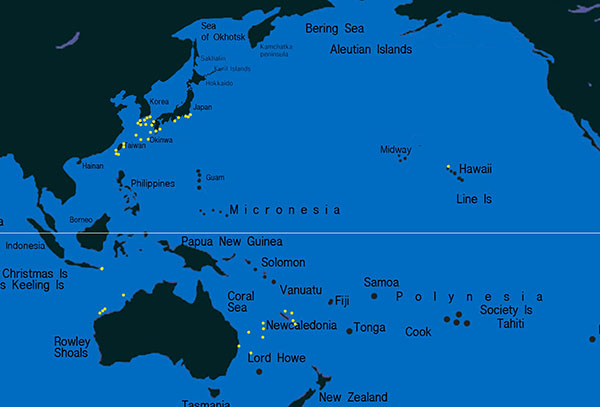 점감펭 분포도. Distribution map of Western scorpionfish(Scorpaena onaria). Main Ref; GBIF, cite date/December, 2024. Edited by fishillust.com(Kim In Young) |
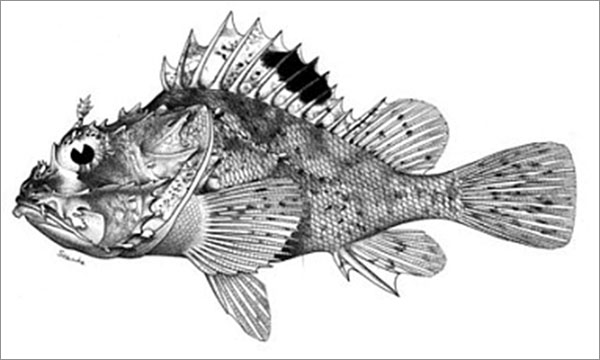 점감펭 묘사도. Illustration of Western scorpionfish(Scorpaena onaria). Creator/Starks, Chloe Lesley. Source/Smithsonian; collections.nmnh.si.edu/search/fishes/. (CC BY NC) |
 점감펭, Western scorpionfish(Scorpaena onaria). Author/Izuzuki |
사진작가의 코멘트/ ’짙푸른 바닷물 속에서, 카메라 조명 빛에 포착된 이 물고기의 붉은색은 비현실적으로 생생하고 아름다웠다. 같은 붉은색을 땅 위에서 보았더라면 이렇게 아름답게 보이지 않을 것이다. 또한 나는 이 물고기의 눈이 매혹적이었다. 안티아스(anthias; 농어목 바리과의 장미돔이나 금강바리 같은 작은 물고기)가 에메랄드색 눈을 가지고 있다면, 이 물고기의 눈은 마불 무늬가 들어간 것 같은 매력적인 눈이었다.” Photographer's comments/“In the deep blue sea water, the red color of this fish captured by the underwater light was unrealistically vivid and beautiful. If I had seen the same red color on land, it would not have looked so beautiful. I was also fascinated by the eyes of this fish. If anthias(small beautiful fishes in Genus Pseudanthias of Family Serranidae) have emerald eyes, this fish’s eyes were charmful with marbling.” Original Japanese text/ブルーが支配する海の中で、ライトの光の中で浮かび上がるコイツの赤い体は、思いの他鮮やかに感じられてキレイなんです。きっと陸上で同じ赤を見ても、これほどキレイには感じられないでしょう。そして、僕はまたコイツの目が好きなんです。ハナダイの目がエメラルドなら、コイツの目はマーブル。味がある。 |
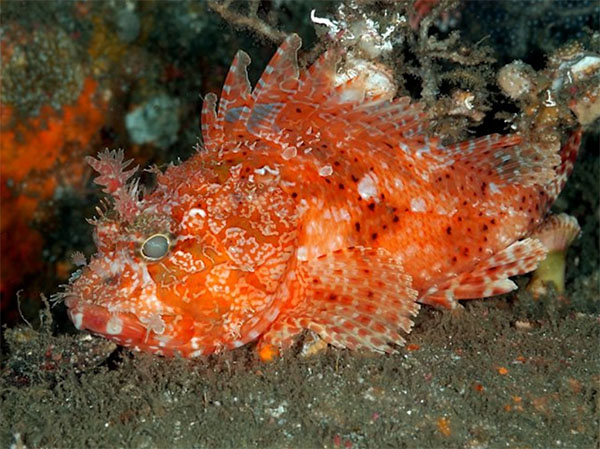 점감펭, Western scorpionfish(Scorpaena onaria). Location/Osezaki, Japan(大瀬崎). At depth of 51m. Author/Izuzuki. (CC BY NC) |
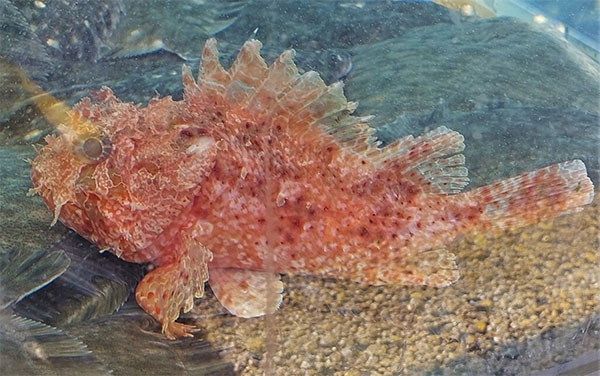 점감펭, Western scorpionfish(Scorpaena onaria). Location/제주도 서귀포(Seogwipo, Jeju Island, Korea). Author/오도현(Oh Do-hyun). (CC BY NC) |
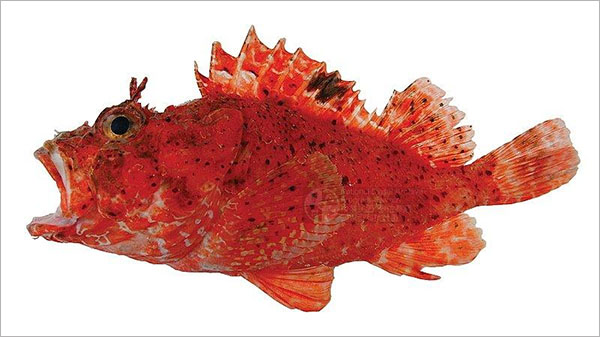 점감펭. 대만의 표본 사진. 등지느러미에 검은 반점이 있다. 암수 표시는 없다. Western scorpionfish(Scorpaena onaria). Preserved specimen of Taiwan, with black blotch on dorsal fin. There is no indication of gender. Location/臺灣東部魚類標本. Author/林沛立. (CC BY NC) |
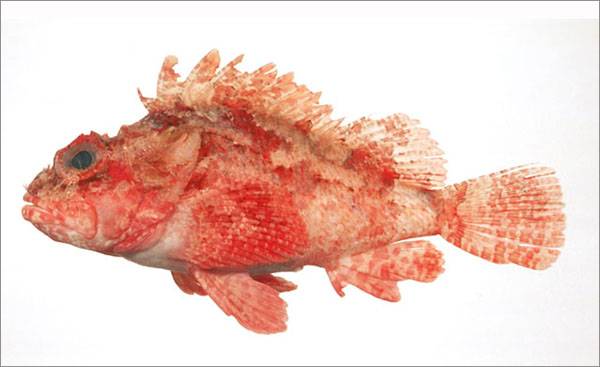 점감펭. 보존개체. Western scorpionfish(Scorpaena onaria). Source/fishbiosystem.ru. (CC BY NC) |
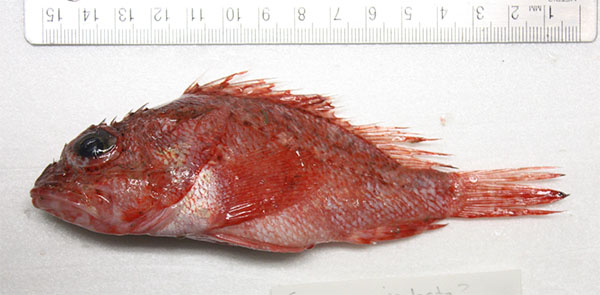 점감펭, 보존개체. Western scorpionfish(Scorpaena onaria). Location/Asia China. Rights holder/ University of Kansas Biodiversity Institute. (CC BY NC) |
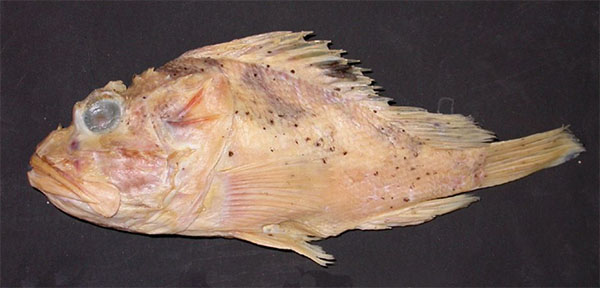 점감펭, 보존개체. Western scorpionfish(Scorpaena onaria). Location/New Caledonia Creator Motomura H. Preserved specimen. Publisher MNHN - Museum national d'Histoire naturelle. (CC BY NC) |
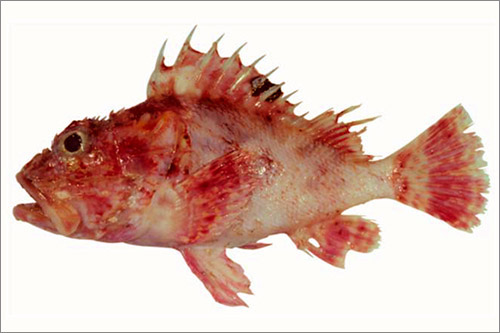 점감펭, Western scorpionfish(Scorpaena onaria). Author/CSIRO |
 점감펭. 보존 개체 사진. 등지느러미에 검은 반점이 있다. 암수 표시는 없다. Preserved specimen of Western scorpionfish(Scorpaena onaria). With black blotch on dorsal fin. No indication of gender. Rights holder/Australian National Fish Collection, CSIRO (CC BY NC) |
| text on preparation |


|
| Copyright ⓒ FISHILLUST.COM All rights reserved. All contents can not be used without permission of the copyright holder. |


 검색
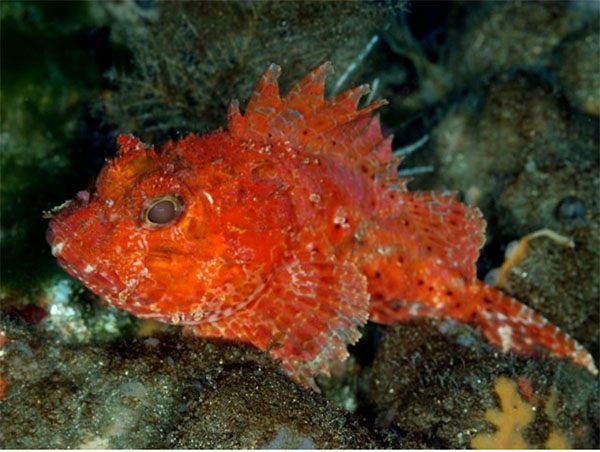 점감펭, Western scorpionfish(Scorpaena onaria). Location/Izu Marine Park, Japan(伊豆海洋公園). At depth of 41m. Author/Izuzuki. (CC BY NC)
