
사이트 로그인
사이트 로그인
|
분류계통/분류계통/경골상강→조기강→쏨뱅이목→볼락과→볼락 Copyright by Kim In Young. 김인영 그림
|

|
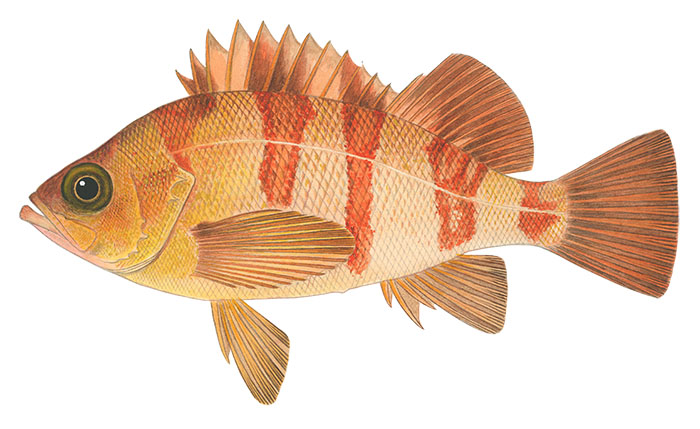
| [painting 1] 볼락 기본 모습. 적색 국면. Lateral view of Japanese red rockfish(Sebastes inermis) or Dark-banded rockfish. Red phase. |
|
Copyright by Kim In Young. 김인영 그림
|
|
| [painting 2] 볼락 기본 모습. 금색 국면. Lateral view of Japanese red rockfish(Sebastes inermis) or Dark-banded rockfish. Golden phase. |
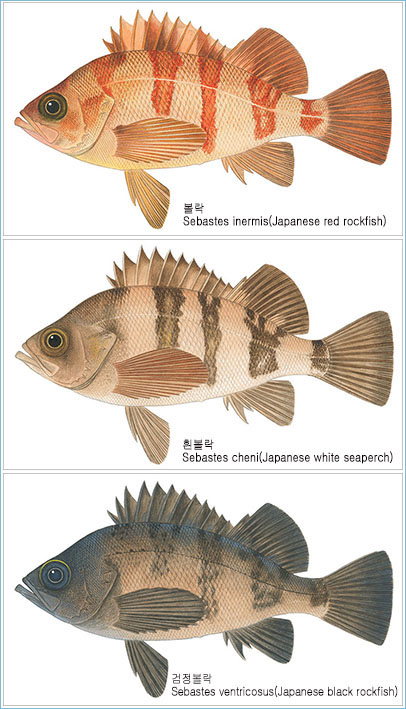 “볼락 종 복합체”의 3종 비교도. 설명은 이하 글에 자세히 있음. Comparison of three species of the “Sebastes inermis species complex”. A detailed explanation is given in the texts below. Author/Kim in-young(fishillus.com). |
“볼락 종 복합체(Sebastes inermis species Complex)” 볼락(Japanese red rockfish or Dark-banded rockfish). Sebastes inermis 오래 전부터 실제로는 3종인데 이 전체를 볼락 1종으로 인식하여 오다가 근래에 사실이 밝혀져 3종이 각자 독립 종이 되었다. 3종은 외형이 서로 매우 유사하여 구별하기가 어려우며 확실하게 구별하는 방법은 가슴지느러미의 기조 수 차이를 이용하는 것이다. 3종의 가슴지느러미의 기조 수는 서로 완전히 다르며 뒷지느러미 기조 수는 부분적으로 다르다. 자세한 내용은 텍스트 후단에 있는 “볼락 종 복합체”에 있다. For a long time, actually three species, but they were all considered as one species with the name of Sebastes inermis(Japanese red rockfish). The truth was recently revealed, and the three species became independent species. The three species are very similar in appearance, making it difficult to distinguish them. A sure way to distinguish them is to use the difference in the number of rays on the pectoral fins. The number of rays on the pectoral fin of the three species is completely different, and the number of rays on the anal fin is partially different. For more information, read “Sebastes inermis species Complex” at the end of the text. |
 볼락. 가슴지느러미 기조들은 모두 연조이며 수는 15개, 뒷지느러미는 극조 3 연조 7개임. 가슴지느러미의 분지 기조와 불분지 기조의 구성 비는 약간 차이가 있을 수 있다. Japanese red rockfish(Sebastes inermis). Pectoral fin rays are all soft rays and number is 15. Anal fin has 3 spines and 7 soft rays. The composition ratio of branched and unbranched ray of the pectoral fin may differ slightly.© Kim in-young |
 흰볼락. 가슴지느러미 기조들은 모두 연조이며 수는 17개, 뒷지느러미는 극조 3 연조 8개임.가슴지느러미의 분지 기조와 불분지 기조의 구성 비는 약간 차이가 있을 수 있다. Japanese red rockfish(Sebastes inermis). Pectoral fin rays are all soft rays and number is 17. Anal fin has 3 spines and 8 soft rays. The composition ratio of branched and unbranched ray of the pectoral fin may differ slightly. © Kim in-young |
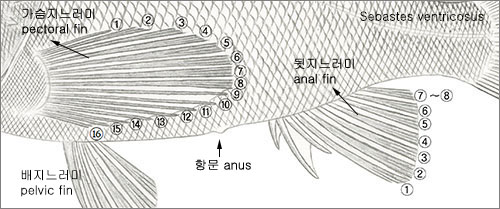 검정볼락. 가슴지느러미 기조들은 모두 연조이며 수는 16개, 뒷지느러미는 극조 3 연조 7개 또는8개임. 가슴지느러미의 분지 기조와 불분지 기조의 구성 비는 약간 차이가 있을 수 있다. Japanese red rockfish(Sebastes inermis). Pectoral fin rays are all soft rays and number is 16. Anal fin has 3 spines and 7~8 soft rays. The composition ratio of branched and unbranched ray of the pectoral fin may differ slightly.© Kim in-young |
쏨뱅이목 볼락과 분포; 서북태평양/한국의 남해, 동해남부, 제주도에 발견되며 서해에서는 상대적으로 드물고, 주로 남해와 동해에서 많이 발견된다. 일본은 남부 홋카이도에서 규슈까지 일본 전역에 분포한다. 몸은 체고가 약간 높은 타원형이며 옆으로 납작하다. 눈은 툭 불거지고 매우 크며 눈 지름은 주둥이 길이보다 크거나 같다. 뒤통수 부위의 가시는 매우 작거나 흔적적이다. 주둥이는 원뿔형으로 끝이 뾰족하다. 입이 크다. 양턱, 서골, 구개골에 작은 이빨이 촘촘히 나 있다. 아래턱 앞 끝의 이빨은 바깥에서 보인다. 아래턱이 위턱보다 앞으로 돌출되어 있다. 위턱 뒤는 동공의 끝에 거의 이른다. 머리와 몸통은 빗비늘로 덮여있다. 아래턱 아랫면에 조밀하게 배열된 미세한 비늘이 있다. 측선은 완전하고 등선을 따라 곡선으로 흐르며 몸통 앞부분에서는 등쪽으로 치우쳐있다. 등지느러미 기점은 아가미뚜껑 위쪽 가장자리 끝 위에 위치한다. 등지느러미 마지막 극조 길이는 그 직전의 극조 보다 길다. 전새개골 가장자리에 5개의 가시가 있다. 아가미뚜껑(주새개골) 위쪽 가장자리에 2개의 가시가 있다. 가슴지느러미는 몸으로 붙이면 뒤 끝이 항문을 넘어간다. 가슴지느러미는 15개의 연조로 구성되어 있다. 가슴지느러미의 맨 위 기조 1개와 아래쪽 기조 8개는 불분지 기조이며 나머지 중간에 있는 기조들은 분지 기조이다. 꼬리지느러미 뒤 가장자리는 거의 절단형인데 펼친 면이 좁을 때는 뒤 가장자리의 중간이 약간 안으로 패였으나 넓게 펼쳤을 때는 패인 곳이 없어지고 가장자리 전체가 매우 약간 둥글다. 볼락의 몸색은 서로 틀리는 몇 가지 설명이 있다. 적색과 금색이며 성어는 붉은 빛이 강하다는 설명, 등과 측면 색이 어두운 적색이거나 희미한 갈색(pale brown)이라는 설명, 갈색을 띤 붉은색이라는 설명이 있다. 종합적으로 보면 붉다는 점이 공통적이다. 몸에 약 5개의 수직형 반점무늬가 있다는 설명은 공통적이다. 수온 15∼25℃의 따뜻한 바다의 암초로 된 연안에서 서식한다. 수심 20-50m 연안의 암초 지역에 무리를 지어 서식한다. 자연물이나 인공물에 상관없이 돌이 있는 곳을 좋아한다. 어릴 때에는 떠다니는 해조류들과 함께 20∼30마리 정도 무리를 지어 다니며, 낮에도 활동한다. 다 자라면 어릴 때보다는 작은 무리를 지으며, 밤에 활동한다. 난태생(ovoviviparous)이다. 수컷은 텃새를 부리는데 그 범위는 12~70 평방미터이다. 암컷이 영역 안으로 들어오면 빠르게 왔다 갔다 하면서 반복해서 암컷과 몸은 나란히 하는 구애 행동을 한다. 교접에 들어가기 전에 이 구애 행위는 약 30분간 지속된다. 클라이맥스 단계에서 암수 두 마리는 바닥에서 수면 쪽으로 1.5~2.0 m 상승했다가 갑자기 수컷이 덤벼들어 암컷의 몸을 껴안고 교미행위를 한다. 암컷이 배 속에서 알을 부화시킨 후 새끼를 낳는다. 교미는 11~12월에 이루어지며, 새끼를 낳는 시기는 1∼2월이다. 육식성으로서, 새우류, 게류, 갯지렁이류, 조개류, 오징어류, 어류 등을 먹는다. 교미 1개월 후에 수정되고, 수정 후 약 1개월이 지나 자어가 되는데, 자어는 어미의 뱃속에서 성숙해서 태어나는 즉시 동물성 플랑크톤을 먹는다. 일년 내내 잡히며, 4~5월에 특히 많이 잡힌다. 한국에서는 15cm 이하는 포획이 금지되어 있다. 주로 낚시로 잡으며, 자연산은 산지에서 거의 소비되고 대도시에 유통되는 것은 양식산이다. 회, 소금구이, 조림, 튀김 등으로 이용되며 맛이 뛰어나다. 맛에서도 참돔에 가까운 감칠맛을 느낄 수 있고, 살은 단단하여 잘 부서지지 않는 편이다. 뼈도 날카롭거나 단단하지 않아 튀겨 먹으면 별미로 즐길 수 있다. 한국을 비롯해 일본 등에서 식재료로 쓰이며, 특히 독일에서 큰 인기를 끄는 생선이라고 알려져 있다. 자산어보에는 발락어(發落魚)로 기재되어 있다. ※ ‘볼락 종 복합체’에 대하여. 일본과 한국에서는 오래 전부터 표준명의 볼락(학명; Sebastes inermis)에는 3가지 다른 외형이 있어서 혼동과 여러 주장들이 지속되어 왔다. 주로 색상 차이에서 혼선이 일어 나는데 한국 낚시 동호인들은 금볼락, 청볼락, 갈볼락으로 구분해서 부른다고 한다. 환경 차이에서 나온 결과인가 아니면 종이 다른 것인가가 논쟁의 핵심이었다. 이 논란은 세계 어류학계(특히 일본 학계)에 오래 전부터 알려져 있는 “볼락 종 복합체(Sebastes inermis species complex)”라는 생물학 현상이다. “종 복합체(species complex)”라는 것은 어떤 한 종에 서로 비슷하게 생긴 것들이 섞여 있으나 서로 다른 종인지 같은 종인지 판단하기 어려운 경우를 규정한 생물학 용어이다. 2008년에 일본의 어류학자 2명(Kai, Yoshiaki와 Nakabo, Tetsuji)은 “볼락 종 복합체”를 규명힌 연구 논문을 발표하였는데 유전자 분석 결과 “볼락 종 복합체”는 각기 다른 3종으로 밝혀졌으며 그 3종은 Sebastes inermis, Sebastes cheni, Sebastes ventricosus라고 하였다. Sebastes inermis는 복합체의 원종인 볼락을 말하며 나머지 2종은 새로 규명된 종이다. 그러나 이 두 종은 신종은 아니다. 새로 규명된 Sebastes cheni는 국제적으로 흰볼락(Japanese white rockfish)이라는 이름으로 알려져 있으며 1988년에 러시아의 어류학자(Vladimir Viktorovich Barsukov)가 일본에서 채집된 표본을 근거로 연구하여 이미 신종으로 발표한 종이다. 한국과 일본에만 분포한다. 새로 규명된 Sebastes ventricosus는 국제적으로 검정볼락(Japanese black rockfish)이라는 이름으로 알려져 있으며 1843년에 네덜란드 동물학자(Coenraad Jacob Temminck)와 독일 동물학자(Hermann Schlegel)가 일본에서 채집된 표본을 근거로 연구하여 이미 신종으로 발표한 종이다. 한국과 일본에만 분포한다. 볼락(Japanese red rockfish)은 1829년 프랑스 동물학자(Georges Cuvier)가 발표한 종으로 알려져 있다. 볼락도 한국과 일본에만 분포한다. “볼락 종 복합체” 3종의 연구 결과는 세계 어류학계에는 적용되고 있는 과정에 있다. 그러나 아직 수정시키지 않은 정보가 많이 남아있어서 혼동이 일어난다. 한국의 어류학계와 관련 국가 기관들도 이에 대해 전혀 언급하고 있지 않다(2025년 5월 기준). 필자가 검색해 본 결과 어류 분류에 관해 가장 권위가 높은 정보 사이트의 하나인 Eschmeyer's Catalog of Fishes(The California Academy of Sciences)에는 새로 정리된 3 종 학명이 모두 인정(valid)되어 있다. 결론적으로 이 3종은 모두 일본과 한국에 분포하는 독립 종들로 귀결되었다. 한국의 낚시인들은 볼락의 생김새에 따라 이름을 금볼락, 청볼락, 갈볼락 3가지 별칭으로 호칭한다고 한다. 필자는 정식 어류학자가 아님으로 결정을 내리는 것이 옳은 일인지 의문이기는 하나 3종을 모두 한국 종으로 정리하는 바이다. 볼락 별칭인 금볼락, 청볼락, 갈볼락 각각의 학명은? ◎학명;Sebastes inermis ◎학명;Sebastes cheni ◎학명; Sebastes ventricosus ※ 볼락 이름의 유래; 한국 최초의 어류 연구서 우해이어보(牛海異魚譜;저자/김려金鑢)에 볼락을 보라어(甫羅魚)로 기록하였다. 보라(甫羅)는 엷은 자주색을 뜻하며 아름다운 비단을 의미하기도 한다. 보(甫)는 화초 같은 아름답다는 뜻을 가지고 있다. 즉 아름다운 몸색을 지닌 물고기라는 뜻에서 보라어 →볼락이 되었다고 풀이 된다. 정약전 자산어보(玆山魚譜)에는 볼락 이름을 박순어(薄脣魚)라 하고 그 속명을 발락어(發落魚)라 하였다. 발락어는 볼락이나 볼락류의 어류를 말하는 것이다. ※ 한글 표기법; 볼락인가 볼낙인가?; 항간에는 "볼낙"으로 표기된 사례가 매우 많은데 국립국어원 표준국어대사전에 의하면 바른 표기는 "볼락"이다. |
Oder Scorpaeniformes Family Family Sebastidae(Rockfishes, rockcods and thornyheads). Distribution; Northwest Pacific/found in the South Sea of Korea, the southern part of the East Sea, and Jeju Island, relatively rare in the West Sea, mostly found in the South Sea and East Sea. In Japan, throughout Japan from southern Hokkaido to Kyushu. Body depth relatively high oval, and laterally flat. The eyes are bulging and very large, and their diameter is greater than or equal to the length of the snout. The spines on the back of the head are very small or rudimentary. The snout is conical and pointed at the end. The mouth is large. Both jaws, vomer, and palatine bones are densely packed with small teeth. The teeth at the front end of the lower jaw are visible from the outside. The lower jaw protrudes forward from the upper jaw. The back of the upper jaw almost reaches the posterior end of the pupil. The head and body are covered with ctenoid scales. There are fine scales densely arranged on the underside of the lower jaw. The lateral line is complete and runs in a curve parallel to the dorsal line, and is shifted toward the dorsal side in the front part of the body. The origin of the dorsal fin is located above the upper edge of the gill cover. The last spine of the dorsal fin is longer than the previous spine. There are five spines on the margin of preopercle bone and two spines on the upper edge of the opercula. The pectoral fins extend beyond the anus when attached to the body side. The pectoral fin is composed of 15 soft rays. The uppermost one ray and eight rays at the bottom side of pectoral fin are unbranched, and the rest innermost(middle) rays are branched. The rear edge of the caudal fin is almost truncated, and when the spread surface is narrow, the middle of the rear edge is slightly indented, but when spread widely, the indentation disappears and the entire edge is very slightly rounded. There are multiple different descriptions about the body color of Sebastes inermis; Red and gold with deeper red color in adult; Dark red or pale brown color on the back and flanks; Brownish red color. Overall, the common feature is that it is red. “Five vertical blotches on the body” is common in descriptions. It inhabits the reef coasts of warm sea in depth of 20-50m with water temperature of 15-25℃. They live in groups on reefs. likes places with stones, whether natural or artificial. When they are young, they travel in groups of about 20 to 30 with floating seaweeds, and are active during the day. When fully grown, they form smaller groups than when they were young and are active at night. Ovoviviparous. Males are territorial, establishing territories which range in area from 12 to 70 sq. m. The male initiates courtship when a female approaches their territory and perform a lateral display with rushing and turning movements being recorded frequently as part of the courtship. The courtship behaviour lasts for around 30 minutes before copulation. It climaxes with the pair ascending into the water column, 1.5 to 2.0 m above the seabed, the male suddenly coils around the body of the female to copulate. Eggs hatch in the belly of female, and give birth to offspring. Mating takes place from November to December, and the breeding period is from January to February. As a carnivore, it eats shrimp, crabs, clams, worms, squid, fish, and the like. About 1 month after fertilization, they become larvae, which mature in the mother's womb and eat zooplankton immediately after birth. It is caught all year round, especially in April-May. Catching under 15 cm is prohibited in Korea. It is mainly caught by fishing, and wild products are mostly consumed in the local regions, and the ones distributed in large cities are farmed products. It is used for sashimi, salt-grilled, stewed, fried, etc. and has excellent taste. In terms of taste, you can feel the umami taste close to that of red sea bream, and the flesh is firm and not easily broken. The bones are not sharp or hard, so you can enjoy them as a delicacy if you fry them. It is used as a food ingredient in Korea and Japan. One of the most important target species for fisheries in Japan and is also grown in aquaculture to supply market demand, and is said to be particularly popular in Germany. ※What is the “Sebastes inermis Species Complex”? The newly identified Sebastes cheni is known as “Japanese white rockfish” and was already announced as a new species in 1988 by a Russian ichthyologist(Vladimir Viktorovich Barsukov) based on specimens collected in Japan. It is distributed only in Korea and Japan. The newly identified Sebastes ventricosus is known as “Japanese black rockfish”, and was already announced as a new species in 1843 by Dutch zoologist Coenraad Jacob Temminck and German zoologist Hermann Schlegel based on specimens collected in Japan. It is distributed only in Korea and Japan. The Bol-lak(Japanese red rockfish/Sebastes inermis) was announced in 1829 by French zoologist Georges Cuvier. It is also distributed only in Korea and Japan. The research results of the three species of “Bolrak species complex” are in the process of being applied to the world ichthyology community. However, there is still a lot of information that has not been corrected, which is causing confusion. The Korean ichthyology community and related national organizations have not mentioned this at all (as of May 2025). Eschmeyer's Catalog of Fishes(The California Academy of Sciences), one of the most authoritative information sites on fish taxonomy, confirmed all three newly identified species names as valid. In conclusion, these three species are all independent species distributed commonly in Japan and Korea. It is said that Korean anglers call this rockfish by three nicknames, gold rockfish, blue rockfish, and brown rockfish, depending on its appearance. However, it is not known which nickname corresponds to which scientific name, respectively. This is because anglers are speaking without principles on SNS. I am not a formal ichthyologist, so I am not sure if it is the right thing to do, but I would classify all three species as Korean species. Which Korean nickname corresponds to which scientific name, respectively?. ◎ Scientific name; Sebastes inermis ◎Scientific name; Sebastes cheni ◎Scientific name; Sebastes ventricosus ※ Origin of the Korean Name “Bol-rak(볼락)”: The earliest Korean ichthyological record, U-hae-i-eo-bo(牛海異魚譜; Author: Kim Ryeo/金鑢), refers to the Sebastes inermis as “Bo-ra-eo(보라어; 甫羅魚)”. The term “bo-ra(보라/甫羅)” signifies a light purple color and can also mean beautiful silk. The Chinese character “bo(甫)” carries the meaning of something as beautiful as flower plants. Thus, it is interpreted that the name “bo-ra-eo” was given to describe a fish with beautiful body color, and over time, this evolved into “bol-lak.” In Ja-san-eo-bo(玆山魚譜) by Jeong Yak-jeon, this fish is named “Bak-sun-eo(박순어/薄脣魚)”, meaning “thin-lipped fish,” and its local common name is recorded as “Bal-lak-eo(발락어/發落魚)”. “Bal-lak-eo” refers to the Sebastes inermis or related species within the rockfish group. ※ Korean spelling: 볼락(bol-rak) or 볼낙(bol-nak)?; There are many cases where rockfish is written as ‘볼낙(bol-nak)’ in everyday usage, but according to the Standard Korean Language Dictionary of the National Institute of the Korean Language, the correct spelling is ‘볼락(bol-rak)‘. |
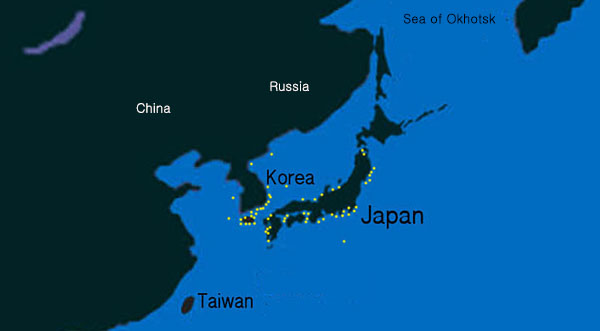 볼락의 분포도. NOTE/이 지도의 분포 해역은 GBIF(Global Biodiversity Information Facility/세계생물다양성정보기구)의 데이터(2022)를 인용한 것이며 “볼락 종 복합체” 문제가 해결된 이후의 데이터인지 아니면 그 이전 데이터인 지 확신할 수 없다. Distribution map of Japanese red rockfish(Sebastes inermis). NOTE/The distribution area on this map is based on data from the Global Biodiversity Information Facility(GBIF; 2022), and it is not certain whether the data is from after the “Sebastes inermis Species Complex” issue has been resolved or before that. Derived work from GBIF(2022 data). Worked by Kim in-young. |
|
[문제점] 아래 사진들에 표시된 학명은 볼락이 3종(볼락 종 복합체)으로 분리되기 전 데이터로 결정된 것과 3종으로 분리된 이후의 데이터를 적용시킨 것들이 혼재되어 있다. 사진 원본에 표기된 대로 종명을 표기했으며 실제의 종명이 무엇인지는 판단을 유보한다. 추가 설명; 아래 사진들 중 4개는 한국의 정부 기관인 국립생물자원관 사이트에 있는 것들인데 이 기관도 아직 “볼락 종 복합체”의 3종을 수용하지 않고 있으므로 종 표시는 3종 중 하나에 해당되며 실제 종은 무엇인지 알 수 없다(2025년 6월 현재). [Issue] The scientific names indicated in the photos below are a mixture of data determined before the “Sebastes inermis Species Complex” was split into three species and data applied after the split. The species names are written as indicated in the original photos, and the actual species identification is withheld. Additional Note: Four of the photos below are from the National Institute of Biological Resources, a government agency of Korea, which has not yet accepted the three species of the “species complex,” so the species designation is for one of the three, and the actual species is unknown(as of June 2025). |
 볼락. 죽은 개체 사진. 편집자는 종명을 확신할 수 없음. 출처; 한국국립생물자원관. 이 국가 기관은 아직 “볼락 종 복합체”의 최근 연구 결과를 수용하고 있지 않음(2025년 6월 현재) Sebastes inermis. Dead specimen. The editor cannot confirm the species name. Source: National Institute of Biological Resources, Korea. This national agency has not yet accepted the latest research findings on the “Sebastes inermis Species Complex” (as of June 2025). (CC BY NC). |
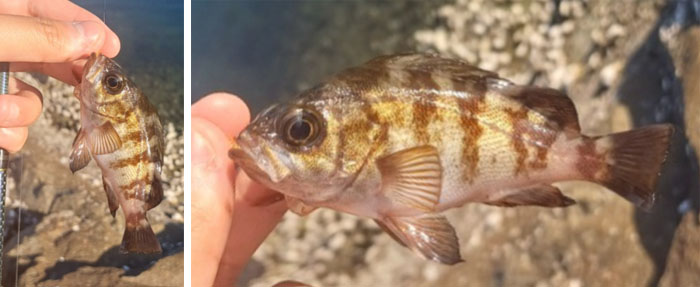 볼락. 종명이 틀리지 않은 것으로 보임. 신선한 죽은 개체 사진. Japanese red rockfish(Sebastes inermis). The species name doesn't seem to be wrong. Fresh dead specimen. Observed in Korea. Source: naturing.net/. Author/김강산(Kim-gang-san). (CC BY NC). |

| 볼락(Sebastes inermis). 수중 사진. 아래 다음 사진(저자; Izuzuki, 일본)과 비교해 보면 한국 표준명 볼락이 맞다고 본다. 출처; 한국국립생물자원관. Japanese red rockfish(Sebastes inermis). Underwater photo. Comparing to the next photo below(author; Izuzuki, Japan), I think the species name is correct. Source: National Institute of Biological Resources, Korea. (CC BY NC). |
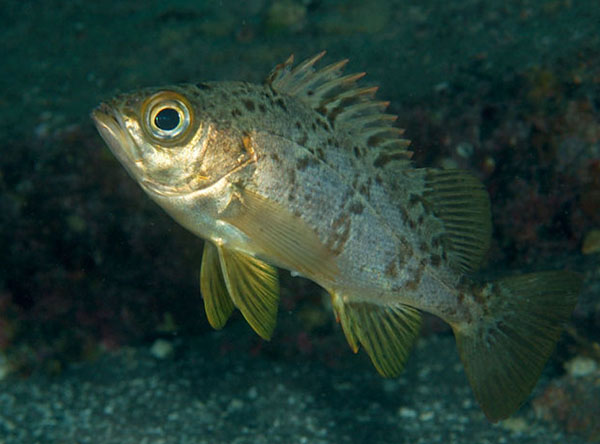 볼락(Japanese red rockfish/Sebastes inermis). 수중 사진. 이 사진의 저자(Izuzuki)는 가슴지느러미 기조 수를 세어보고 볼락임을 확인하였다. Japanese red rockfish(Sebastes inermis). Underwater photo. The author(Izuzuki, Japan) of this photo confirmed that it is Sebastes inermis by counting the number of rays of the pectoral fin. Author/Izuzuki. (CC BY NC). |

| 볼락(종명 확실할 가능성 많음). 수중 사진. 출처; 한국국립생물자원관. Sebastes inermis(The species name is likely to be certain). Underwater photo. Source: National Institute of Biological Resources, Korea. (CC BY NC). |
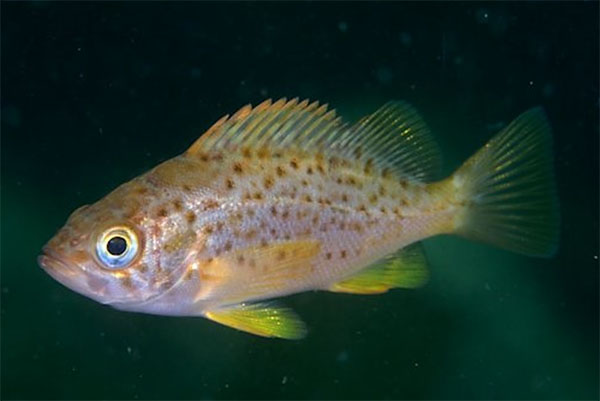 볼락(Sebastes inermis). 수중 사진. 사진의 저자(izuzuki)는 가슴지느러미의 기조 수가 15개임을 확인하였으므로 Sebastes inermis가 맞다고 하였다. 해저의 풀 줄기에 붙어 있었으며 작은 새끼일 것이라고 설명하였다. Sebastes inermis. The author of the photo(izuzuki) confirmed the number of rays on the pectoral fin was 15, so he said it was definitely Sebastes inermis. He explained it was attached to a stem of seaweed on the sea floor and it must be a small juvenile. Author/ izuzuki. (CC BY NC). |
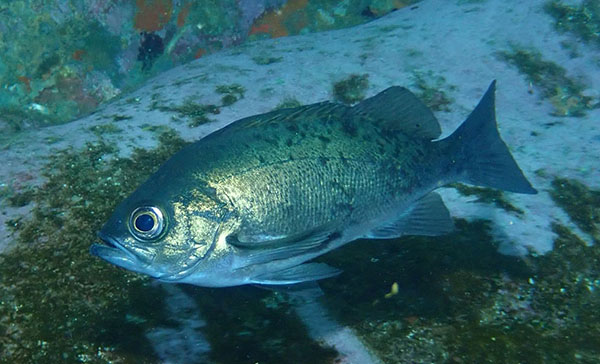 볼락. 수중 사진. 편집자는 종명을 확신할 수 없음. 청볼락(Sebastes ventricosus’; 검정볼락의 별칭)일 가능성이 있음. 출처; 한국국립생물자원관. Sebastes inermis. Underwater photo. location/Jeju Island, Korea. The editor cannot confirm the species name. It could be a Japanese black rockfish(Sebastes ventricosus). Author/김병직(Kim-byeong-jig; National Institute of Biological Resources, Korea). (CC BY NC). |
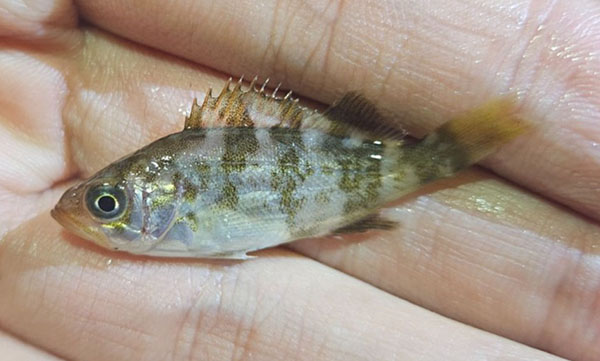
| 볼락. 신선한 죽은 개체 사진. 편집자는 종명을 확신할 수 없음. Japanese red rockfish(Sebastes inermis). The editor cannot confirm the species name. Fresh dead specimen. Observed in Korea. Source: naturing.net/. Author/김경민(Kim-gyeong-min). (CC BY NC). |
 볼락(Sebastes inermis). 수중 사진. 사진 저자(Izuzuki; 신뢰할 수 있는 전문가임)는 지느러미들의 색이 아름다워 이상했지만 Sebastes inermis 일 것이라고 말했다. Japanese red rockfish(Sebastes inermis). Underwater photo. The author of the photo(Izuzuki; trusted expert) said that it was probably Sebastes inermis, although the colors of the fins were strangely beautiful. Author/Izuzuki. (CC BY NC). |
 볼락(Sebastes inermis). 3종 분리 이전 데이터인지 이후 데이터인지 확인이 안됨. Japanese red rockfish(Sebastes inermis). It is not possible to confirm whether the data is before or after the separation of the three species. Location: Shin Enoshima Aquarium, Kanagawa, Japan. Author/OpenCage. (CC BY NC). |
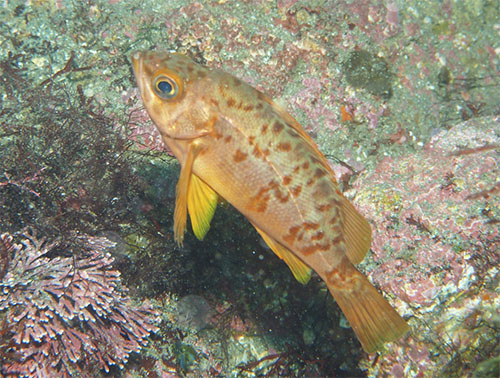 볼락(Sebastes inermis). 종명이 맞는 것으로 보임. Japanese red rockfish(Sebastes inermis). The species name seems correct. Observed in Japan. Author/Zack. (CC BY NC). |
 볼락(Sebastes inermis). 3종 분리 이전 데이터인지 이후 데이터인지 확인이 안됨. 따라서 종명 확인은 안됨. Japanese red rockfish(Sebastes inermis). It is not possible to confirm whether the data is before or after the separation of the three species, therefore, the species name cannot be confirmed. Observed in Yeosu-si, Jeollanam-do, Korea. Author/최병준(Choe-byeong-jun).Source: naturing.net/. (CC BY NC). |
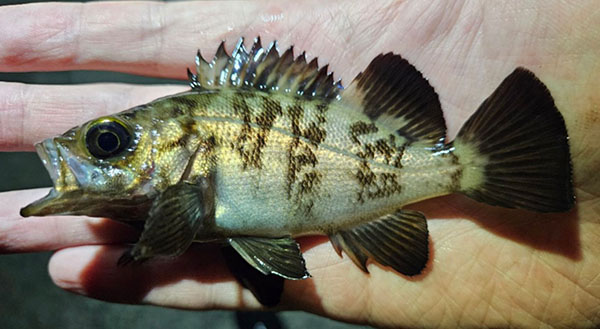 볼락(Sebastes inermis). 3종 분리 이전 데이터인지 이후 데이터인지 확인이 안됨. 따라서 종명 확인은 안됨. Japanese red rockfish(Sebastes inermis). It is not possible to confirm whether the data is before or after the separation of the three species, therefore, the species name cannot be confirmed. Observed in Korea. Author/김경민(Kim-gyeong-min). Source: naturing.net/. (CC BY NC). |
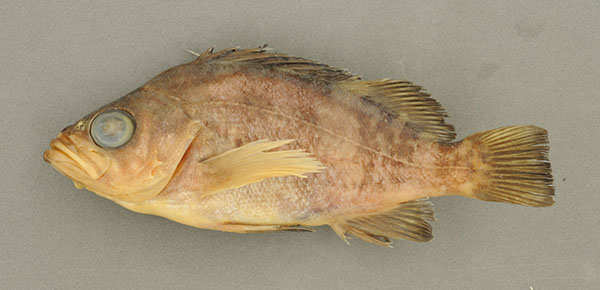 볼락. 연구실 보존 개체. “볼락 종 복합체” 문제가 해결되기 전 자료임으로 종명 재확인이 필요해 보임. 출처/한국국립생물자원관. Sebastes inermis. A preserved specimen in research lab. As this is data from before the “Sebastes inermis species complex” issue was resolved, the species name appears to need to be reconfirmed. Source: National Institute of Biological Resources, Korea. (CC BY NC). |
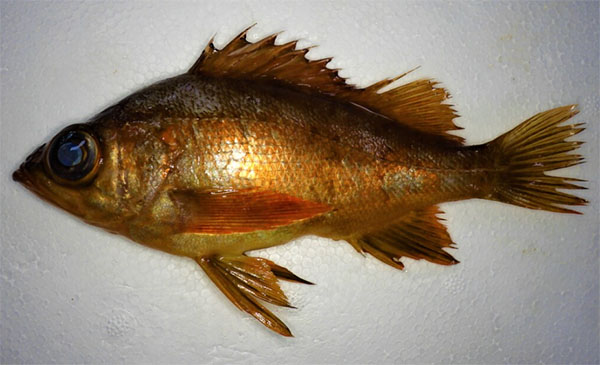
| 볼락. 죽은 개체 사진. 사진의 저자는 ‘금볼락(볼락의 별칭)’이라고 표기하였다. Sebastes inermis. Observed in Korea. The author of the photo labeled this fish as “golden rockfish(nickname of Sebastes inermis)”. Source: naturing.net/. Author/오도현(O-do-hyeon). (CC BY NC). |
 볼락(Sebastes inermis). 3종 분리 이전 데이터인지 이후 데이터인지 확인이 안됨. 따라서 종명 확인은 안됨. Japanese red rockfish(Sebastes inermis). It is not possible to confirm whether the data is before or after the separation of the three species, therefore, the species name cannot be confirmed. Observed in Korea. Author/성창민(Seong-chang-min). Source: naturing.net/. (CC BY NC). |
 볼락(Sebastes inermis). 3종 분리 이전 데이터인지 이후 데이터인지 확인이 안됨. 따라서 종명 확인은 안됨. Japanese red rockfish(Sebastes inermis). It is not possible to confirm whether the data is before or after the separation of the three species, therefore, the species name cannot be confirmed. Observed in Korea. Author/김경민(Kim-gyeong-min).Source: naturing.net/. (CC BY NC). |
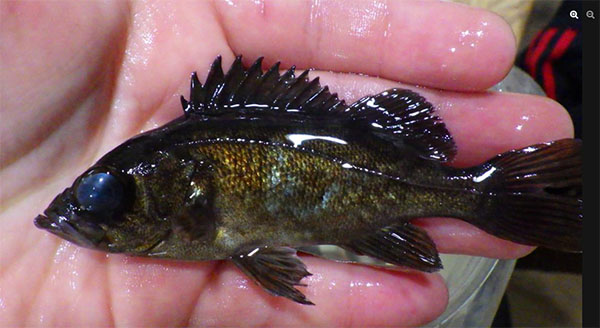 볼락. 신선한 죽은 개체 사진. 3종 분리 이전 데이터인지 이후 데이터인지 확인이 안됨. 따라서 종명 확인은 안됨. Japanese red rockfish(Sebastes inermis). Fresh dead specimen. It is not possible to confirm whether the data is before or after the separation of the three species, therefore, the species name cannot be confirmed. Observed in Korea. Source: naturing.net/. Author/윤성열(Yun-seog-yeol). (CC BY NC). |
 볼락의 자치어. 3종 분리 이전 데이터인지 이후 데이터인지 확인이 안됨. 따라서 종명 확인은 안됨. Larva of Japanese red rockfish(Sebastes inermis). It is not possible to confirm whether the data is before or after the separation of the three species, therefore, the species name cannot be confirmed. Observed in Korea. Author/성창민(Seong-chang-min). Source: naturing.net/. (CC BY NC). |
 볼락. 3종 분리 이전 데이터인지 이후 데이터인지 확인이 안됨. 따라서 종명 확인은 안됨. 수직방향 사진(왼쪽)을 회전시킴(오른쪽). Japanese red rockfish(Sebastes inermis). It is not possible to confirm whether the data is before or after the separation of the three species, therefore, the species name cannot be confirmed. Observed in Japan. Left photo/original vertical photo. Right photo/Rotated 90˚ccw. Author/Jay. (CC BY NC). |
 Left/볼락 회. Sashimi of Japanese red rockfish(sliced). Author/대경라이프. Right/뼈를 바르지 않고 저민 볼락 회. Sashimi of Japanese red rockfish(minced raw bone-in). Author/대경라이프 |
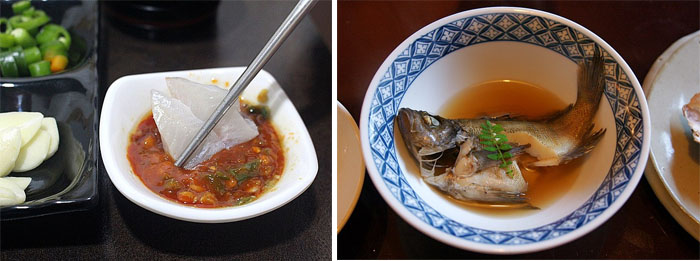 Left/볼락 회를 된장과 고추장을 섞은 소스에 찍어 먹기. Dipping sliced sashimi of Japanese red rockfish in doenjang(soybean paste) and cho-gochujang(vinegar chili paste) mixture. Right/일본의 볼락 외간장 조림. Japaese cuisine/Stewed Japanese rockfish in Japanese soy sauce. Author/663highland |
| text on preparation |


|
| Copyright ⓒ FISHILLUST.COM All rights reserved. All contents can not be used without permission of the copyright holder. |


 검색
