
사이트 로그인
사이트 로그인
|
분류계통/분류계통/경골상강→조기강→쏨뱅이목→볼락과→흰꼬리볼락 Copyright by Kim In Young. 김인영 그림
|
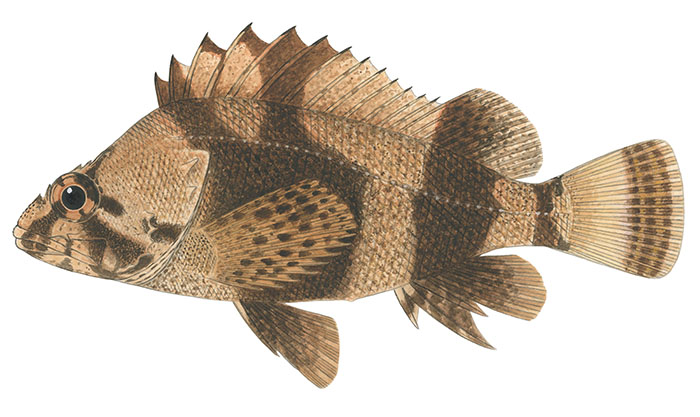 |
| [painting1] 흰꼬리볼락 기본 모습. 황갈색 국면. Lateral view of Longspined rockfish(Sebastes longispinis). Brown(yellowish) phase. |
|
Copyright by Kim In Young. 김인영 그림
|
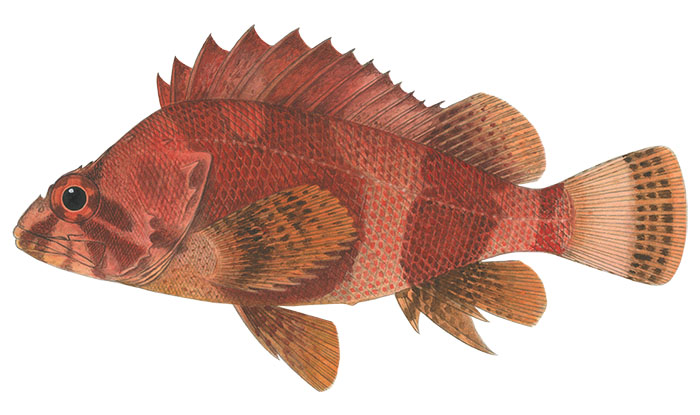 |
| [painting 2] 흰꼬리볼락 기본 모습. 적갈색 국면. Lateral view of Longspined rockfish(Sebastes longispinis). Red brown phase. |
쏨뱅이목 볼락과 분포; 서북태평양/한국의 서해, 제주도를 포함한 남해, 일본 중부이남의 근해, 중국 황해 전 연안에 분포하며 대만과 그 주변 중국 연안까지 분포하고 있을 가능성이 높다. 등지느러미는 극조부와 연조부가 연결되어 1개이다. 등지느러미 기점은 아가미뚜껑 상단 가장자리보다 약간 앞에 있다. 등지느러미 연조부 시작점은 뒷지느러미 연조부의 시작점 보다 앞에 있다. 뒷지느러미의 가시는 두 번째가 가장 길며 머리 길이의 반을 초과한다. 가슴지느러미의 맨 위쪽 1~2개 기조와 아래 쪽 8개 기조는 불분지 기조이며 중간의 6~7 개 기조는 분지기조이다. 가슴지느러미는 몸통 중앙보다 약간 아래에 있으며 뒤 끝은 항문(총배설강)에 이른다. 항문은 몸통 중앙에서 약간 뒤쪽에 있다. 배지느러미는 가슴지느러미 기부보다 약간 뒤에 위치하며 뒤 끝은 항문에 이른다. 꼬리지느러미가 좁혀있을 때는 뒤 가장자리가 절단형이며 넓게 펼치면 뒤 가장자리가 약간 둥근 모양이 된다. 측선은 완전하고 뚜렷하며 앞쪽은 등쪽으로 약간 치우쳐있고 등의 외곽선을 따라 구부러져 있다. 머리와 몸통은 빗비늘로 덮여 있고 턱, 눈앞뼈, 주둥이, 눈 사이 공간, 아래턱, 아가미 막에는 비늘이 없다. 채색은 서식 환경에 따라 차이가 있다. 체측에 회갈색이거나 붉은색이거나 또는 암적색으로 된 불규칙하고 넓은 가로(수직 방향) 띠 무늬 두 개가 있고 지느러미마다 검은 반점이 촘촘하게 있다. 전반적으로 암갈색과 붉은 색으로 얼룩덜룩하다. 머리 앞부분은 검다. 꼬리지느러미의 앞 절반과 뒤 가장자리가 그리고 각 지느러미의 가장자리도 약간 누르스름한 흰색이다. 난태생어로 연안의 암초에 산다. 매우 드물게 낚시에 잡히며 생태에 관해 연구 자료가 거의 없는 종이다. 이 종은 우럭볼락(Sebastes hubbsi)과 많이 닮았으나 뒷지느러미의 두 번째 가시가 더 길고(머리 길이의 절반 이상), 등 가시가 더 길고(머리 길이의 약 0.5배), 꼬리지느러미 앞부분이 옅은 흰색을 띤다는 점에서 차이가 있다. |
Oder Scorpaeniformes Family Family Sebastidae(Rockfishes, rockcods and thornyheads). Distribution; Northwest Pacific/West sea and south sea of Korea including Jeju Island, coastal waters south of central Japan, the Yellow Sea coast of China, and it is highly likely that it is distributed as far as Taiwan and the surrounding Chinese coast. The dorsal fin is a single fin, with the spines and soft rays connected. The origin of the dorsal fin is slightly in front of the upper edge of the gill cover. The origin of the soft part of the dorsal fin is in front of the origin of the soft part of the anal fin. The second anal fin spine is very long, its length is more than half the head length. The uppermost 1-2 rays and the lower 8 rays of the pectoral fin are unbranched, and the middle 6-7 rays are branched. The pectoral fin is located slightly below the center of the body, and its posterior end reaches the anus(cloaca). The anus is located slightly behind the center of the body. The pelvic fin is located slightly behind the base of the pectoral fin, and its posterior end does not reach the anus. When the caudal fin is narrowed, the trailing edge is truncated, and when it is spread wide, the trailing edge becomes slightly rounded. The lateral line is complete and distinct, the anterior part slightly shifted dorsally and curved along the outline of the back. The head and body are covered with ctenoid scales but jaws, preorbital bones, snout, interorbital space, lower jaw, and gill membranes are naked(not covered with scales). Coloring differs depending on the habitat environment. Two irregular, wide vertical bands on body side which are grayish brown, reddish, or dark red and dense black spots on each fin. Overall, it is mottled with dark brown and red colors. Anterior head blackish. The anterior half and posterior edge of the caudal fin yellowish white, and the martins of rest fins are also with yellowish white. It is very similar to Armorclad rockfish(Sebastes hubbsi) except for the absent of whitish colored band on the caudal fin. Ovoviviparous. Inhabit coastal reefs. Very rarely fished, and there is little data on its ecology. This species is closely related to Sebastes hubbsi, but differs by the longer second anal spine (over half the head length), longer dorsal spines(approximately 0.5 of the head length), and the pale whitish color of the front part of the caudal fin. |
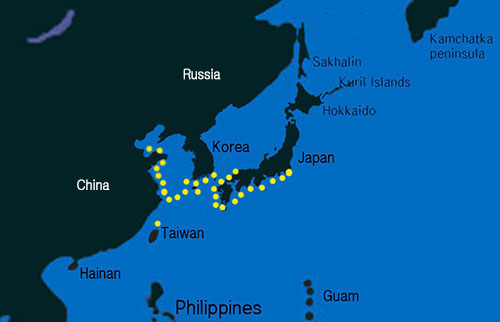 흰꼬리볼락 분포도. Distribution map of Longspined rockfish(Sebastes longispinis). Author/Kim in-young(fishillust.com). Data source of North Yellow Sea; fishbiosystem.ru/ |
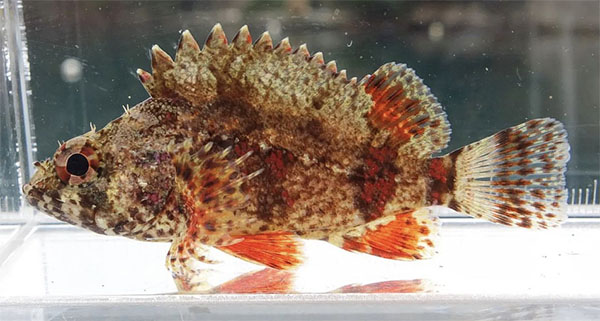 흰꼬리볼락. 채집 관찰용 어항 사진. 의문 점; 흰꼬리볼락은 머리 등선에 몇 개의 가시가 있다. 뉘여 있어서 사진에 나타나지 않았다고 본다. 그런데 눈과 정수리 부분에 가시가 아닌 3개의 Y자형 돌기가 보이는데 이 특징이 설명된 자료를 온라인에서 찾을 수 없다. 인공지능에 물어보아도 머리 위 돌기가 있다는 정보는 없다고 한다. Longspined rockfish(Sebastes longispinis). Location/Okitsu, Kochi, Japan. Author/bananyasan. Question: The Longspined rockfish(Sebastes longispinis) has a few spines on its head. I think they are not shown in the photo because they are lying down. However, there are three V-shaped protrusions instead of spines on the eyes and crown area, but I cannot find any information explaining this feature online. I asked multiple AIs, but they said there is no information about the protrusions on the top of the head. |
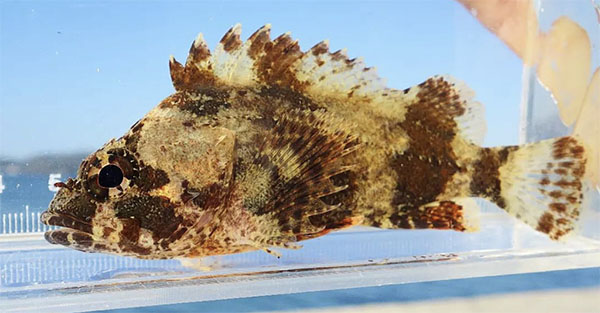 흰꼬리볼락. 채집 관찰용 어항 사진. Longspined rockfish(Sebastes longispinis). Photo of a small fish tank for observing. March, 2022. Location/Okitsu, Kochi, Japan. Author/bananyasan. (CC BY-NC) |
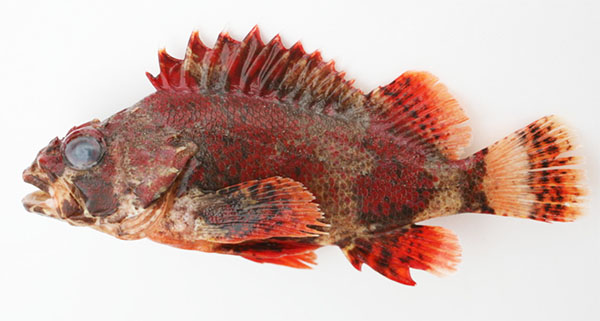 흰꼬리볼락. Longspined rockfish(Sebastes longispinis). Date/2008. Location/Bogil-myeon, Wando-gun, Jeollanam-do, Korea(전라남도 완도군 보길면). Author/Chae Byeong-su(채병수). (CC BY-NC) |
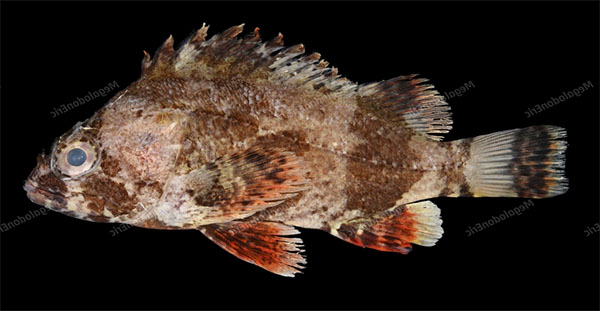 흰꼬리볼락. Longspined rockfish(Sebastes longispinis). Date/October, 2024. Location/North Yellow Sea. Author/Eric.L.Chen. (CC BY-NC) |
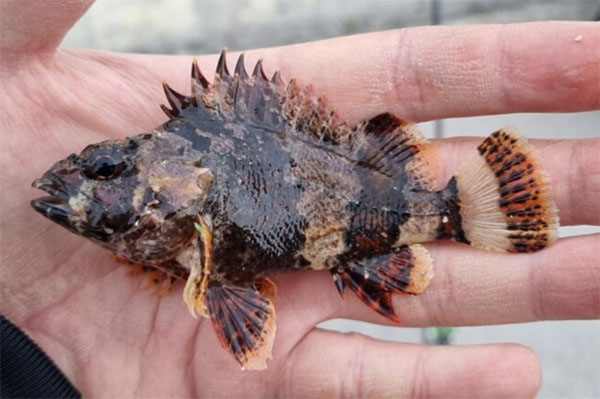 흰꼬리볼락. Longspined rockfish(Sebastes longispinis). Date/2022. Location/Mijo-myeon, Namhae-gun, Gyeongsangnam-do, Korea(경상남도 남해군 미조면). Author/Shin Yu-shin(신유신). (CC BY-NC) |
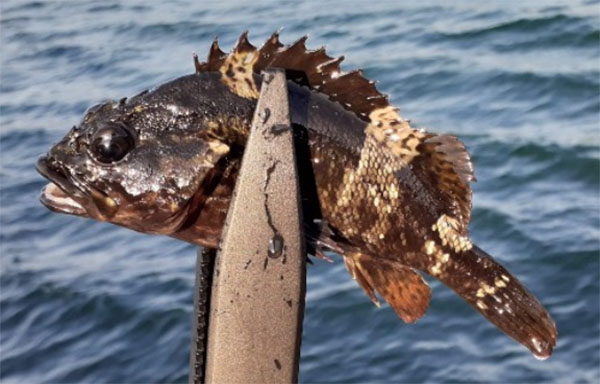 흰꼬리볼락. Longspined rockfish(Sebastes longispinis). Date/2025. Location/Korea. Author/Jeong Jae-Yeop(정재엽). (CC BY-NC) |
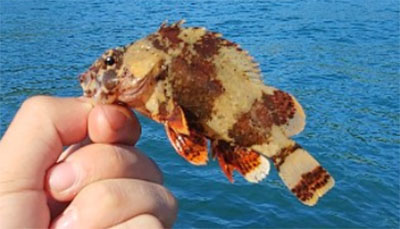 흰꼬리볼락. Longspined rockfish(Sebastes longispinis). Date/2020년. Location/Mado-dong, Sacheon-si, Gyeongsangnam-do, Korea(경상남도 사천시 마도동). Author/Cha Da-hyun(차다현). (CC BY-NC) |
| text on preparation |


|
| Copyright ⓒ FISHILLUST.COM All rights reserved. All contents can not be used without permission of the copyright holder. |


 검색
