
사이트 로그인
사이트 로그인
|
분류계통/경골상강→조기강→쏨뱅이목→볼락과→조피볼락 Copyright by Kim In Young. 김인영 그림
|
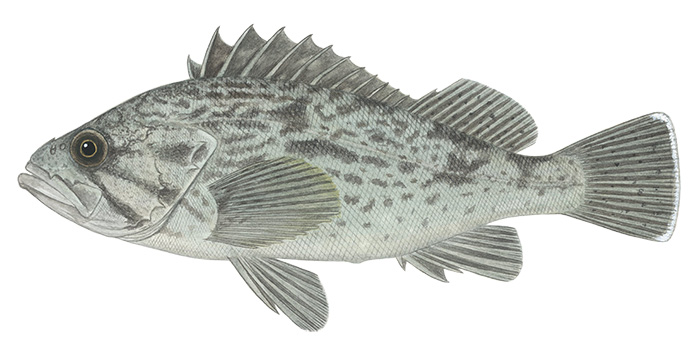 |
| [Painting 1] 조피볼락 기본 모습. 성어의 회색 국면 Lateral view of Korean rockfish(Sebastes schlegelii). Grey phase of adult. |
|
Copyright by Kim In Young. 김인영 그림
|
 |
| [Painting 2] 조피볼락 기본 모습. 미성어의 갈색 국면 Lateral view of Korean rockfish(Sebastes schlegelii). Brown phase of subadult. |
|
|
|
쏨뱅이목 볼락과 분포; 서북태평양/한반도의 전 연안, 일본 홋카이도 전 해역과 그 이남의 일본 서해안, 중국 산동반도(보하이해), 대만, 러시아의 블라디보스토크. 등지느러미는 1개로 극조부와 연조부 사이는 깊게 파여 있다. 등지느러미 가시는 잘 발달되어 있으며 가시 사이의 막은 깊게 파여 있다. 등지느러미 연조부는 바깥쪽 가장자리가 둥글다. 가슴지느러미는 배쪽에 치우쳐 있으며 뒷가장자리가 둥글다. 가슴지느러미 뒤는 항문(총배설강)에 이르지 못한다. 가슴지느러미는 맨 위 첫 기조는 불분지 기조, 그 다음 아래 8개 기조는 분지 기조이며 그 아래의 나머지 기조 8개는 불분지 기조이다. 배지느러미는 가슴지느러미 기부 보다 뒤에서 시작하며 뒤 끝은 항문에 거의 닿는다. 뒷지느러미는 가장자리가 둥글고 가시는 두 번째 가시가 비교적 굵고 강하다. 꼬리지느러미 후연은 약간 둥글지만 거의 직선형이다. 아주 어렸을 때는 몸 바탕 색이 올리브색을 띤 황색이며 수직 방향의 검정 띠 무늬를 가진다. 자랄수록 연한 황갈색 바탕에 띠 무늬는 어두운 색의 얼룩무늬로 바뀐다. 완전히 다 자라면 바탕색은 회갈색이 되며 어두운 무늬들은 불특정하게 작은 크기로 분해되어 전신에 얼룩무늬로 분산된다. 성어의 전형적인 색은 갈색이 거의 다 사라진 잿빛이며 회색 바탕 위에 분산된 얼룩무늬들이 약간 더 어두운 회색으로 덮여 있는 모양새이다. 이 기본 패턴이 농도가 진하게 또는 연하게 변화한다. 매우 드물게 일본명 Kurosoi(흑볼락)의 뜻처럼 거의 까만 색까지 나타날 수도 있다. 꼬리지느러미 뒤 가장자리가 좁게 백색이며 위와 아래 모서리 부분의 백색 면적이 약간 넓다. 눈에서부터 방사상으로 뻗은 뚜렷하지는 않은 3개의 검은 띠가 있다. 맨 위 띠는 눈에서부터 거의 수평으로 주새개골 상단의 가시 부분에 이르며 두 번째 중간 띠는 눈에서부터 비스듬하게 아래 방향으로 전새개골을 넘어가며 맨 아래 띠는 눈 아래에서부터 전새개골의 아래 쪽 4번 가시 쪽으로 이어져 있다. 이 방사상 무늬는 머리와 몸에 산재하는 얼룩무늬와 비슷하게 보여서 별개의 띠 무늬가 아닌 것으로 인식될 수 있다. 수심 10∼100m인 연안의 암초지대에서 주로 서식한다. 담수의 기수역에도 출현한다. 가을과 겨울에 남쪽으로 이동하여 월동하는 계절회유를 한다. 황해의 경우 수온이 내려가기 시작하는 가을, 겨울에 걸쳐 발해만이나 황해 북부의 각 연안으로부터 남하를 시작해서 1월에는 북위 35°선에 달하며, 그 해역에서부터 남부해역에 걸쳐 3월경까지 월동한다. 그 뒤 수온의 상승과 함께 다시 북상한다고 알려져 있다. 암컷은 35cm(3년생), 수컷 28cm(2년생)가 되어야 산란을 시작할 수 있다. 성어 암 수컷은 추운 겨울이 오면 짝짓기를 하며 수컷은 항문 바로 뒤의 조그만 생식기를 암컷의 생식공에 밀착하여, 정자를 암컷의 체내로 들여 보낸다. 암컷의 몸 속으로 들어간 정자는 난소 내에서 약 1개월 반 동안 난소가 성숙될 때까지 기다렸다가 수정을 하게 되며 그 후 체내 발육기간을 거쳐 5∼6월에 새끼를 난태생으로 출산한다. 암컷이 한 배에 가지는 알 수는 3년생이 55,000~74,000개, 5년생이 100,000~180,000개인데, 전장이 50cm급인 어미는 약 40만 마리의 새끼를 낳는다. 치어(稚魚)는 알에서 깬 직후 표층에 떠다니는 해초와 함께 이동한다 하다가 성장해 가면서 표층생활에서 연안의 얕은 해조류가 많은 곳으로 이동하며 치어기는 수심 10m보다 얕은 곳에 머문다. 10㎝ 미만은 연안을 떠나서 성장함에 따라 깊은 곳으로 이동한다. 야간에는 분산하여 중층으로 떠오르기도 하지만 주간에는 떼를 지어 바닥 부근에 머문다. 그다지 이동거리가 멀지 않지만 움직임은 아침•저녁에 활발하다.. 먹이는 치어일 때는 동물플랑크톤이지만 성장함에 따라 게•새우•곤쟁이 및 갑각류 유생을 즐겨 먹는다. 미성어기가 되면 초기에는 대형 새우류와 게류를 잡아먹다가 몸길이 15㎝ 이상이 되면 주로 까나리를 잡아먹는 육식성으로 변한다. 성어기가 되면 동물•소형어류•게•새우류 등을 닥치는 대로 잡아먹는다. 정치망, 땅주낙, 걸그물로 주로 어획한다. 한국에서 스포츠 낚시 인기 대상어이다. 주로 횟감으로 이용하며, 매운탕으로도 많이 먹고 있다. 넙치와 함께 대표적인 양식어종이다.매년 많은 양을 방류하여 자원량이 매우 풍부하다. 개인 수족관에 잘 적응되어 오래 산다. 한국명의 유래 ※일본어 이름은 '쿠로소이(クロソイ, 黒曹以)'이다. 일본에서는 볼락류를 통칭하여 '소이(ソイ)'라고 부르며, 조피볼락은 몸색이 검어서 '쿠로(黒)'를 붙여 쿠로소이라 한다. 한글 표기법; 볼락인가 볼낙인가? |
|
|
|
Oder Scorpaeniformes Family Family Sebastidae(Rockfishes, rockcods and thornyheads). Distribution; Northwest Pacific/all around the Korean Peninsula. Around Hokkaido and along west coasts of japan, Bohai Sea of China, Taiwan, Vladivostok of Russia. The mouth opens at the tip of the snout, with the lower jaw slightly longer than the upper jaw. The lateral line is complete. The mouth is large, and the posterior end of the maxilla reaches the rear margin of the eye. Both jaws bear very small teeth arranged in bands. A distinctive feature of this species is the presence of three distinct spines projecting downward from the upper margin of the maxilla, partially covering it. Head spines are short but strong: one pair in front of the eyes, two pairs between the eyes, and one pair behind them. There are five spines on the preopercle and two on the opercle. The body is covered with small, weakly developed quadrangular ctenoid scales. Scales are absent on both jaws and along the margin of the preopercle. The number of lateral line pore scales is 38 or more. The dorsal fin is single, with a deep notch separating the spinous and soft-rayed portions. The dorsal spines are well developed, and the membranes between them are deeply incised. The soft-rayed portion of the dorsal fin has a rounded outer margin. The pectoral fins are positioned ventrally, with a rounded posterior margin, and do not reach the anus(cloaca). In the pectoral fin, the uppermost 1 ray is unbranched, the following eight rays are branched, and the remaining eight lower rays are unbranched. The pelvic fins originate posterior to the base of the pectoral fins, and their posterior tips nearly reach the anus. The anal fin has a rounded margin, with the second spine relatively thick and strong. The posterior margin of the caudal fin is slightly rounded but nearly straight. At a very early stage, the ground color of the body is yellow with an olive tint and bears vertical black bands. As the fish grows, the background becomes pale yellowish brown, and the banded pattern changes into darker blotches. When fully grown, the ground color turns grayish brown, and the dark markings break up into small, irregular spots that are scattered over the entire body. The typical coloration of the adult fish is a ashy gray tone with almost all of the brown hues gone, featuring a pattern of dark gray mottling dispersed over a gray background. The intensity of this basic pattern varies from darker to lighter shades. In very rare cases, it can appear almost black, just as its Japanese name 'Kurosoi' (meaning black rockfish) suggests. The rear edge of the caudal fin is narrowly white, with the white areas slightly broader at the upper and lower corners. Three indistinct black bands radiate outward from the eye. The uppermost band extends almost horizontally from the eye to the spined upper part of the opercle. The second, middle band runs obliquely downward from the eye, passing across the preopercle. The lowermost band extends from beneath the eye toward the fourth lower spine of the preopercle. These radiating markings resemble the scattered blotches on the head and body and may therefore be perceived not as distinct bands but as part of the general mottled pattern. This species mainly inhabits rocky coastal areas at depths of 10–100 m, and it also occurs in brackish waters influenced by freshwater. It undertakes seasonal migrations, moving southward in autumn and winter to overwinter. In the Yellow Sea, as water temperatures begin to drop in autumn and winter, individuals migrate southward from Bohai Bay and the northern coasts of the Yellow Sea, reaching approximately 35°N latitude by January. They overwinter from that region southward to the southern sea areas until around March, after which they are known to migrate northward again as water temperatures rise. Females begin spawning at about 35 cm in total length(3 years old), and males at about 28 cm(2 years old). In winter, mature males and females mate. The male presses a small genital organ located just behind the anus against the female’s genital opening, transferring sperm into the female’s body. The sperm remains in the ovary for about one and a half months until the ovaries mature, at which point fertilization occurs. After an internal developmental period, the female gives birth to live young(ovoviviparity) between May and June. The number of eggs per brood is approximately 55,000–74,000 in 3-year-old females and 100,000–180,000 in 5-year-old females; a female of about 50 cm total length can produce as many as 400,000 offspring. Immediately after hatching, the larvae drift near the surface together with floating seaweeds. As they grow, they shift from a surface-dwelling life to shallow coastal areas rich in seaweeds, with juveniles remaining in waters shallower than 10 m. Individuals smaller than 10 cm stay near the coast, but as they grow, they move to deeper waters. At night they disperse and may rise into midwater, whereas during the day they form schools and remain near the bottom. Their overall migration distance is not great, but their activity is most pronounced in the morning and evening. The diet consists mainly of zooplankton during the larval stage. With growth, they preferentially feed on crabs, shrimps, mysids, and crustacean larvae. In the early subadult stage, they prey on large shrimps and crabs, and once they exceed about 15 cm in length, they shift to a predominantly carnivorous diet, feeding mainly on sand lances. As adults, they feed opportunistically on animals such as small fishes, crabs, and shrimps. They are commonly caught using set nets, bottom longlines, and gill nets. In Korea, this species is a highly popular target of recreational fishing. It is mainly consumed as raw fish(sashimi) and is also widely used in spicy fish stews. Along with the flounder(Bastard halibut; Paralichthys olivaceus), it is one of Korea’s representative aquaculture species. Large numbers are released annually, resulting in very abundant stocks. The species adapts well to private aquaria and can live for a long time in captivity. The origin of the Korean name; "jo-pi-bol-lak(조피볼락)" ※ The Japanese name for the Sebastes schlegelii is Kurosoi(クロソイ, 黒曹以). In Japan, rockfish species are generally called “soi” (ソイ), and because the Sebastes schlegelii has a dark body color, the word “Kuro” (黒, meaning “black”) is added—thus the name Kurosoi. ※ The Russian name for the Sebastes schlegelii is “окунь чёрный морской” (okun chernyy morskoy). Okun means “rockfish,” chernyy means “black,” and morskoy means “of the sea.” Therefore, the term literally means “black sea rockfish.” ※ The Chinese name “許氏平鮋” (Xǔ shì píng yóu) originates from its scientific name Sebastes schlegelii. “Xǔ shì” (許氏) is the Chinese transliteration of Schlegel, the specific epithet of the species. “Píng” (平) means “flat,” referring to the fish’s laterally compressed body, and “yóu” (鮋) means “rockfish.” The genus Sebastes is referred to in Chinese as 平鮋屬 (píng yóu shǔ), meaning the “rockfish genus.” Altogether, the name translates to “Schlegel’s rockfish.” Korean spelling: 볼락(bol-rak) or 볼낙(bol-nak)? |
 조피볼락 분포도. Distribution map of Korean rockfish(Sebastes schlegelii). Main reference/AquaMaps (2019, October). Author/Kim in young(fishillust.com) |
 조피볼락(우럭). 살아있는 성어의 가장 표준적인 색상이다. 실제 바다 속에서도 이 색상이 가장 많이 발견된다. Korean rockfish(Sebastes schlegelii). The typical coloration of mature adults and is the most prevalent hue observed in their natural marine habitat. Location/Muroran Aquarium, Hokkaido, Japan. Author/Tomarin |
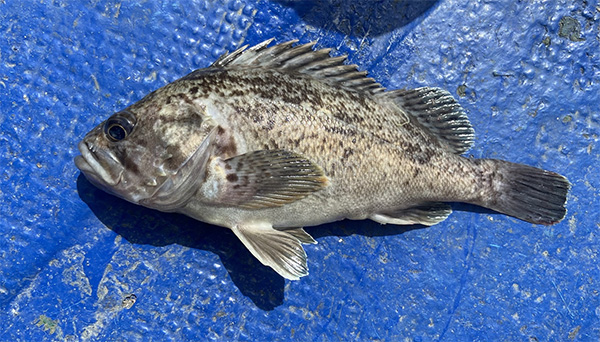 조피볼락(우럭). 죽은 개체. Korean rockfish(Sebastes schlegelii). Location/Qingdao, Shandong, China(중국 산둥성 칭다오시). Dead specimen. Author/Mengshuai Ge. Source/inaturalist.org. (CC BY NC) |
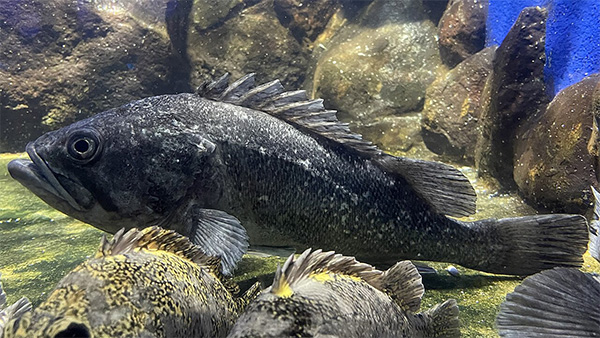 조피볼락(우럭). 일본 홋카이도 시립 무로란 수족관 사진(市立室蘭水族館飼育展示個体). Korean rockfish(Sebastes schlegelii). A specimen on display at the Muroran City Aquarium, Hokkaido, Japan. Author/Totti. Source/Wikimedia. (CC BY NC) |
 조피볼락(우럭). 낚시로 갓 잡힌 개체. Korean rockfish(Sebastes schlegelii). A freshly angled specimen. Location/Vladivostok gorsovet, Primor'ye, Russia(러시아, 블라디보스토크). Author/Глеб Колесников. Source/inaturalist.org. (CC BY NC) |
 조피볼락. Korean rockfish(Sebastes schlegelii). Location/Osaka Aquarium Kaiyukan, Japan. Author/OpenCage. (CC BY NC) |
 조피볼락. 보존개체 사진. Korean rockfish(Sebastes schlegelii). Preserved specimen. Location/Korea, Author/해양수산과학원(National Institute of Fisheries Science, Koea). (CC BY NC) |
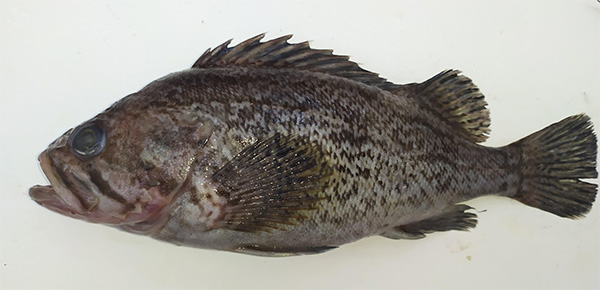 조피볼락. 흑해 이입 종. Korean rockfish(Sebastes schlegelii). Invasive species in the Black Sea. Location/Sinop, Southern Black Sea, Türkiye.. May 2023, 199 mm. Author/Orçin Uygun. (CC BY NC) |

| 조피볼락(우럭). 어릴수록 검은 점들은 크기가 크고 그 수는 적다. 꼬리지느러미의 뒤 가장자리(특히 위와 아래 모서리)가 하얀 점은 조피볼락의 특징 중 하나이다. Korean rockfish(Sebastes schlegelii). Black spots tend to be larger in size and fewer in number in younger specimens. The white edge on the posterior margin of the caudal fin(especially on the upper and lower corners) is one of the characteristics of Korean rockfish. Location/Korea. Author/윤성열. Source/naturing.net. (CC BY NC) |
 조피볼락(우럭). 항구 직벽 수중촬영. Korean rockfish(Sebastes schlegelii). Underwater photo of a specimen found on vertical wall of a port. Location/Korea. Author/윤성열. Source/naturing.net. (CC BY NC) |
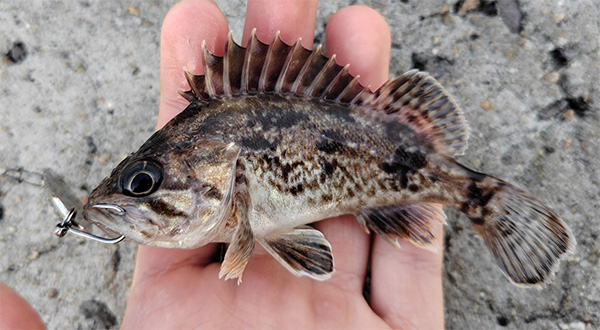 조피볼락(우럭). Korean rockfish(Sebastes schlegelii). Location/Qingdao, Shandong, China(중국 산둥성 칭다오시). Author/弘扬. Source/inaturalist.org. (CC BY NC) |
 조피볼락(우럭). Korean rockfish(Sebastes schlegelii). Location/Dalian, Liaoning, China(중국 랴오닝성 다롄). Author/Arthur Han. Source/inaturalist.org. (CC BY NC) |
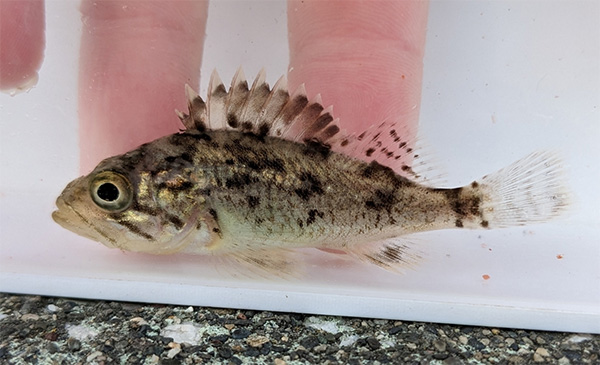 조피볼락(우럭). 배경에 보이는 것은 사람의 손가락임, 물고기의 크기를 나타내기 위함. Korean rockfish(Sebastes schlegelii). Location/Otaru, Hokkaido, Japan(오타루, 홋카이도, 일본). The thing visible in the background is the human fingers. It is used to indicate the size of the fish. Author/Arthur Han. Source/inaturalist.org. (CC BY NC) |
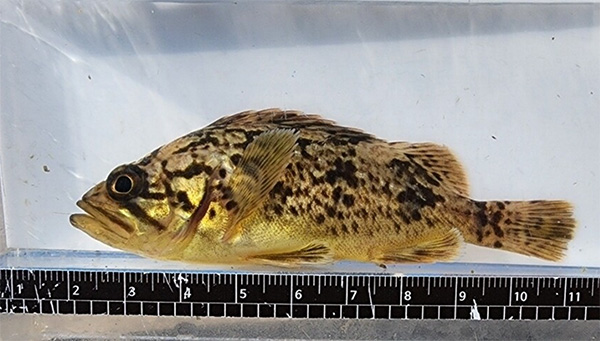 조피볼락(우럭). 체장 약 7.5cm(SL). Korean rockfish(Sebastes schlegelii). Location/Seo-gwi-po-si, Jeju Island, Korea. Author/희건. Source/naturing.net. (CC BY NC) |
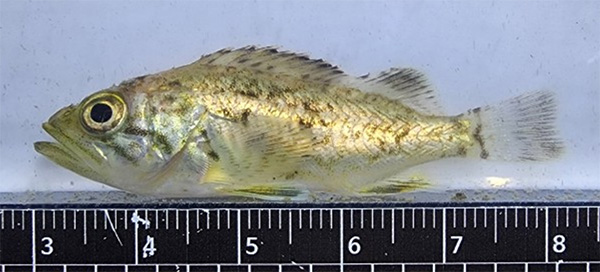 조피볼락(우럭). 체장 약 4.5cm(SL). Korean rockfish(Sebastes schlegelii). Location/Korea. Author/희건. Source/naturing.net. (CC BY NC) |
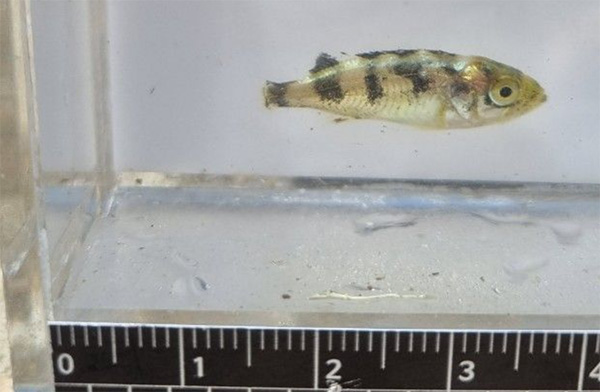 조피볼락(우럭). 실물이 자가 있는 유리벽과 멀리 떨어져 있음으로 카메라의 거리 왜곡 현상이 작용하고 있어서 주제의 크기는 짐작으로만 가능하다. Korean rockfish(Sebastes schlegelii). The distance between the fish and the scale on the glass wall causes camera lens distortion, so the size of the subject can only be roughly estimated. Location/Korea. Author/김지훈. Source/naturing.net. (CC BY NC) |
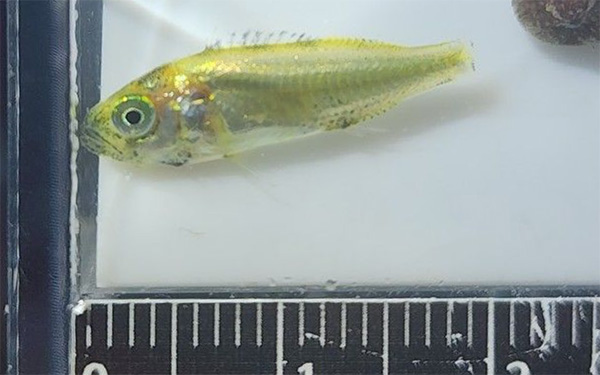 조피볼락(우럭). 체장 약 2cm(SL). Korean rockfish(Sebastes schlegelii). Location/Korea. Author/uno. Source/naturing.net. (CC BY NC) |
 조피볼락(우럭). 식당의 활어 수조 사진. Korean rockfish(Sebastes schlegelii). Live specimen in a water tank of a restaurant. Location/Qingdao, Shandong, China(중국 산둥성 칭다오시). Author/orcinusss. Source/inaturalist.org. (CC BY NC) |
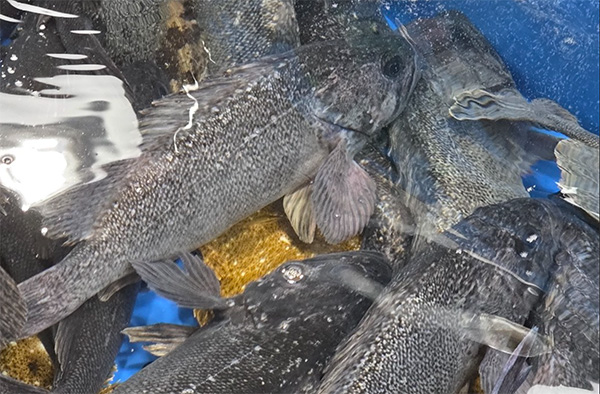 조피볼락(우럭). 회식당의 활어 수조 사진. Korean rockfish(Sebastes schlegelii). A photo of the live fish tank at the sashimi restaurant. Location/Gungpyeong-ri, Seosin-myeon, Hwaseong-si, Gyeonggi-do, Korea(경기 화성시 서신면 궁평리). Author/다이스1234. Source/naturing.net. (CC BY NC) |
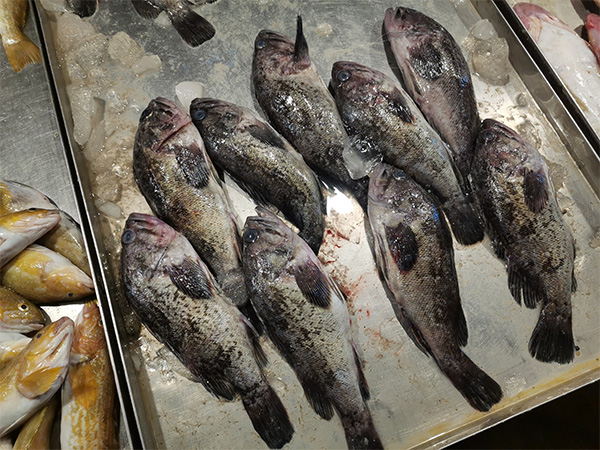
| 조피볼락(우럭). 생선시장 진열품. Korean rockfish(Sebastes schlegelii). In fish market. Location/Yantai, Shandong, China(중국 산둥성 옌타이시). Author/邹轶帆 Zou Yifan. Source/inaturalist.org. (CC BY NC) |
 조피볼락(우럭)의 일본식 소금 구이 요리. 마이다케 버섯, 유자, 파가 곁들여 있다. Korean rockfish(Sebastes schlegelii). Grilled soy fish(grilled with salt), served with maitake, green onions, and yuzu. Author/OpenCage. (CC BY NC) |
| text on preparation |
|
|
  |
| Copyright ⓒ FISHILLUST.COM All rights reserved. All contents can not be used without permission of the copyright holder. |


 검색
