
사이트 로그인
사이트 로그인
|
분류계통/경골상강→조기강→쏨뱅이목→볼락과→누루시볼락 Copyright by Kim In Young. 김인영 그림
|
 |
| [illustration 1]. 누루시볼락 추론적 순종의 기본 모습. 몸은 청색이 약간 들어간 청회색이며 몸 전체에 그물망 무늬가 있다. 몸통에 반점이나 띠 같은 큰 무늬가 없다(띠볼락에게는 있다).. 꼬리지느러미 뒤에 백색 테두리가 없다(띠볼락에게는 있다).. 위턱 뒷부분에 잔비늘이 없다(띠볼락에게는 있다). 등지느러미 극조부 바닥(기저부)에 잔비늘이 없다(띠볼락에게는 있다).
The inferred basic appearance of the typical form of Fox jacopever (Sebastes vulpes). • The body is gray with a slight blue tint and features reticulated patterns across the entire body. •There are no large markings, such as spots or bands(present in the banded rockfish). •The caudal fin lacks a white margin on its posterior edge(present in the banded rockfish). •There are no fine scales on the posterior part of the upper jaw (present in the banded rockfish). •There are no fine scales at the base of the dorsal fin spines (present in the banded rockfish). |
|
Copyright by Kim In Young. 김인영 그림
|
 |
| [illustration 2]. 실제로 발견되는 누루시볼락의 청회색 국면. 일반론; 누루시볼락의 꼬리지느러미 뒤에는 백색 테두리가 없거나 덜 분명하게 있으나 띠볼락에게는 뚜렷한 백색 테두리가 있다"는 것이 일반론이지만 실제로 낚시인들이 공개한 개체 사진들에서는 두 종을 구별하기 어렵게 누루시볼락도 흰테가 분명한 것들이 많다. 띠볼락은 몸에 3개의 분명하고 넓은 띠무늬가 있으나 누루시볼락에게는 띠가 희미하거나 불분명하다는 것이 일반론이지만 누루시볼락도 띠무늬가 분명한 것들이 있어서 띠볼락과 구별하기 어려운 경우가 많다. The blue-gray phase of the fox jacopever (Sebastes vulpes) as actually observed. |
|
Copyright by Kim In Young. 김인영 그림
|
 |
| [[illustration 3]. 누루시볼락의 황갈색 국면. 색상 국면과 관계없이 몸의 그물무늬는 성장할수록 쪼개지고 작아져서 그물망 모양을 상실해 간다. 다 자란 성어의 크기가 전장 약 40cm(TL)라고 가정할 때 이 이미지의 개체는 약 25cm 미만 개체에 해당된다. A yellowish-brown phase of the fox jacopever (Sebastes vulpes). Regardless of the color phase, the reticulated patterns on the body break apart and shrink as the fish grows, eventually losing their mesh-like appearance. Assuming a fully grown adult reaches a total length (TL) of approximately 40cm, the specimen in this image corresponds to an individual under 25cm. |
|
Copyright by Kim In Young. 김인영 그림
|
 |
| [illustration 4]. 누루시볼락의 흑색 국면. Black phase of fox jacopever (Sebastes vulpes). |
|
Copyright by Kim In Young. 김인영 그림
|
 |
| [illustration 5]. 띠볼락과 누루시볼락 유어의 공통적인 모습, 두 종의 성어는 외관이 비슷한 것으로 잘 알려져 있지만 유어기에는 더욱 비슷하여 외관으로 종을 구별하기가 거의 불가능하다. 그림은 추정 몸 길이 약 7cm(TL) 미만의 개체 사진에 근거하였음. 사진은 정 측면보다 아주 약간 위에서 촬영된 것임. Common appearance of juvenile Sebastes zonatus and Sebastes vulpes, with an estimated total length(TL) of less than 7 cm. Although the adults of the two species are well known to look similar, they are even more alike during the juvenile stage, making it almost impossible to distinguish them by external appearance alone. This illustration is based on a photograph taken from a slightly elevated side view." |
|
Copyright by Kim In Young. 김인영 그림
|
 |
| [illustration 6]. 누루시볼락 외형의 기본 프레임. 누루시볼락과 구별하기가 어려운 띠볼락(Sebastes zonatus)은 아래턱 뒤 부분에 미세한 둥근비늘이 있지만 누루시볼락(Sebastes vulpes)에게는 비늘이 없다. 띠볼락은 등지느러미 가시부 바닥 전체에 걸쳐 미세한 둥근 비늘이 분포하지만, 누루시볼락은 이 부위에 잔 비늘이 거의 없거나 아주 적다. 이 2 가지 특징은 도해에서 표시하기가 어렵다. Basic external structure frame of Fox jacopever(Sebastes vulpes). Sebastes vulpes is hard to distinguish from Sebastes zonatus. It is said that Sebastes zonatus has fine cycloid scales on the back of its lower jaw, but Sebastes vulpes not, and Sebastes zonatus has fine cycloid scales distributed across the entire base of its dorsal fin spines, the Sebastes vulpes has few to no small scales in that area. These two characteristics are difficult to illustrate in a diagram. |
쏨뱅이목 볼락과 분포; 서북태평양/한반도의 동부, 남해 동부 및 서남해 쪽 먼바다, 일본의 중부 이북 홋카이도까지, 일본의 서해(일본해) 쪽에 널리 분포한다. 등지느러미 극조부와 연조부는 연결되었으며 경계부는 오목하다. 등지느러미 기점은 아가미뚜껑 뒤끝보다 약간 앞에 있다. 등지느러미의 제 5극조가 가장 길다. 등지느러미의 마지막 극조는 바로 앞의 극조보다 길이가 길다. 등지느러미 연조부 가장자리는 둥글다. 등지느러미 극조부 기저부 길이는 연조부 기저부 길이보다 길다. 뒷지느러미 기저부 뒤끝은 등지느러미 연조부의 기저부 뒤끝보다 약간 앞에 있다. 뒷지느러미의 3개 가시 중 두번째와 세번째 가시는 길이가 서로 거의 같다. 가슴지느러미는 몸통 중앙보다 약간 아래에 위치한다. 가슴지느러미 뒤끝은 항문(총배설강)에 이른다. 가슴지느러미는 약 17개의 연조로 이루어져 있다. 맨 위의 연조 1개은 불분지 연조이며 그 아래로 8개는 분지 연조이며 그 아래의 나머지 연조8개는 불분지 연조이다. 가슴지느러미의 아래 쪽 불분지 연조들은 두툼하게 살이 쪄 있다. 배지느러미는 가슴지느러미 기저부보다 훨씬 뒤쪽에 자리하며 그 뒤끝은 항문(총배설강)에 약간 이르지 못한다. 항문(총배설강)은 몸통 중앙보다 약간 뒤쪽에 자리한다. 꼬리지느러미는 뒤 가장자리는 약간 둥근 형과 절단형이면서 위와 아래 코너만 둥근 형이 있다. 꼬리지느러미 펼침이 좁은 상태에서는 절단형으로 보인다. 누루시볼락의 색상: 누루시볼락(Sebastes vulpes)의 몸색은 청회흑색 국면과 황갈색 국면 그리고 흑색 국면까지 3가지가 있다. 눈동자 크기 내지 조금 더 큰 그물 무늬가 몸 전체에 밀집해 있고 너비가 넓은 검은 수직 띠 무늬가 3개 있다. 그물 무늬는 나이가 들수록 쪼개지고 흩어지면서 불분명해 진다. 황갈색 국면, 흑색 국면 모두 무늬나 띠의 모양은 동일하다. 첫번째 띠무늬는 등지느러미 극조부(제 4-11극)아래에, 두번째 띠무늬는 등지느러미 연조부 아래에, 마지막 세번째 띠무늬는 미병부에 있다. 띠무늬 3개 중 맨 앞에 있는 넓은 띠는 매우 뚜렷하고 뒤쪽의 2개는 덜 뚜렷하다. 외형이 거의 동일하게 보이는 누루시볼락과 띠볼락을 구별할 때 "누루시볼락의 띠는 띠볼락의 띠무늬 보다 덜 분명하다"는 설명이 있지만 누루시볼락의 띠는 흐릴 때도 있고 진할 때도 있어서 구별의 기준을 삼을 수 없다. 띠볼락은 꼬리지느러미 뒤 가장자리가 뚜렷한 흰색 테두리로 되어 있다. 누루시볼락은 꼬리지느러미 뒤 가장자리에는 원칙적으로 흰 테두리가 없는 것으로 정의되어 있지만 누루시볼락의 꼬리지느러미에도 흰테가 있는 경우가 많아서 혼란이 일어나 있다. 수심 0~50m의 얕은 바다의 암초지역에 사는 천해어이며 독립생활을 한다. 난태생어이다. 암컷은 겨울철에 수컷과 교미를 하여 수컷의 정자를 난소 안에 일정 기간 보관하고 있다가 몸 안에서 난자가 성숙해지면 수정시킨다. 수정된 알은 외부로 배출되지 않고 암컷의 배 속에서 영양을 공급받으며 부화 과정을 거친다. 부화된 새끼(자어)는 어미 몸 안에서 약 4~5mm 크기로 자란 뒤, 봄에 분만 된다. 어린 자어는 표류하는 해초 더미 아래에서 숨어 지낸다. 크기는 25㎝ 전후가 흔하다. 5~6월에 낚시로 많이 어획된다. 작은 갑각류나 어류 등을 먹는다. 단백질을 다량 함유하고 있으며 조피볼락(Sebastes schlegelii)에 비하여 지방이 많아 열량이 높다. 다른 볼락류와 마찬가지로 매운탕, 구이 회 등 다양한 방식으로 조리하여 식용한다. 방언에 "참우럭"있는데 이는 누루시볼락과 띠볼락을 뭉뚱그려 부르는 말이다. 맛이 좋다는 뜻이 담겨있다. [누루시볼락 콤플렉스] [누루시볼락과 띠볼락의 외관 유사성] [판단 어려운 외관의 결론] 1). 누루시볼락(Sebastes vulpes)은 살아있을 때(매우 신선할 때) 기본색이 한국에서 발견되는 것들은 회색 또는 회흑색 바탕에 대리석 무늬 같은 잔 무늬가 깔려 있고 얼룩이나 반점 같은 뚜렷한 무늬는 없다. 일본에서 발견되는 것들은 바탕색이 누런 황갈색 계열이며 얼룩이나 반점 같은 뚜렷한 무늬는 없다. 한국 이름 누루시볼락의 어원이 만약 "누루스름한 색"에 있다면 오리지널 바탕색은 황갈색 계열이며 일본의 경우와 같다고 상상할 수 있다. 누루시볼락의 색 변형 중에는 거의 흑색에 가까운 것이 있다. 2). 띠볼락(Sebastes zonatus)은 살아있을 때(매우 신선할 때) 기본색이 한국에서 발견되는 것들은 연한 청색 또는 연한 보라색이 깔린 회색이며 몸에 3개의 넓은 수직 방향의 뚜렷한 띠가 있다. 일본 사진 자료들 중에는 한국 개체들처럼 연한 청색이나 연한 보라 빛이 섞인 회색인 것이 있으나 일본 누루시볼락의 경우와 마찬가지로 누런 색(황갈색 계열) 개체들이 더 많이 제시되어 있다. [Note] 띠볼락의 띠 무늬 3개 중 첫번째 띠는 등지느러미 4~5번 가시의 기저 점과 11~12번 가시의 기저 점 사이의 등 너비에서 시작하여 아래로 완만하게 좁아지면서(역사다리꼴) 가슴지느러미 지나 배쪽으로 내려가 있다. 두번째 띠는 등지느러미 연조부의 대략 3번째 연조 기저 점과 11번째 연조 기저 점 사이의 너비로 시작하여 아래로 완만하게 좁아지면서 측선을 조금 초과한다. 마지막 세번째 띠는 등지느러미 뒤 끝을 지난 미병부 상부에서 시작하여 아래로 측선을 약간 지난다. 3). 요점; 한국과 일본의 이미지 자료들을 함께 모아 보면 누런 색은 양국에서 두 종 모두에 나타난다. 4). 누루시볼락과 띠볼락의 중간자 형(잡종)이 너무 많이 있다. 띠볼락의 띠 무늬가 매우 흐릿하게 나타나 있는 것, 띠 무늬가 조금 더 좀 분명하게 나타나 있는 것, 띠 무늬가 거의 진짜 띠볼락에 가깝게 분명한 것. 잡종이 독립적인 종명을 가지지는 않음으로 한 잡종의 외관이 이종인지 저종인지 유전자를 검사해 보기 전에는 결정해 말하기가 어렵다. 5). 누루시볼락 원종(原種)은 꼬리지느러미 가장자리에 백색 테두리가 없으며 만약 있다면 아주, 매우 가늘다. 띠볼락 원종(原種)은 꼬리지느러미 가장자리에 백색 테두리가 뚜렷하게 있다. 이 특징은 두 원종에서 분명하다. 그러나 잡종 국면에서는 매우 애매하다. "잡종에 뿌리를 둔" 누루시볼락과 "잡종에 뿌리를 둔" 띠볼락이 모두 제 나름대로 흰테를 가지고 있기 때문이다. 6). 인터넷상에 올려지는 사진들은 제공자 각각의 판단에 따라 이름이 정해지는 경향이 있다고 본다. 또한 이 동종이 맞았다 틀렸다 말할 수도 없는 것은 해당 개체의 유전자 검사를 전문가가 하지 않는 한 아무도 왈가왈부할 수 없기 때문이다. 다만 원종의 정의에 매우 가까운 외관을 가진 개체에 대해서만은 어는 정도 정확성을 기할 수 있을 것이다. 7). 색상과 무늬 외의 다른 외관 차이/ |
Oder Scorpaeniformes Family Family Sebastidae(Rockfishes, rockcods and thornyheads). Distribution; Northwest Pacific/the eastern coast of the Korean Peninsula, the eastern South Sea and the offshore waters of the southwestern sea of Korea. From central Japan northward to Hokkaido, more widely found along the west coasts of Japan. The spinous and soft-rayed portions of the dorsal fin are continuous, and the boundary between them is concave. The origin of the dorsal fin is slightly anterior to the posterior edge of the operculum. The fifth dorsal-fin spine is the longest. The last dorsal-fin spine is longer than the spine immediately before it. The distal margin of the soft-rayed portion of the dorsal fin is rounded. The base length of the spinous portion of the dorsal fin is longer than that of the soft-rayed portion. The posterior end of the anal-fin base is slightly anterior to the posterior end of the base of the soft-rayed portion of the dorsal fin. Of the three spines of the anal fin, the second and third spines are nearly equal in length. The pectoral fin is located slightly below the middle of the body. The tip of the pectoral fin reaches the anus(cloaca). The pectoral fin usually consists of about 17 soft rays. Usually, the uppermost 1 soft ray is unbranched, the next 8 rays are branched, and the remaining 8 lower rays are unbranched. The lower unbranched rays of the pectoral fin are thick and fleshy. The pelvic fin is situated well behind the base of the pectoral fin, and its tip falls slightly short of reaching the anus(cloaca). The anus(cloaca). is located slightly behind the middle of the body. The caudal fin has a slightly rounded posterior margin, and there is also a truncate type in which only the upper and lower corners are rounded. When the caudal fin is narrowly spread, it appears truncate. Body color; The body color of the fox jacopever(Sebastes vulpes) comes in three phases: a blue-gray-black phase, a yellow-brown phase, and a black phase. Reticulated patterns roughly the size of the pupil — or slightly larger — are densely distributed across the entire body, and there are three wide, dark vertical bar markings. The Reticulated patterns become fragmented and scattered with age, growing increasingly indistinct. In both the yellow-brown and black phases, the shape of the patterns and bars remains the same. The first bar is located beneath the spinous dorsal fin(spines 4–11), the second beneath the soft dorsal fin, and the third on the caudal peduncle. Of the three bars, the frontmost wide bar is very distinct, while the two behind it are less so. When distinguishing the Fox jacopever(Sebastes vulpes) from the Banded jacopever(S. zonatus), which appears nearly identical in external appearance, there is a description stating that "the bars of the Fox jacopever rockfish are less distinct than those of the Banded rockfish." However, since the bars of the Fox jacopever can be either faint or bold, this cannot serve as a reliable distinguishing criterion. The Banded jacopever(S. zonatus), has a clearly defined white margin along the posterior edge of the caudal fin. The Fox jacopever is defined as having no white margin on the posterior edge of the caudal fin in principle, but confusion has arisen because white margins are frequently observed on the caudal fin of the Banded jacopever as well. It is a coastal fish that lives independently in rocky areas of shallow seas at depths of 0–50 meters. It is ovoviviparous. The female mates with a male in winter and stores the sperm in her ovaries for a certain period. When the eggs mature inside her body, they are fertilized. The fertilized eggs do not get released outside but develop inside the female’s abdomen, receiving nourishment from the egg yolk until hatching. The hatched larvae grow to about 4–5 mm inside the mother’s body and are born in spring. The young larvae hide under drifting seaweed masses. Their common size is around 25 cm. They are often caught by fishing in May and June. They feed on small crustaceans and fish. They contain a large amount of protein and, compared to the rockfish (Sebastes schlegelii), have more fat and thus higher calories. Like other rockfish species, they are eaten in various ways such as spicy soup, grilled dishes, or raw fish. [Sebastes vulpes complex] Similarity in appearance between the Sebastes vulpes and the Sebastes zonatus; Conclusion on Ambiguous Appearance. 1). In Korea, highly fresh(or living) specimens of Fox jacopever(Sebastes vulpes) typically feature a grayish or grayish dark base covered with fine, marble-like patterns, lacking distinct blotches or spots. In contrast, those found in Japan have a dull yellowish-brown base color, also without prominent markings. If the etymology of the Korean name "Nu-ru-si-bol-lak" originates from the word "nu-ru-seu-reum-han(dull yellowish)", it suggests the original base color was yellowish-brown, similar to the Japanese specimens. Among the color variations of this species, some individuals appear almost entirely black. 2). In Korea, highly fresh(or living) specimens of Bended jacopever(Sebastes zonatus) typically have a base color of gray tinged with pale blue or light purple, featuring three distinct, broad vertical bands on the body. Among Japanese photographic records, some individuals show the same pale blue or purple-tinted gray as Korean specimens; however, much like the Japanese case of the Fox jacopever, yellowish-brown individuals are more frequently documented. [Note] Among the three bands of the Sebastes zonatus, the first band starts at the base of the dorsal fin, spanning the width between the 4th–5th and 11th–12th spines; it tapers gently downward in an inverted trapezoid shape, passing beneath the pectoral fin toward the ventral side. The second band starts at the base of the soft dorsal fin, spanning approximately the width from the 3rd to11th soft ray; narrowing slightly as it extends just beyond the lateral line. 3). Key Point: A comprehensive review of image data from both Korea and Japan reveals that the dull yellowish brown coloration occurs in both species across both countries. 4). There are too many intermediate forms(hybrids) between Sebastes vulpes and Sebastes zonatus. These include individuals with very faint bands, those with slightly more distinct bands, and others with bands so clear they almost closely resemble a pure Sebastes zonatus. Since hybrids do not possess independent species names, it is difficult to definitively categorize a hybrid's appearance as one species or the other without conducting a genetic analysis. 5). The original species of Fox jacopever(S. vulpes) lacks a white margin on the edge of the caudal fin; if present, it is extremely thin. In contrast, the original species of Bandit rockfish(S. zonatus) has a distinct white margin on the caudal fin. While this characteristic is clear in the original species, it becomes highly ambiguous in hybrid scenarios. Both "hybrid-derived" S. vulpes and "hybrid-derived" S. zonatus possess their own variations of this white margin. 6). I believe that photos uploaded to the internet tend to be named based on the individual provider's own judgment. Furthermore, it is impossible to say whether a specific identification is correct or not, as no one can make a definitive claim unless a specialist performs a genetic analysis on that particular specimen. However, accuracy can be reasonably assured only for individuals whose appearance closely aligns with the definition of the original species. 7). Other Physical Differences Beyond Color and Pattern: |
 누루시볼락 분포도. Distribution map of Fox jacopever(Sebastes vulpes). Derived work from GBIF. Author/fishillust.com |
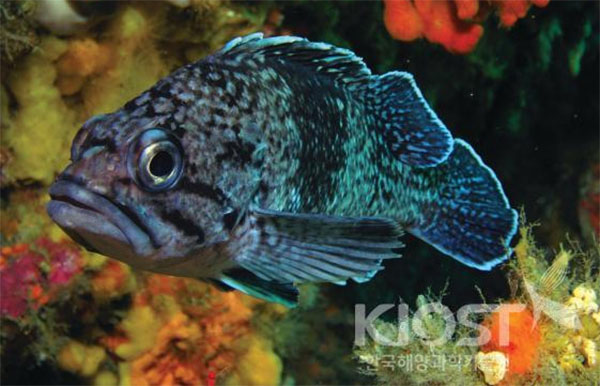 누루시볼락이라고 주장되어 있는 사진. 누루시볼락의 3가지 색상 국면 중 청회흑색 국면에 해당한다. 촬영일/2014년 09월 출처/한국해양과학기술원(KIOST). Photograph claimed to be a Fox jacopever(Sebastes vulpes). It belongs to the blue-gray-black phase among the three color phases of the fox jacopever. Date taken: September 2014. Source: Korea Institute of Ocean Science and Technology(KIOST). (CC BY NC) |
[Hard to Distinguish by Appearance: Sebastes vulpes vs. Sebastes zonatus] |
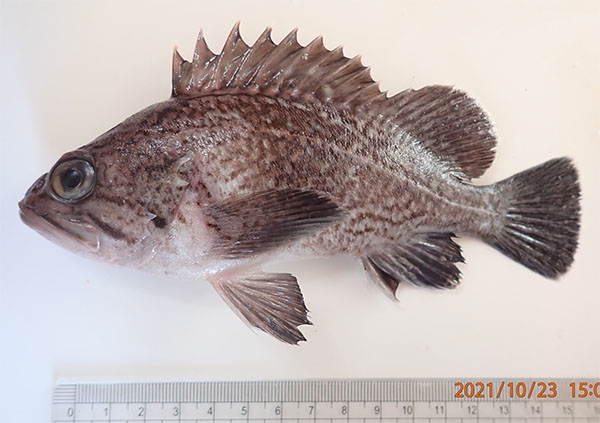 누루시볼락 Fox jacopever(Sebastes vulpes). Location; Korea. Source/국립해양생물자원관(MABIK; Marine Bio-Resource Information System). Korea. (CC BY NC) |
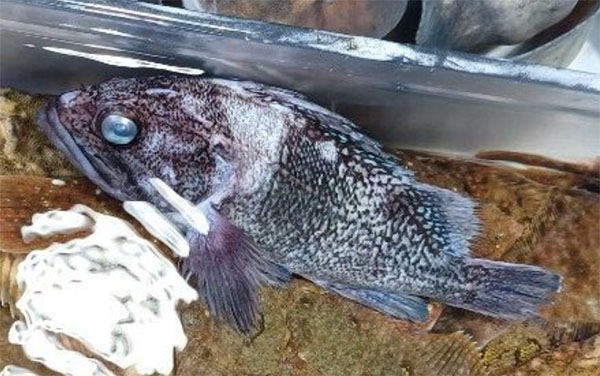 게시자가 누루시볼락(Sebastes vulpes))이라고 주장한 사진이며 활어식당의 수조에서 살아있는 상태로 보인다. Specimen alive in a restaurant's fish tank. claimed by the uploader to be Sebastes vulpes(Fox jacopever). Location/South Korea. date/Oct, 2014.. Author/김강산(Kim Gang-san). Source/naturing.net(네이처링) |
[Hard to Distinguish by Appearance: Sebastes vulpes vs. Sebastes zonatus] |
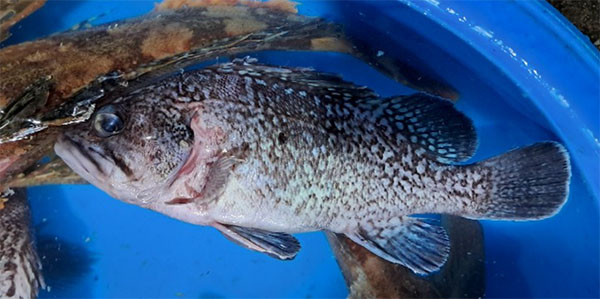 누루시볼락(Sebastes vulpes). 활어식당?의 큰 플라스틱 함지박에서 살아있는 상태로 보인다. Fox jacopever(Sebastes vulpes), look alive in a large plastic basin at a live fish restaurant. Location/Korea. Author/idi22. Source/naturing.net(네이처링). (CC BY NC) |
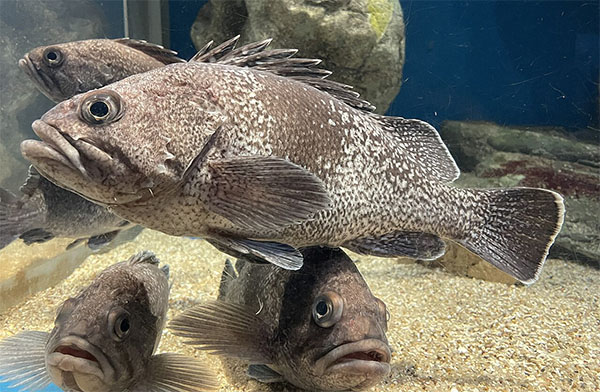 누루시볼락(Sebastes vulpes). 황갈색 국면. Fox jacopever(Sebastes vulpes), yellowish‑brown phase. Location/Asamushi Aquarium Japan(浅虫水族館飼育展示個体). Author/Totti. Wikimedia. (CC BY NC) |
[Hard to Distinguish by Appearance: Sebastes vulpes vs. Sebastes zonatus] |
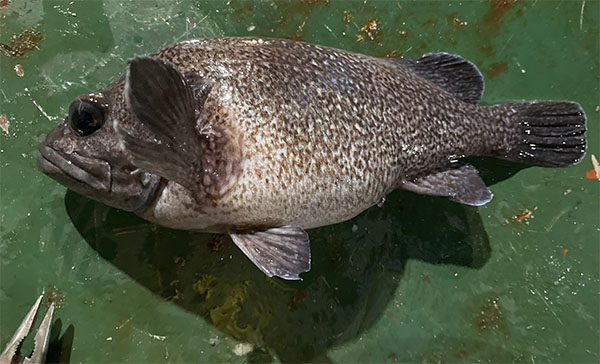 누루시볼락(Sebastes vulpes). 암갈색임으로 '황갈색 국면'에 해당한다. Fox jacopever(Sebastes vulpes), It is dark brown, so it belongs to the “yellowish‑brown phase". Location/Nikaho, Akita, Japan. Author/Dhugal Lindsay. (CC BY NC) |
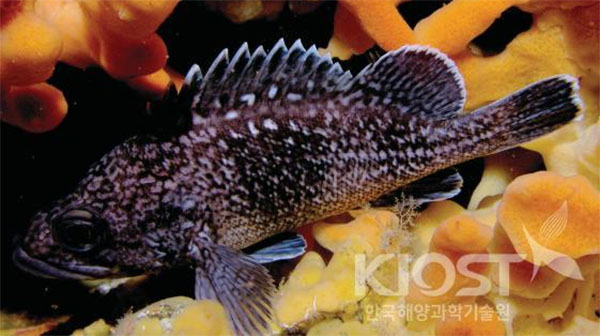
| 누루시볼락이라고 주장되어 있는 사진. 누루시볼락의 3가지 색상 국면 중 청회흑색 국면에 해당한다. 촬영일/2014년 09월 출처/한국해양과학기술원(KIOST). Photograph claimed to be a Fox jacopever(Sebastes vulpes). It belongs to the blue-gray-black phase among the three color phases of the fox jacopever. Date taken: September 2014. Source: Korea Institute of Ocean Science and Technology(KIOST). (CC BY NC) |
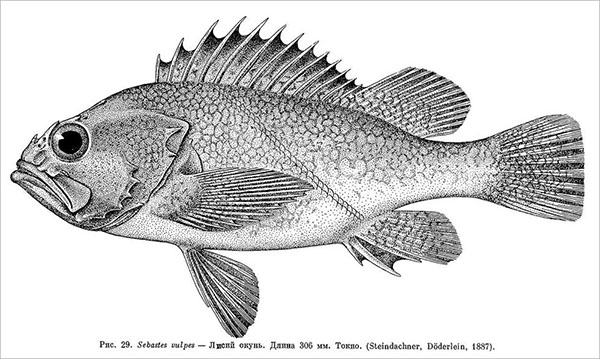 러시아 웹사이트(fishbiosystem.ru)에 나와 있는 누루시볼락 묘사도 중 하나. (기간 경과 저작권 소멸로 판단됨). An illustration of the Fox jacopever(Sebastes vulpes) from the Russian website fishbiosystem.ru, with copyright assumed to have expired. |
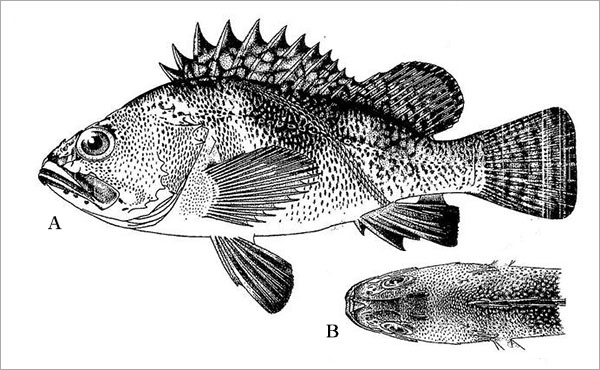 러시아 웹사이트(fishbiosystem.ru)에 나와 있는 누루시볼락 묘사도 중 하나(기간 경과 저작권 소멸로 판단됨). 그림 B는 머리의 등면 모습. An illustration of the Fox jacopever(Sebastes vulpes) from the Russian website fishbiosystem.ru, with copyright assumed to have expired. Figure B is a dorsal view of the head. |
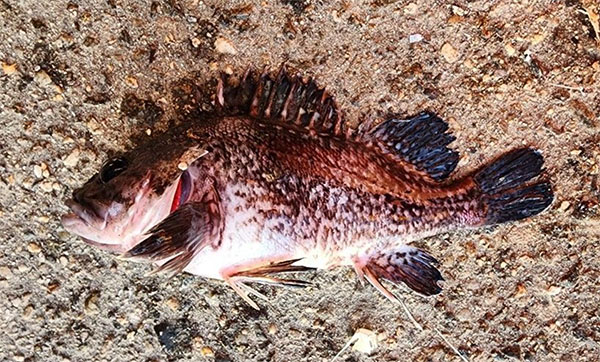 게\게시자가 누루시볼락(Sebastes vulpes)으로 소개한 사진. Photo identified as Sebastes vulpes(Fox jacopever) by the uploader. Location/Korea. Author/희건(Hee-geon). Source/naturing.net(네이처링). (CC BY NC) |
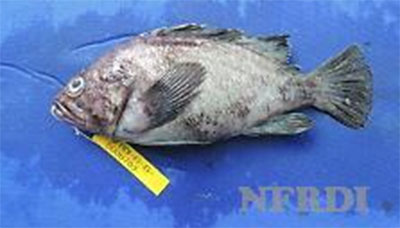
| 누루시볼락 보존표본. Preserved specimen of Fox jacopever(Sebastes vulpes). Locality/central east coast of Korean Peninsula. Author/NFRDI(National Fisheries Research and Development Institute of Korea, 국립수산과학원). |
Oil painting of a Fox jacopever(Sebastes vulpes). Artist: Kinjirō Kida(1893–1962). Date: 1953. Photographer: Selected Works of Kinjirō Kida, Kinjirō Kida Museum, 1999. Source/Wikimedia. |
| text on preparation |


|
| Copyright ⓒ FISHILLUST.COM All rights reserved. All contents can not be used without permission of the copyright holder. |
|
분류계통/경골상강→조기강→쏨뱅이목→볼락과→누루시볼락 Copyright by Kim In Young. 김인영 그림
|
|
| [illustration 1]. 누루시볼락 추론적 순종의 기본 모습. 몸은 청색이 약간 들어간 청회색이며 몸 전체에 그물망 무늬가 있다. 몸통에 반점이나 띠 같은 큰 무늬가 없다(띠볼락에게는 있다).. 꼬리지느러미 뒤에 백색 테두리가 없다(띠볼락에게는 있다).. 위턱 뒷부분에 잔비늘이 없다(띠볼락에게는 있다). 등지느러미 극조부 바닥(기저부)에 잔비늘이 없다(띠볼락에게는 있다).
The inferred basic appearance of the typical form of Fox jacopever (Sebastes vulpes). • The body is gray with a slight blue tint and features reticulated patterns across the entire body. •There are no large markings, such as spots or bands(present in the banded rockfish). •The caudal fin lacks a white margin on its posterior edge(present in the banded rockfish). •There are no fine scales on the posterior part of the upper jaw (present in the banded rockfish). •There are no fine scales at the base of the dorsal fin spines (present in the banded rockfish). |
|
Copyright by Kim In Young. 김인영 그림
|
|
| [illustration 2]. 실제로 발견되는 누루시볼락의 청회색 국면. 일반론; 누루시볼락의 꼬리지느러미 뒤에는 백색 테두리가 없거나 덜 분명하게 있으나 띠볼락에게는 뚜렷한 백색 테두리가 있다"는 것이 일반론이지만 실제로 낚시인들이 공개한 개체 사진들에서는 두 종을 구별하기 어렵게 누루시볼락도 흰테가 분명한 것들이 많다. 띠볼락은 몸에 3개의 분명하고 넓은 띠무늬가 있으나 누루시볼락에게는 띠가 희미하거나 불분명하다는 것이 일반론이지만 누루시볼락도 띠무늬가 분명한 것들이 있어서 띠볼락과 구별하기 어려운 경우가 많다. The blue-gray phase of the fox jacopever (Sebastes vulpes) as actually observed. |
|
Copyright by Kim In Young. 김인영 그림
|
|
| [[illustration 3]. 누루시볼락의 황갈색 국면. 색상 국면과 관계없이 몸의 그물무늬는 성장할수록 쪼개지고 작아져서 그물망 모양을 상실해 간다. 다 자란 성어의 크기가 전장 약 40cm(TL)라고 가정할 때 이 이미지의 개체는 약 25cm 미만 개체에 해당된다. A yellowish-brown phase of the fox jacopever (Sebastes vulpes). Regardless of the color phase, the reticulated patterns on the body break apart and shrink as the fish grows, eventually losing their mesh-like appearance. Assuming a fully grown adult reaches a total length (TL) of approximately 40cm, the specimen in this image corresponds to an individual under 25cm. |
|
Copyright by Kim In Young. 김인영 그림
|
|
| [illustration 4]. 누루시볼락의 흑색 국면. Black phase of fox jacopever (Sebastes vulpes). |
|
Copyright by Kim In Young. 김인영 그림
|
|
| [illustration 5]. 띠볼락과 누루시볼락 유어의 공통적인 모습, 두 종의 성어는 외관이 비슷한 것으로 잘 알려져 있지만 유어기에는 더욱 비슷하여 외관으로 종을 구별하기가 거의 불가능하다. 그림은 추정 몸 길이 약 7cm(TL) 미만의 개체 사진에 근거하였음. 사진은 정 측면보다 아주 약간 위에서 촬영된 것임. Common appearance of juvenile Sebastes zonatus and Sebastes vulpes, with an estimated total length(TL) of less than 7 cm. Although the adults of the two species are well known to look similar, they are even more alike during the juvenile stage, making it almost impossible to distinguish them by external appearance alone. This illustration is based on a photograph taken from a slightly elevated side view." |
|
Copyright by Kim In Young. 김인영 그림
|
|
| [illustration 6]. 누루시볼락 외형의 기본 프레임. 누루시볼락과 구별하기가 어려운 띠볼락(Sebastes zonatus)은 아래턱 뒤 부분에 미세한 둥근비늘이 있지만 누루시볼락(Sebastes vulpes)에게는 비늘이 없다. 띠볼락은 등지느러미 가시부 바닥 전체에 걸쳐 미세한 둥근 비늘이 분포하지만, 누루시볼락은 이 부위에 잔 비늘이 거의 없거나 아주 적다. 이 2 가지 특징은 도해에서 표시하기가 어렵다. Basic external structure frame of Fox jacopever(Sebastes vulpes). Sebastes vulpes is hard to distinguish from Sebastes zonatus. It is said that Sebastes zonatus has fine cycloid scales on the back of its lower jaw, but Sebastes vulpes not, and Sebastes zonatus has fine cycloid scales distributed across the entire base of its dorsal fin spines, the Sebastes vulpes has few to no small scales in that area. These two characteristics are difficult to illustrate in a diagram. |
쏨뱅이목 볼락과 분포; 서북태평양/한반도의 동부, 남해 동부 및 서남해 쪽 먼바다, 일본의 중부 이북 홋카이도까지, 일본의 서해(일본해) 쪽에 널리 분포한다. 등지느러미 극조부와 연조부는 연결되었으며 경계부는 오목하다. 등지느러미 기점은 아가미뚜껑 뒤끝보다 약간 앞에 있다. 등지느러미의 제 5극조가 가장 길다. 등지느러미의 마지막 극조는 바로 앞의 극조보다 길이가 길다. 등지느러미 연조부 가장자리는 둥글다. 등지느러미 극조부 기저부 길이는 연조부 기저부 길이보다 길다. 뒷지느러미 기저부 뒤끝은 등지느러미 연조부의 기저부 뒤끝보다 약간 앞에 있다. 뒷지느러미의 3개 가시 중 두번째와 세번째 가시는 길이가 서로 거의 같다. 가슴지느러미는 몸통 중앙보다 약간 아래에 위치한다. 가슴지느러미 뒤끝은 항문(총배설강)에 이른다. 가슴지느러미는 약 17개의 연조로 이루어져 있다. 맨 위의 연조 1개은 불분지 연조이며 그 아래로 8개는 분지 연조이며 그 아래의 나머지 연조8개는 불분지 연조이다. 가슴지느러미의 아래 쪽 불분지 연조들은 두툼하게 살이 쪄 있다. 배지느러미는 가슴지느러미 기저부보다 훨씬 뒤쪽에 자리하며 그 뒤끝은 항문(총배설강)에 약간 이르지 못한다. 항문(총배설강)은 몸통 중앙보다 약간 뒤쪽에 자리한다. 꼬리지느러미는 뒤 가장자리는 약간 둥근 형과 절단형이면서 위와 아래 코너만 둥근 형이 있다. 꼬리지느러미 펼침이 좁은 상태에서는 절단형으로 보인다. 누루시볼락의 색상: 누루시볼락(Sebastes vulpes)의 몸색은 청회흑색 국면과 황갈색 국면 그리고 흑색 국면까지 3가지가 있다. 눈동자 크기 내지 조금 더 큰 그물 무늬가 몸 전체에 밀집해 있고 너비가 넓은 검은 수직 띠 무늬가 3개 있다. 그물 무늬는 나이가 들수록 쪼개지고 흩어지면서 불분명해 진다. 황갈색 국면, 흑색 국면 모두 무늬나 띠의 모양은 동일하다. 첫번째 띠무늬는 등지느러미 극조부(제 4-11극)아래에, 두번째 띠무늬는 등지느러미 연조부 아래에, 마지막 세번째 띠무늬는 미병부에 있다. 띠무늬 3개 중 맨 앞에 있는 넓은 띠는 매우 뚜렷하고 뒤쪽의 2개는 덜 뚜렷하다. 외형이 거의 동일하게 보이는 누루시볼락과 띠볼락을 구별할 때 "누루시볼락의 띠는 띠볼락의 띠무늬 보다 덜 분명하다"는 설명이 있지만 누루시볼락의 띠는 흐릴 때도 있고 진할 때도 있어서 구별의 기준을 삼을 수 없다. 띠볼락은 꼬리지느러미 뒤 가장자리가 뚜렷한 흰색 테두리로 되어 있다. 누루시볼락은 꼬리지느러미 뒤 가장자리에는 원칙적으로 흰 테두리가 없는 것으로 정의되어 있지만 누루시볼락의 꼬리지느러미에도 흰테가 있는 경우가 많아서 혼란이 일어나 있다. 수심 0~50m의 얕은 바다의 암초지역에 사는 천해어이며 독립생활을 한다. 난태생어이다. 암컷은 겨울철에 수컷과 교미를 하여 수컷의 정자를 난소 안에 일정 기간 보관하고 있다가 몸 안에서 난자가 성숙해지면 수정시킨다. 수정된 알은 외부로 배출되지 않고 암컷의 배 속에서 영양을 공급받으며 부화 과정을 거친다. 부화된 새끼(자어)는 어미 몸 안에서 약 4~5mm 크기로 자란 뒤, 봄에 분만 된다. 어린 자어는 표류하는 해초 더미 아래에서 숨어 지낸다. 크기는 25㎝ 전후가 흔하다. 5~6월에 낚시로 많이 어획된다. 작은 갑각류나 어류 등을 먹는다. 단백질을 다량 함유하고 있으며 조피볼락(Sebastes schlegelii)에 비하여 지방이 많아 열량이 높다. 다른 볼락류와 마찬가지로 매운탕, 구이 회 등 다양한 방식으로 조리하여 식용한다. 방언에 "참우럭"있는데 이는 누루시볼락과 띠볼락을 뭉뚱그려 부르는 말이다. 맛이 좋다는 뜻이 담겨있다. [누루시볼락 콤플렉스] [누루시볼락과 띠볼락의 외관 유사성] [판단 어려운 외관의 결론] 1). 누루시볼락(Sebastes vulpes)은 살아있을 때(매우 신선할 때) 기본색이 한국에서 발견되는 것들은 회색 또는 회흑색 바탕에 대리석 무늬 같은 잔 무늬가 깔려 있고 얼룩이나 반점 같은 뚜렷한 무늬는 없다. 일본에서 발견되는 것들은 바탕색이 누런 황갈색 계열이며 얼룩이나 반점 같은 뚜렷한 무늬는 없다. 한국 이름 누루시볼락의 어원이 만약 "누루스름한 색"에 있다면 오리지널 바탕색은 황갈색 계열이며 일본의 경우와 같다고 상상할 수 있다. 누루시볼락의 색 변형 중에는 거의 흑색에 가까운 것이 있다. 2). 띠볼락(Sebastes zonatus)은 살아있을 때(매우 신선할 때) 기본색이 한국에서 발견되는 것들은 연한 청색 또는 연한 보라색이 깔린 회색이며 몸에 3개의 넓은 수직 방향의 뚜렷한 띠가 있다. 일본 사진 자료들 중에는 한국 개체들처럼 연한 청색이나 연한 보라 빛이 섞인 회색인 것이 있으나 일본 누루시볼락의 경우와 마찬가지로 누런 색(황갈색 계열) 개체들이 더 많이 제시되어 있다. [Note] 띠볼락의 띠 무늬 3개 중 첫번째 띠는 등지느러미 4~5번 가시의 기저 점과 11~12번 가시의 기저 점 사이의 등 너비에서 시작하여 아래로 완만하게 좁아지면서(역사다리꼴) 가슴지느러미 지나 배쪽으로 내려가 있다. 두번째 띠는 등지느러미 연조부의 대략 3번째 연조 기저 점과 11번째 연조 기저 점 사이의 너비로 시작하여 아래로 완만하게 좁아지면서 측선을 조금 초과한다. 마지막 세번째 띠는 등지느러미 뒤 끝을 지난 미병부 상부에서 시작하여 아래로 측선을 약간 지난다. 3). 요점; 한국과 일본의 이미지 자료들을 함께 모아 보면 누런 색은 양국에서 두 종 모두에 나타난다. 4). 누루시볼락과 띠볼락의 중간자 형(잡종)이 너무 많이 있다. 띠볼락의 띠 무늬가 매우 흐릿하게 나타나 있는 것, 띠 무늬가 조금 더 좀 분명하게 나타나 있는 것, 띠 무늬가 거의 진짜 띠볼락에 가깝게 분명한 것. 잡종이 독립적인 종명을 가지지는 않음으로 한 잡종의 외관이 이종인지 저종인지 유전자를 검사해 보기 전에는 결정해 말하기가 어렵다. 5). 누루시볼락 원종(原種)은 꼬리지느러미 가장자리에 백색 테두리가 없으며 만약 있다면 아주, 매우 가늘다. 띠볼락 원종(原種)은 꼬리지느러미 가장자리에 백색 테두리가 뚜렷하게 있다. 이 특징은 두 원종에서 분명하다. 그러나 잡종 국면에서는 매우 애매하다. "잡종에 뿌리를 둔" 누루시볼락과 "잡종에 뿌리를 둔" 띠볼락이 모두 제 나름대로 흰테를 가지고 있기 때문이다. 6). 인터넷상에 올려지는 사진들은 제공자 각각의 판단에 따라 이름이 정해지는 경향이 있다고 본다. 또한 이 동종이 맞았다 틀렸다 말할 수도 없는 것은 해당 개체의 유전자 검사를 전문가가 하지 않는 한 아무도 왈가왈부할 수 없기 때문이다. 다만 원종의 정의에 매우 가까운 외관을 가진 개체에 대해서만은 어는 정도 정확성을 기할 수 있을 것이다. 7). 색상과 무늬 외의 다른 외관 차이/ |
Oder Scorpaeniformes Family Family Sebastidae(Rockfishes, rockcods and thornyheads). Distribution; Northwest Pacific/the eastern coast of the Korean Peninsula, the eastern South Sea and the offshore waters of the southwestern sea of Korea. From central Japan northward to Hokkaido, more widely found along the west coasts of Japan. The spinous and soft-rayed portions of the dorsal fin are continuous, and the boundary between them is concave. The origin of the dorsal fin is slightly anterior to the posterior edge of the operculum. The fifth dorsal-fin spine is the longest. The last dorsal-fin spine is longer than the spine immediately before it. The distal margin of the soft-rayed portion of the dorsal fin is rounded. The base length of the spinous portion of the dorsal fin is longer than that of the soft-rayed portion. The posterior end of the anal-fin base is slightly anterior to the posterior end of the base of the soft-rayed portion of the dorsal fin. Of the three spines of the anal fin, the second and third spines are nearly equal in length. The pectoral fin is located slightly below the middle of the body. The tip of the pectoral fin reaches the anus(cloaca). The pectoral fin usually consists of about 17 soft rays. Usually, the uppermost 1 soft ray is unbranched, the next 8 rays are branched, and the remaining 8 lower rays are unbranched. The lower unbranched rays of the pectoral fin are thick and fleshy. The pelvic fin is situated well behind the base of the pectoral fin, and its tip falls slightly short of reaching the anus(cloaca). The anus(cloaca). is located slightly behind the middle of the body. The caudal fin has a slightly rounded posterior margin, and there is also a truncate type in which only the upper and lower corners are rounded. When the caudal fin is narrowly spread, it appears truncate. Body color; The body color of the fox jacopever(Sebastes vulpes) comes in three phases: a blue-gray-black phase, a yellow-brown phase, and a black phase. Reticulated patterns roughly the size of the pupil — or slightly larger — are densely distributed across the entire body, and there are three wide, dark vertical bar markings. The Reticulated patterns become fragmented and scattered with age, growing increasingly indistinct. In both the yellow-brown and black phases, the shape of the patterns and bars remains the same. The first bar is located beneath the spinous dorsal fin(spines 4–11), the second beneath the soft dorsal fin, and the third on the caudal peduncle. Of the three bars, the frontmost wide bar is very distinct, while the two behind it are less so. When distinguishing the Fox jacopever(Sebastes vulpes) from the Banded jacopever(S. zonatus), which appears nearly identical in external appearance, there is a description stating that "the bars of the Fox jacopever rockfish are less distinct than those of the Banded rockfish." However, since the bars of the Fox jacopever can be either faint or bold, this cannot serve as a reliable distinguishing criterion. The Banded jacopever(S. zonatus), has a clearly defined white margin along the posterior edge of the caudal fin. The Fox jacopever is defined as having no white margin on the posterior edge of the caudal fin in principle, but confusion has arisen because white margins are frequently observed on the caudal fin of the Banded jacopever as well. It is a coastal fish that lives independently in rocky areas of shallow seas at depths of 0–50 meters. It is ovoviviparous. The female mates with a male in winter and stores the sperm in her ovaries for a certain period. When the eggs mature inside her body, they are fertilized. The fertilized eggs do not get released outside but develop inside the female’s abdomen, receiving nourishment from the egg yolk until hatching. The hatched larvae grow to about 4–5 mm inside the mother’s body and are born in spring. The young larvae hide under drifting seaweed masses. Their common size is around 25 cm. They are often caught by fishing in May and June. They feed on small crustaceans and fish. They contain a large amount of protein and, compared to the rockfish (Sebastes schlegelii), have more fat and thus higher calories. Like other rockfish species, they are eaten in various ways such as spicy soup, grilled dishes, or raw fish. [Sebastes vulpes complex] Similarity in appearance between the Sebastes vulpes and the Sebastes zonatus; Conclusion on Ambiguous Appearance. 1). In Korea, highly fresh(or living) specimens of Fox jacopever(Sebastes vulpes) typically feature a grayish or grayish dark base covered with fine, marble-like patterns, lacking distinct blotches or spots. In contrast, those found in Japan have a dull yellowish-brown base color, also without prominent markings. If the etymology of the Korean name "Nu-ru-si-bol-lak" originates from the word "nu-ru-seu-reum-han(dull yellowish)", it suggests the original base color was yellowish-brown, similar to the Japanese specimens. Among the color variations of this species, some individuals appear almost entirely black. 2). In Korea, highly fresh(or living) specimens of Bended jacopever(Sebastes zonatus) typically have a base color of gray tinged with pale blue or light purple, featuring three distinct, broad vertical bands on the body. Among Japanese photographic records, some individuals show the same pale blue or purple-tinted gray as Korean specimens; however, much like the Japanese case of the Fox jacopever, yellowish-brown individuals are more frequently documented. [Note] Among the three bands of the Sebastes zonatus, the first band starts at the base of the dorsal fin, spanning the width between the 4th–5th and 11th–12th spines; it tapers gently downward in an inverted trapezoid shape, passing beneath the pectoral fin toward the ventral side. The second band starts at the base of the soft dorsal fin, spanning approximately the width from the 3rd to11th soft ray; narrowing slightly as it extends just beyond the lateral line. 3). Key Point: A comprehensive review of image data from both Korea and Japan reveals that the dull yellowish brown coloration occurs in both species across both countries. 4). There are too many intermediate forms(hybrids) between Sebastes vulpes and Sebastes zonatus. These include individuals with very faint bands, those with slightly more distinct bands, and others with bands so clear they almost closely resemble a pure Sebastes zonatus. Since hybrids do not possess independent species names, it is difficult to definitively categorize a hybrid's appearance as one species or the other without conducting a genetic analysis. 5). The original species of Fox jacopever(S. vulpes) lacks a white margin on the edge of the caudal fin; if present, it is extremely thin. In contrast, the original species of Bandit rockfish(S. zonatus) has a distinct white margin on the caudal fin. While this characteristic is clear in the original species, it becomes highly ambiguous in hybrid scenarios. Both "hybrid-derived" S. vulpes and "hybrid-derived" S. zonatus possess their own variations of this white margin. 6). I believe that photos uploaded to the internet tend to be named based on the individual provider's own judgment. Furthermore, it is impossible to say whether a specific identification is correct or not, as no one can make a definitive claim unless a specialist performs a genetic analysis on that particular specimen. However, accuracy can be reasonably assured only for individuals whose appearance closely aligns with the definition of the original species. 7). Other Physical Differences Beyond Color and Pattern: |
| 누루시볼락 분포도. Distribution map of Fox jacopever(Sebastes vulpes). Derived work from GBIF. Author/fishillust.com
|
| 누루시볼락이라고 주장되어 있는 사진. 누루시볼락의 3가지 색상 국면 중 청회흑색 국면에 해당한다. 촬영일/2014년 09월 출처/한국해양과학기술원(KIOST). Photograph claimed to be a Fox jacopever(Sebastes vulpes). It belongs to the blue-gray-black phase among the three color phases of the fox jacopever. Date taken: September 2014. Source: Korea Institute of Ocean Science and Technology(KIOST). (CC BY NC) |
[Hard to Distinguish by Appearance: Sebastes vulpes vs. Sebastes zonatus] |
| 누루시볼락 Fox jacopever(Sebastes vulpes). Location; Korea. Source/국립해양생물자원관(MABIK; Marine Bio-Resource Information System). Korea. (CC BY NC) |
| 게시자가 누루시볼락(Sebastes vulpes))이라고 주장한 사진이며 활어식당의 수조에서 살아있는 상태로 보인다. Specimen alive in a restaurant's fish tank. claimed by the uploader to be Sebastes vulpes(Fox jacopever). Location/South Korea. date/Oct, 2014.. Author/김강산(Kim Gang-san). Source/naturing.net(네이처링) |
[Hard to Distinguish by Appearance: Sebastes vulpes vs. Sebastes zonatus] |
| 누루시볼락(Sebastes vulpes). 활어식당?의 큰 플라스틱 함지박에서 살아있는 상태로 보인다. Fox jacopever(Sebastes vulpes), look alive in a large plastic basin at a live fish restaurant. Location/Korea. Author/idi22. Source/naturing.net(네이처링). (CC BY NC) |
| 누루시볼락(Sebastes vulpes). 황갈색 국면. Fox jacopever(Sebastes vulpes), yellowish‑brown phase. Location/Asamushi Aquarium Japan(浅虫水族館飼育展示個体). Author/Totti. Wikimedia. (CC BY NC) |
[Hard to Distinguish by Appearance: Sebastes vulpes vs. Sebastes zonatus] |
| 누루시볼락(Sebastes vulpes). 암갈색임으로 '황갈색 국면'에 해당한다. Fox jacopever(Sebastes vulpes), It is dark brown, so it belongs to the “yellowish‑brown phase". Location/Nikaho, Akita, Japan. Author/Dhugal Lindsay. (CC BY NC)
|
| 누루시볼락이라고 주장되어 있는 사진. 누루시볼락의 3가지 색상 국면 중 청회흑색 국면에 해당한다. 촬영일/2014년 09월 출처/한국해양과학기술원(KIOST). Photograph claimed to be a Fox jacopever(Sebastes vulpes). It belongs to the blue-gray-black phase among the three color phases of the fox jacopever. Date taken: September 2014. Source: Korea Institute of Ocean Science and Technology(KIOST). (CC BY NC) |
| 러시아 웹사이트(fishbiosystem.ru)에 나와 있는 누루시볼락 묘사도 중 하나. (기간 경과 저작권 소멸로 판단됨). An illustration of the Fox jacopever(Sebastes vulpes) from the Russian website fishbiosystem.ru, with copyright assumed to have expired.
|
| 러시아 웹사이트(fishbiosystem.ru)에 나와 있는 누루시볼락 묘사도 중 하나(기간 경과 저작권 소멸로 판단됨). 그림 B는 머리의 등면 모습. An illustration of the Fox jacopever(Sebastes vulpes) from the Russian website fishbiosystem.ru, with copyright assumed to have expired. Figure B is a dorsal view of the head.
|
| 게\게시자가 누루시볼락(Sebastes vulpes)으로 소개한 사진. Photo identified as Sebastes vulpes(Fox jacopever) by the uploader. Location/Korea. Author/희건(Hee-geon). Source/naturing.net(네이처링). (CC BY NC) |
| 누루시볼락 보존표본. Preserved specimen of Fox jacopever(Sebastes vulpes). Locality/central east coast of Korean Peninsula. Author/NFRDI(National Fisheries Research and Development Institute of Korea, 국립수산과학원). |
Oil painting of a Fox jacopever(Sebastes vulpes). Artist: Kinjirō Kida(1893–1962). Date: 1953. Photographer: Selected Works of Kinjirō Kida, Kinjirō Kida Museum, 1999. Source/Wikimedia. |
| text on preparation |
|
|
| Copyright ⓒ FISHILLUST.COM All rights reserved. All contents can not be used without permission of the copyright holder. |


 검색
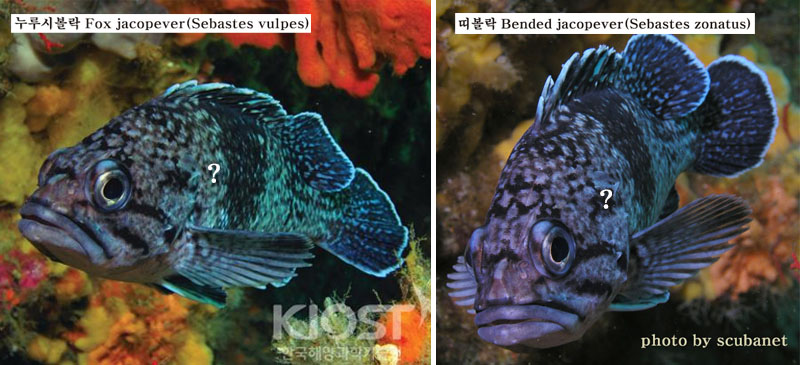 [외관으로 구별하기 어려운 누루시볼락과 띠볼락]
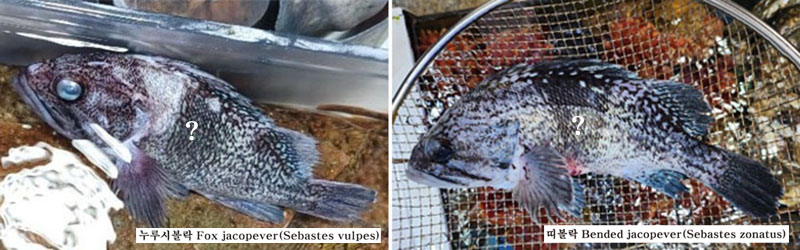 [외관으로 구별하기 어려운 누루시볼락과 띠볼락]
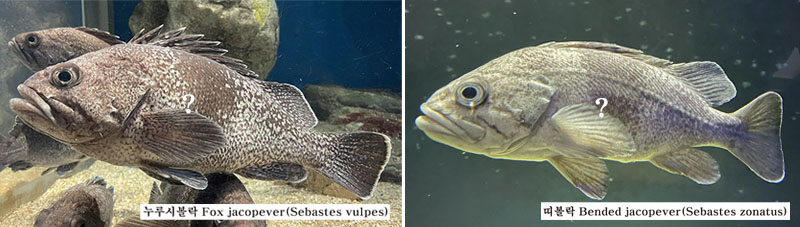 [외관으로 구별하기 어려운 누루시볼락과 띠볼락]
 유화로 그린 누루시볼락. Oil painting of Fox jacopever(Sebastes vulpes). Artist/Kinjirō Kida(1893–1962). Date/1953. Photographer/「木田金次郎画集」木田金次郎美術館、1999年. (CC BY NC)
