
사이트 로그인
사이트 로그인
|
분류계통/경골상강→조기강→바다빙어목→바다빙어과→시샤모 빙어(Shishamo smelt.; Spirinchus lanceolatus) Copyright by Kim In Young. 김인영 그림
|
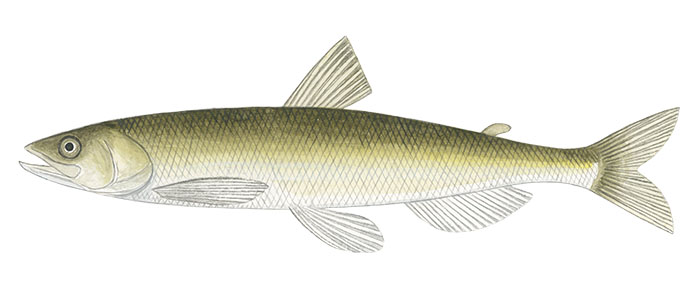 |
| 시샤모 빙어 기본 모습. Lateral view of Shishamo smelt(Spirinchus lanceolatus) |
[소하성/Anadromous] 분포; 서북태평양/일본 홋카이도 섬 남동부에 분포. 일본 고유종. 소하성 어류이며 강으로 올라가 산란한다. 겨울 무렵에 강을 거슬러 오른 암컷은 강바닥의 자갈에 산란한다. 암컷은 주로 1마리당 평균 8,000개 내외의 알을 유속이 0.6 m/sec 미만인 저층에 낳는다. 산란 후 성어의 대부분은 폐사하지만, 일부 암컷은 살아남아 바다로 돌아갔다가 이듬해 다시 산란을 위해 하천으로 돌아오기도 한다. 지금까지 문헌으로 확인된 산란 장소는, 일본 홋카이도의 태평양 연안 에리모 곶(襟裳岬)의 서쪽 9개 하천과 동쪽 7개 하천이다. 유엽어의 알은 겉에 점착성이 있어, 수정 후 자갈 등 강바닥의 저질(底質)에 달라붙는다. 알에서 부화한 자어는 곧장 바다로 이동해 약 1년반의 해양생활을 거쳐, 성어가 되면 산란 활동을 위해 다시 강을 거슬러 오른다. 자어는 주로 일본 홋카이도 무카와강(鵡川) 하구 주변 해역 수심 4-5m에서 성장한다. 성어는 수심 120m 이하의 먼바다에서 생활하다가 산란기가 되면 각 하천 연안지역으로 밀집한다. 수컷은 산란기에 몸이 검은빛으로 변한다. 암컷은 색이 변하지 않는다. 시샤모(shishamo; 학명; Spirinchus lanceolatus)는 열빙어(Capelin; Mallotus villosus)와 혼동되는 경우가 많은데 시샤모와 열빙어는 빙어류이지만 속과 종이 다르다. 식용으로 시샤모는 인기는 좋은데 값이 비싸서 시샤모 대용품으로 열빙어를 사용하는 상인들이 생겼다. 이 대용품을 가라후토시샤모라고 불렀다. 시샤모를 잘 모르는 사람들에게 가라후토시샤모를 시샤모라고 속여 팔던 게 정착이 되어 가라후토시샤모(Karafuto-shishamo)가 열빙어의 일본명으로 굳어졌다. 홋카이도 지역을 제외한 일본 대부분 지역의 식당에서 열빙어를 시샤모라는 이름으로 판매하고 있으며, 열빙어를 시샤모로 알고 있는 일본인도 아주 많다. 알이 찬 열빙어를 통째로 굽거나 튀겨서 먹는 것이 일반적인 조리법이다. 술 안주로 제격이다. 또한 열빙어 알이 날치알 보다 훨씬 싸기 때문에 날치알 대체품으로 팔리고 있다. 외관과 맛이 비슷하기 때문이다. 그러나 알 크기가 작고 덜 아삭아삭해서 식감은 다르다. 일보에서 시샤모는 인공약식이 시도되고 있다. |
[Anadromous] Distribution; Northwest Pacific/southeastern Hokkaido, Japan. Endemic species. Anadromous. Move into river in winter for spawning. Lay eggs onto gravel bottoms of the river where the velocity of water flow is less than 0.6 m/sec. eggs are Average batch of eggs per a female about 8,000. Eggs are adhesive and attach onto substrate. After spawn, they die, but some female survive and can spawn next season. The reported spawning grounds are the 9 streams in west and 7 streams in east of Cape Erimo in Hokkaido Island. The hatchlings move to salt water near river mouth in depth of 4-5m. Grow to adulthood in one and half year. Adults stay in deep water offshore and migrate into rivers for spawning. Nuptial color of males blackish, but females do not change in coloration Shishamo smelt(Spirinchus lanceolatus) is frequently confused with Capelin(Mallotus villosus). These 2 species are members of family Osmeridae(Smelts), but different in genus and species name, the latter species is called as “Karafuto-shishamo” in Japanese common name. This common name can be translated into English as “pseudo-shishamo”. Roe of real shishamo smelt(Spirinchus lanceolatus) is a high-value product and in short supply, thus a lot of restaurant owners sold the fake low priced shishamo as the real. Many Japanese cosummers do not have the ability to distinguish the differences. Often, roe of Capelin(masago; Mallotus villosus) is used as a substitute for flying fish roe, owing to its similar appearance and taste —although the mouthfeel is different due to the individual eggs being smaller and less crunchy than flying fish roe. In Japanese cuisine, Shishamo smelt is grilled or fried whole and served with its roe intact. Due to declining catches in recent years, attempts have been made to commercially farm the fish in Japan. |
 시샤모 빙어 분포도. Distribution map of Shishamo smelt(Spirinchus lanceolatus). Autor/Kim in young(fishillust.com) |
 시샤모 빙어. Shishamo smelt(Spirinchus lanceolatus). Author/left; loyalty free Stock Photo right/pelican from Tokyo, Japan |
 Left/슈퍼마켓의 시샤모(shishamoシシャモ). On display stand. Japan. Author/rhosoi. Right/시샤모 구이. Grilled shishamo. Author/pelican from Tokyo, Japan |
 일본 홋카이도 무카와정의 빙어축제(시샤모 죽제). 초등하교 운동장(왼쪽). 홋카이도 무카와정의 빙어축제(시샤모 죽제) 주최측 간부가 굽기 전 시샤모를 들어 보이고 있다(오른쪽). Left; A scene of Mukawa Shishamo Festival; countless people to the various food stalls offering their different delicacies. Mukawa Central Elementary School which served as the event’s venue. Right;The event’s staff took the time to show off their shishamo, ready to be cooked and sold to curious foodies!. Source/livejapan.com/ en/ in-hokkaido/ in-pref-hokkaido/ in-tomakomai/ article-a0002803/ |


|
| Copyright ⓒ FISHILLUST.COM All rights reserved. All contents can not be used without permission of the copyright holder. |


 검색
