
사이트 로그인
사이트 로그인
|
연골어강→판새아강→흉상어목→흉상어과→ 피그아이 샤크(Pigeye shark; Carcharhinus amboinensis)
Class Chondrichthyes→Subclass Elasmobranchii→Order Carcharhiniformes→Family Carcharhinidae→ Pigeye shark (Carcharhinus amboinensis)
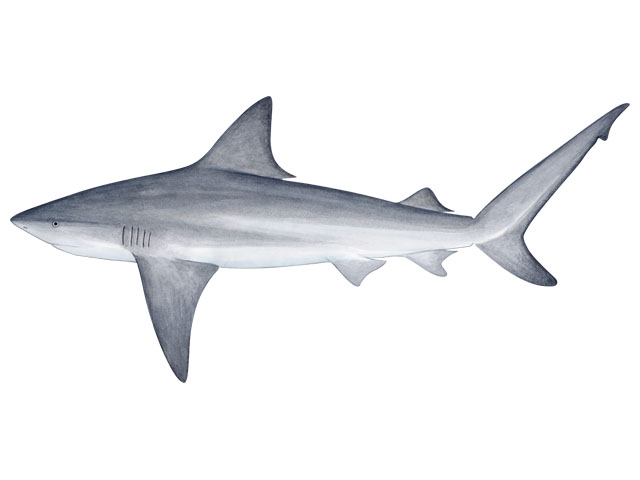
흉상어목 흉상어과 References for this drawing; dead specimen photos. 분포; 동대서양/케이프 베르데, 세네갈, 및 나이지리아에서부터 나미비아까지. 인도양/남아공 동부에서부터 마다가스카르, 세이셸, 모리셔스, 아라비아 반도. 북오스트레일리아. 지중해에서는 이탈리아에서 한번 발견된 기록이 있다. 태평양/필리핀 포함 동남 아시아, 중국 남부. 동으로는 뉴기니와 마이크로네시아 일부 섬에서 발견된다. ※ 열대와 아열대 해역에서 분포 범위는 넓지만 분포 해역이 띄엄띄엄 격리되어 있고 개체가 자주 발견되는 곳도 없다. 불 샤크(bull shark/Carcharhinus leucas)와 혼동이 많이 일어나 분포 지역이 애매하다. 요약; 피그아이 샤크(돼지눈 상어)는 쟈바 샤크(Java shark)라고도 부른다. 흉상어과 중에서 드물게 발견되는 종이다. 얕은 수심, 바닥이 뻘인 흐린 물을 좋아하며 한정된 범위의 해역 안에서 돌아다니는 행태를 보인다. 몸이 육중하고 회색이며 눈이 작고 주둥이는 짧고 뭉툭하다. 많이 알려진 불 샤크(황소 상어/bull shark; Carcharhinus leucas)와 거의 같아서 종 구별의 혼동이 심하게 일어난다. 피그아이 샤크와 불 샤크는 척추 뼈의 수와 등지느러미의 크기가 미세하게 다를 뿐이며 그 외에 전문가가 아니면 알 수 없는 부분의 차이가 있을 뿐이다. 보통 크기는 1.9-2.5m이다. 주로 저층에 사는 먹이감을 사냥하며 경골어류 연골어류를 주식하며 갑각류와 연체동물 바다뱀 포유동물도 잡아먹는다. 태생이며 태아가 자신의 난황을 다 소진하면 난황 주머니와 모체가 탯줄로 연결되어 영양분이 계속 공급 된다. 9-12개월 임신 기간에 3-13마리의 새끼를 낳는다. 사람을 공격한 사례는 없으나 덩치가 크고 이빨이 예리함으로 잠재적으로는 위험한 상어이다. 어로 작업에서 잡히거나 상어 방어막 그물이 쳐진 해수욕장의 그물에 걸려 잡히기도 한다. 식용으로 사용된다. 세계자연보호연맹은 이 종의 위기 등급을 매길 수 있는 데이터를 현재로서는 갖고 있지 않다.
일반 개요; 피그아이 샤크(돼지눈 상어)는 몸이 매우 튼튼한 상어로 주둥이는 짧고 넓으며 둥글다. 작고 동그란 눈이며 눈에 순막(제3의 눈꺼풀)이 있다. 콧구멍 앞에 중간 크기의 피부 편이 달려있다. 입은 너비가 큰 아치형이며 입 양쪽 코너의 패인 홈은 분명하지가 않다. 이빨은 위턱에 11-13열 아래턱에 10-12열이 있고 각 턱의 가운데 결합선(symphyses)에 작은 이빨들의 열이 한 개씩 있다. 이빨은 넓은 삼각형이며 이빨의 가장자리가 톱니 구조이다. 5개인 아가미구멍 슬릿은 길이가 중간 급이다. 성장한 피그아이 샤크들의 크기는 1.9m-2.5m 길이이며 최대어 기록은 2.8m로 나와있다 제1등지느러미는 크고 끝이 뾰족한 삼각형이며 뒤 변이 안으로 휘었으며 지느러미의 개시부는 가슴지느러미가 몸체와 합쳐진 부분(insertion)의 후단 위치 위에 있다. 제2등지느러미는 제1등지느러미의 1/3 이하 높이로 작고 뒷지느러미 보다 앞에서 시작된다. 두 등지느러미 사이에 융기선은 없다. 가슴지느러미는 크고 길며 약간 낫 모양이다. 모서리 끝들은 뾰족하다. 뒷지느러미의 후단 변은 V자 형태를 가진다. 꼬리지느러미가 시작되는 위치의 꼬리자루의 등에 깊은 V각이 있다. 꼬리지느러미는 비 대칭형이며 잘 발달한 하엽과 긴 상엽으로 구성되어 있으며 상엽의 끝 근처에 V각이 있다. 피부를 덮고 있는 피부치들은 큰 편이며 나이가 들수록 조밀해지고 서로 포개어진다. 각 피부치는 3줄 내지 5줄의 융기선(선 모양으로 돌출된 부분) 구조가 있고 후단 끝에 5개의 이빨(모양)이 붙어있다. 등 쪽은 회색이며 배는 하얗고 옆구리에 희미하게 밝은 줄무늬 하나가 있다. 제2등지느러미와 꼬리지느러미의 하엽은 끝 부분이 어두우며 특히 어린 개체가 검다. 1987년 오스트레일리아 퀸스랜드에서 백색증(albinism)에 걸린 개체가 잡혔으며 흉상어류(requiem shark) 중 백색증을 가진 첫 사례로 기록되었다.
피그아이 샤크는 바닥이든 중층이든 어디서든 사냥할 수 있지만 바닥에서 더 많은 먹이를 확보한다. 먹이사슬의 정점에 있으며 경골어류를 주로 먹으며 기타피시(Guitarfishes)를 포함해 연골어류도 잡아먹는다. 복족류와 바다뱀 돌고래를 잡아먹기도 하며 썩은 고래 고기를 먹는 장면도 목격되었다.
피그아이 샤크는 다른 흉상어류와 마찬가지로 태생이다. 태아가 자신의 난황을 다 비우면 빈 난황주머니에서 태반이 나와 모체와 연결되어 영양분이 계속 공급된다. 성숙한 암컷은 한 개의 난소와 두 개의 기능적 자궁을 갖고 있다. 재생산 생태는 해역에 따라 다르다. 남아프리카에서는 임신 기간이 약 12개월이며 한 배에 나오는 새끼의 수는 3-7(평균 5) 마리이며 새끼의 크기는 75-79cm이다. 오스트레일리아 북부에서는 임신 기간이 9개월이며 한 배에 6-13(평균 9) 마리를 낳고 크기는 59–66cm 이다. 어린 새끼들은 3년이 지날 동안 만 같은 얕은 수심에서 살다가 성장하는데 따라 점차적으로 깊은 수심으로 이동해 간다. 피시아이 샤크는 수명은 길고 번식 율은 낮다. 다 성장하면 수컷이 암컷보다 작다. 수컷은 약 12세에 도달하고 크기가 2.1m 정도에서, 암컷은 13년 자라서 2.2m 크기가 되었을 때 성어가 된다. 최대 수명은 수컷이 최소한 26년, 암컷은 최소한 30년이다.
|
|
English version Order Carcharhiniformes(ground sharks), Family Carcharhinidae(requiem sharks) References for this drawing; dead specimen photos. Distribution; Eastern Atlantic/Cape Verde and Senegal, and from Nigeria to Namibia. Indian Ocean/eastern South Africa to the Arabian Peninsula(including Madagascar, the Seychelles, and Mauritius), northern Australia. Pacific/Southeast Asia including Philippines and southern China, and eastward to New Guinea and some Micronesian islands. Though widely distributed in the tropical and subtropical marine waters, the pigeye shark does not appear to be common anywhere. Existing records are patchy, and the full extent of its range may be obscured by confusion with the bull shark. Short description; The pigeye shark or Java shark(Carcharhinus amboinensis) is an uncommon species of requiem shark, in the family Carcharhinidae. It prefers shallow, murky environments with soft bottoms, and tends to roam within a fairly localised area. With its bulky grey body, small eyes, and short, blunt snout, the pigeye shark looks almost identicalto(and is often confused with) the better-known bull shark (C. leucas). The two species differ in vertebral count, the relative sizes of the dorsal fins, and other subtle traits. This shark typically reach lengths of 1.9–2.5 m (6.2–8.2 ft). The pigeye shark is an apex predator that mostly hunts low in the water column. It has a varied diet, consisting mainly of bony and cartilaginous fishes and also including crustaceans, molluscs, sea snakes, and cetaceans. This species gives birth to live young, with the developing embryos sustained to term via a placental connection to their mother. Litters of three to thirteen pups are born after a gestation period of nine or twelve months. The pigeye shark's size and dentition make it potentially dangerous, though it has not been known to attack humans. The shark is infrequently caught in shark nets protecting beaches and by fisheries, which use it for meat and fins. The IUCN presently lacks adequate data to assess the conservation status of this species.
General; The pigeye shark is a very robust-bodied species with a short, broad, and rounded snout. The small and circular eyes are equipped with nictitating membranes. The anterior rims of the nostrils bear medium-sized flaps of skin. The mouth forms a wide arch and has barely noticeable furrows at the corners. There are 11–13 (usually 12) upper and 10–12 (usually 11) lower tooth rows on each side; in addition, there are single rows of tiny teeth at the upper and lower symphyses (jaw midpoints). The teeth are broad and triangular with serrated edges. The five pairs of gill slits are of moderate length. The first dorsal fin is large and triangular, with a pointed apex and a concave trailing margin; it originates roughly over the posterior insertions of the pectoral fins. The second dorsal fin is less than a third as high as the first, and originates ahead of the anal fin. There is no midline ridge between the dorsal fins. The long pectoral fins are broad and slightly falcate(sickle-shaped), becoming narrow and pointed at the tips. The anal fin has a sharply notched trailing margin. The caudal peduncle has a deep notch on its upper surface at the caudal fin origin. The caudal fin is asymmetrical, with a well-developed lower lobe and a longer upper lobe with a notch in the trailing margin near its tip. The skin is covered by rather large dermal denticles, which become more tightly packed and overlapping with age; each denticle bears three to five horizontal ridges and five posterior teeth. This species is grey above and white below, with a faint pale band on the flanks. The second dorsal fin and lower caudal fin lobe darken at the tips, particularly in juveniles. An albino individual was caught off Queenland in 1987, which was the first known example of albinism in a requiem shark. An adult pigeye shark typically measures 1.9–2.5 m(6.2–8.2 ft) long, while the largest individuals reach 2.8 m(9.2 ft) long.
The pigeye shark is a largely solitary animal, though occasionally several individuals may be found at the same location. Tagging and genetic data indicate that pigeye sharks, particularly juveniles, are not strongly migratory and tend to remain in a local area. The longest recorded distance covered by an adult is 1,080 km (670 mi).
The pigeye shark will take prey from anywhere in the water column, it tends to hunt close to the sea floor. An apex predator, it feeds mainly on teleost fishes and to a lesser extent on cartilaginous fishes such as Guitarfishes and cephalopods, crustaceans. It has also been recorded eating gastropods, sea snakes, dolphins, and whale carrion. The pigeye shark is viviparous; like in other requiem sharks, after the developing embryo depletes its supply of yolk, it is sustained to term by its mother through a placental connection formed from the empty yolk sac. Mature females have a single functional ovary and two functional uteruses. Reproductive details vary among regions: Off South Africa, the gestation period lasts about 12 months, The litters range from three to seven pups (average five) and the newborns are around 75–79 cm (30–31 in) long. Off northern Australia, the gestation period lasts 9 months, The litters range from six to 13 pups (average 9) and the newborns are around 59–66 cm (23–26 in) long. Young sharks can be found in shallow inshore environments such as bays until at least three years of age, suggesting this species uses these sheltered habitats as nurseries. As the sharks grow older, they venture farther from land into deeper water, more and more often, until they eventually disperse. This is a long-lived, slow-growing species; males grow faster and reach a smaller ultimate size than females. Sexual maturity is attained at around 2.1 m (6.9 ft) long and 12 years of age for males, and 2.2 m (7.2 ft) long and 13 years of age for females. The maximum lifespan is at least 26 years for males and 30 years for females. Large and formidably toothed, the pigeye shark is regarded as potentially dangerous to humans, though it has not been implicated in any attacks. Pigeye shark can accumulate ciguatera toxins produced by dinoflagellates within its tissues.
|


 검색
검색  피그아이 샤크. 타이 푸켓의 어항. 불 샤크(아래 사진)와 너무 흡사해서 구별하기 어렵다. 외관상으로는 두 등지느러미들 간의 크기 비례가 미세하게 다른 점과 뒷지느러미의 뒤 가장자리가 패인 모양이 다른 것 뿐이다. Source/wikipedia.org, Author/Tassapon KRAJANGDARA.
 선박의 갑판으로 잡혀온 불 샤크. 불 샤크와 피그아이 샤크는 외관으로 구별하기 어렵다. 확실한 방법은 해부를 해서 척추 뼈 수의 차이를 확인하는 것이다. Author/Apex Predators Program, NOAA/NEFSC
 피그아이 샤크의 측면 프로파일과 머리 이빨의 모양. 그림/FAO.
 피그아이 샤크가 잘 잡아먹는 연골어류 중 하나인 커먼 기타피시(common guitarfish; Rhinobatos rhinobatos). wikipedia.org, Author/Esquilo
