
사이트 로그인
사이트 로그인
지진을 일으키는 메기(namazu), 일본의 메기 신화 Catfish causes earthquakes, mythology of Japan. 일본 신화에 타케미카즈치(Takemikazuchi)라는 신이 있다. 건어뢰(建御雷) 또는 무옹퇴(武甕槌)라고 하며 표현을 하자면 “천둥신” 또는 “검의 신”이다. 일본 최초의 스모 씨름 대회에도 출전했다는 설이 있다. 일본 이바라키 현의 가시마 시에 있는 가시마 신사(鹿島神社 Kashima Shrine)는 타케미카즈치를 모시고 있다. 신사가 숭배하는 신들 중 타케미카즈치가 으뜸 신이다. 이 신사는 일본 전국의 약 600 곳에 이르는 가시마 신사의 총본사(総本社)이며 660년에 창건되었다고 전해진다. 600곳 모든 계열 신사들도 타케미카즈치를 모시고 있다. 타케미카즈치는 다른 이름으로는 “가시마 노 오카미(Kashima-no-Okami)”로 알려져 있다. 뜻은 “가시마 대왕”이다. 그냥 “가시마”라고도 부른다. 여러 신화에서 지진은 동물과 연관된 경우가 많다. 일본 신화에서는 처음에는 지진을 일으키는 동물이 거대한 용이었다가 그 다음에는 거대한 우주 물고기였다가 그 다음에 메기로 바뀌었다. 일본말로 메기를 나마주(namazu/なまず/ 鯰/염)라고 하는데 전설에서 나마주는 일본 땅 진흙 속에 사는 거대한 메기였다. 에도 시대의 메기 그림들을 보면 가시마 신(타케미카즈치)이 거대한 메기를 압박해 누르고 있다. 이 메기는 지진을 일으키는 메기이며 천둥신 가시마가 땅 속 깊은 곳까지 박혀있는 쐐기 돌로 메기를 누르고 있다. 가시마 현은 비교적으로 지진이 덜 일어나는 지역이었다. 가시마 신이 메기를 제압하고 있기 때문이다. 그러나 가시마 신이 방심하여 메기를 누르지 않거나 또는 다른 신과 싸우기 위해 자리를 떠야 하는 일이 생기면 메기가 꿈틀거려 지진이 일어나는 것이었다. 메기 신은 1855년 에도(현재의 도쿄)에서 일어난 대지진 이후에 세상을 바로잡는 대명신(大明神)으로 숭배되기 시작하였다. 메기 그림은 우키요에(Ukiyo-e, 浮世繪;부세회)라는 한 예술 작품의 장르가 되었으며 이는 서민생활을 기조로 하여 제작된 회화의 한 양식이다. 그림에는 작자의 서명이 들어가 있지 않으며 장면의 내용도 여러 가지이다. 가시마 신과 메기가 지진을 일으킨 것을 속죄하는 뜻에서 부자들로 하여금 가난한 사람들에게 동전을 토해내도록 압력을 가한다는 내용 이거나 가시마 신 자신이 사람들에게 부를 나누어 주었다는 내용 같은 것들이다. 메기가 지진을 일으킨다는 발상은 지진 징조가 일어나기 전에 메기들의 행동이 활발해진다는 현상이 고대에서부터 관찰되어 온 데 기인한다고 보는 견해가 있다. 메기들이 아주 미세한 진동을 감지하기 때문에 일어나는 현상인데 이를 과학적으로 이해할 수 없었던 시대에는 작은 메기들의 행동이 이상해지는 것은 동시에 땅속에 있는 거대한 메기가 요동을 치는 것이며 이는 지진의 원인이라고 믿었다는 것이다. 20세기에 들어 도쿄수산시험장을 비롯한 대학 실험실에서 과학자들이 메기가 정말로 지진을 미리 감지하고서 행동 변화를 일으키는 지에 대해 과학적 실험을 했다. 이 과정에서 메기는 지진유발자로부터 지진예지자로 변신했다. 전설의 신이었다가 지진을 알려주는 실제 영웅이 되었다. 결과적으로, 이 연구는 민속지식과 과학지식으로 동떨어져 있던 메기의 존재를 양면으로 설명할 수 있는 하나의 존재로 되돌려 놓았다. |
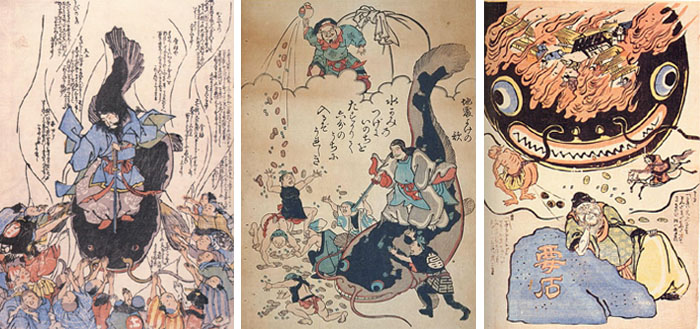 Left/1855년 작. 나마주 메기를 검으로 제압하고 있는 가시마 신. 서민들이 동전을 받으려고 손을 내밀고 있다. Kashima controls Namazu with his sword. The poor people wishes act of charity from the god. Author/Unknown Left/1855년 작. 나마주 메기를 검으로 제압하고 있는 가시마 신. 서민들이 동전을 받으려고 손을 내밀고 있다. Kashima controls Namazu with his sword. The poor people wishes act of charity from the god. Author/UnknownCenter/1855년 작. 메기를 타고 있는 신은 가시마 신(또는 타케미카즈치/Takemikazuchi). 풍작•복덕의 신(7복신의 하나)인 다이코쿠(Daikoku; 大黒, 大黒天의 준말)가 구름 위에서 재물을 분배하고 있다. Daikoku, one of the Seven Lucky Gods redistributes wealthies's riches. The mallet-shaking god is Daikokuten; the catfish rider is Takemikazuchi. AuthorAnonymous Right/1855년 작. 가시마 신(타케미카즈치)이 메기를 누르는 요석(要石) 관리를 에비수(Ebisu/恵比須; 혜비수/7복신의 하나)에게 맡기고 출장을 나갔는데 에비수가 졸았다. 이 틈에 메기가 요동을 쳐 지진이 일어났다. 뒤늦게 가시마가 말을 타고 달려오고 있으나 늦었다. 왼쪽은 천둥신이 큰 소리로 방귀를 뀌고 있다. 파괴된 마을에서는 돈이 쏟아져 나오고 있는데 부의 재분배를 의미한다. 지진이 일어나면 서민들은 재물이 생기는 것이다. The deity Ebisu falls asleep while guarding the foundation stone (kaname ishi) for Kashima, allowing the Namazu to cause the quake that destroys Edo. Kashima (aka Takemikazuchi, enshrined at Kashima shrine) is seen returning on horseback, too late. The thunder deity is seen engaging in 'thunder farting'. Coins are seen falling from the destruction, indicating redistribution of wealth. Author/Unknown. |
Catfish causes earthquakes, mythology of Japan. Takemikazuchi(建御雷 or 武甕槌, "Brave-Awful-Possessing" or "Thunder-God") is a deity in Japanese mythology, considered a god of thunder and sword god. He also competed in what is considered the first sumo wrestling match recorded in history. He is otherwise known as Kashima-no-kami, the chief deity revered of the Kashima Shrine at Kashima, Ibaraki(and all other subsidiary Kashima shrines). In many mythologies, earthquakes are connected to animals. Japanese earthquakes were first symbolized by a dragon, then a large cosmic fish which finally became a giant and mischievous catfish known as namazu. He lives in the mud beneath the earth. In the namazu-e or catfish pictures of the Edo Period, Takemikazuchi/Kashima is depicted attempting to subdue the giant catfish supposedly dwelling at the kaname-ishi(要石 "pinning rock") of the Japanese land-mass and causing its earthquakes. He fought the massive earthquake-causing catfish Namazu and trapped it under a giant rock. Kashima, an area which has remained comparatively free of earthquakes. However, the Kashima god occasionally leaves their post to confer with other gods. When the god is gone the namazu writhes and plays. The result is devastation for the humans living above him. Following an earthquake near Edo(modern day Tokyo) in 1855, the Namazu became worshiped as a yonaoshi daimyōjin(god of world rectification). Namazu-e(catfish prints) are a minor genre of ukiyo-e. They are usually unsigned and encompass a large variety of scenes such as a namazu forcing the wealthy to excrete coins for the poor, and a namazu atoning for the earthquake he caused. It is believed by some that the origin of the story is the notion that catfish can sense the small tremors that happen before many earthquakes, and are more active at such times. Supposedly, the sudden activity was observed in ancient times and people believed the quakes to be the result of a giant catfish. It was not until the 20th Century, however, that scientific experiments were carried out at the Tokyo Fish Laboratory and other college laboratories, proving the hypothesis that catfish did indeed detect earthquakes in advance and raised disturbance in consequence. In this process, the catfish ceases to be the cause of earthquakes and becomes a predictor. In other words, it goes from being a god to being a hero. Overall, this study converges the existence of the catfish that had been divided into folkloric and scientific knowledge, into that of a single, transforming entity. |
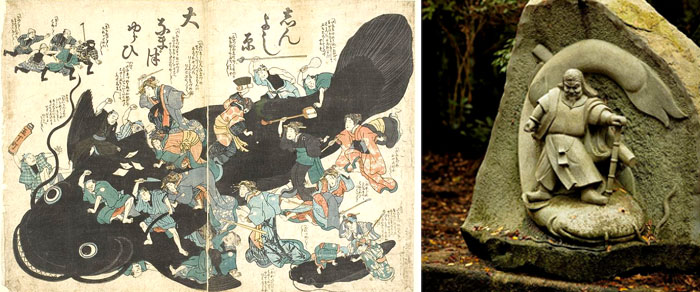 Left/에도 시대에 현재의 동경에 해당하는 도시에 유명한 사창가 요시와라(吉原)가 있었다. 유곽(遊廓/홍등가)이라 한다. 여자 매춘부와 남자 매춘부까지 번성했었다. 그림은 요시와라 유곽의 매춘부들이 지진을 일으킨 메기를 두들겨 패주는 장면이다. 그러나 메기는 여자 창녀들이 자기 몸에 자극을 가하는 것에 오히려 쾌감을 느끼고 몸을 꿈실거린다. 이는 여진을 일으키는 위험한 몸짓이다. 1855년 작. A namazu-e or catfish motif earthquake art entitled Shin Yoshiwara ōnamazu Yurai or "The Cause of the Great Catfish at Shin Yoshiwara." The women of the pleasure quarters blame the catfish for the earthquake, but the catfish is delighted to have these ladies press flesh with him, and threatens to squirm again, causing aftershock. Yoshiwara (吉原) was a famous yūkaku (遊廓、遊郭, pleasure district, red-light district) in Edo, present-day Tōkyō, Japan. In the early 17th century, there was widespread male and female prostitution throughout the cities of Kyoto, Edo, and Osaka. (Photo: Tokyo University Library). Author/Anonymous. Left/에도 시대에 현재의 동경에 해당하는 도시에 유명한 사창가 요시와라(吉原)가 있었다. 유곽(遊廓/홍등가)이라 한다. 여자 매춘부와 남자 매춘부까지 번성했었다. 그림은 요시와라 유곽의 매춘부들이 지진을 일으킨 메기를 두들겨 패주는 장면이다. 그러나 메기는 여자 창녀들이 자기 몸에 자극을 가하는 것에 오히려 쾌감을 느끼고 몸을 꿈실거린다. 이는 여진을 일으키는 위험한 몸짓이다. 1855년 작. A namazu-e or catfish motif earthquake art entitled Shin Yoshiwara ōnamazu Yurai or "The Cause of the Great Catfish at Shin Yoshiwara." The women of the pleasure quarters blame the catfish for the earthquake, but the catfish is delighted to have these ladies press flesh with him, and threatens to squirm again, causing aftershock. Yoshiwara (吉原) was a famous yūkaku (遊廓、遊郭, pleasure district, red-light district) in Edo, present-day Tōkyō, Japan. In the early 17th century, there was widespread male and female prostitution throughout the cities of Kyoto, Edo, and Osaka. (Photo: Tokyo University Library). Author/Anonymous.Right/가시마 신사(Kashima Shrine) 경내에 있는 메기와 가시마 신의 조각상. Statue of giant catfish and the god Takemikazuchi. Placed in shrine garden. Author/Mr Montarou. |
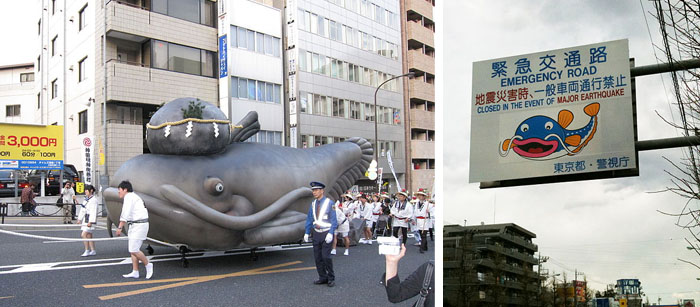 Left/간다 마츠리(神田祭, Kanda Matsuri). 매년 5월 15일에 가장 가까운 주말, 도쿄 간다묘진신사를 중심으로 열리는 민속 축제 행렬 중에 메기도 참여하고 있다. Kanda Matsuri(神田祭) or the Kanda Festival, is one of the three great Shinto festivals of Tokyo, Author/Ciphers. Right/동경 시내의 비상 도로교통표지판. 지진 발생시 일반 차량 통행 금지로 표시되어 있고 메기 그림이 크게 사용되어 있다. A emergency road traffic sign of Tokyo. Closed in the event of major earthquake. Symbol mark is catfish. Author/Mr. Brian. Left/간다 마츠리(神田祭, Kanda Matsuri). 매년 5월 15일에 가장 가까운 주말, 도쿄 간다묘진신사를 중심으로 열리는 민속 축제 행렬 중에 메기도 참여하고 있다. Kanda Matsuri(神田祭) or the Kanda Festival, is one of the three great Shinto festivals of Tokyo, Author/Ciphers. Right/동경 시내의 비상 도로교통표지판. 지진 발생시 일반 차량 통행 금지로 표시되어 있고 메기 그림이 크게 사용되어 있다. A emergency road traffic sign of Tokyo. Closed in the event of major earthquake. Symbol mark is catfish. Author/Mr. Brian.
|
| Copyright ⓒ FISHILLUST.COM All rights reserved. All contents can not be used without permission of the copyright holder. |


|


 검색
검색 